Microsoft gets itself into a pickle with a privacy-popping new feature on its CoPilot+ PCs, the FTC warns of impersonated companies, and is your company hiring North Korean IT workers?
All this and much much more is discussed in the latest edition of the “Smashing Security” podcast by cybersecurity veterans Graham Cluley and Carole Theriault, joined this week by author, journalist, and podcaster Geoff White.
Warning: This podcast may contain nuts, adult themes, and rude language.

Show full transcript ▼
 This transcript was generated automatically, probably contains mistakes, and has not been manually verified.
The North Korean Insider Threat with Carole Theriault and Graham Cluley. Hello, hello, and welcome to Smashing Security episode 374. My name's Graham Cluley.
So as well, people might remember The Lazarus Heist, the podcast and the book, were about North Korea and its suspected hacks on financial institutions.
And through that, I got interested in money laundering, 'cause actually—
'Cause half the story of The Lazarus Heist wasn't actually about North Korea hacking at all. It was about laundering money through casinos and stuff.
And so I was like, okay, well that's interesting.
So the new book, "Winston," is out in June, June 13th, and it's all about that topic, money laundering, and particularly how technology is changing the world of money laundering.
It's rocket fueling, I think we describe it in the blurb, the industry of money laundering. So that's what that's all about.
I go to these financial crime conferences and look, obviously cybersecurity conferences, I know lots of the companies, obviously know lots of the speakers a lot of the time, you know, folks yourselves.
Financial crime conferences, I go along, I don't know any of the companies, I don't know any of the speakers, but then they start talking and it's suddenly, oh, you're just at the other end of the pipe.
Yeah, okay, you're just the other side of the equation here.
So I really think there needs to be more, hopefully more collaboration, cooperation between cybercrime and financial crime.
I think that'll be a healthy thing to do is my conclusion from this work that I've done.
And, you know, I was looking forward, obviously, to meeting you guys in real life, IRL, as the youth say.
And I've invited you along to a couple of events, and you're like, oh, I'm busy. 'Oh, I can't really come,' and stuff.
And I thought, you know, fine, Carole is busy, but it just happened a few too many times. And so here's my hunch. My investigative journalist spidey senses have been tingling, right?
Rewind a few years and multiple podcast awards, right? Graham Cluley thinks I want a hit podcast.
But Graham is, you know, male and British and middle-aged and by his own admission, 'commodiony,' I think is the correct word.
And this is mulling around in Graham's head.
And then he's flicking through the TV stations late at night, and he comes across the classic '80s sci-fi romp, Weird Science, and realises that he can create his— I put it to you, Carole Theriault, you are an AI chatbot created by Graham.
Even now, am I seeing a picture of Carole? No, I'm seeing a picture of Graham. I'm not seeing a picture of Carole. And if I was, I would be counting the fingers, ladies and gentlemen.
Now, coming up on today's show, Graham, what do you got?
Apparently it's something called the hippocampus, the area of your brain governing memory. It can shrink slightly, and maybe that makes you more forgetful with age.
It's not just age though. All of us, I think we naturally prioritize what we need to remember, right?
So I need to remember where I live so that if I get off the bus, I know whether to turn left or right. That's kind of important.
But the humdrum day-to-day stuff, like what I ate for lunch last Friday, no chance at all. And I've had my memory tested from time to time.
Years ago, over 30 years ago, in fact, I was interviewed by police about a murder. They turned up on my door.
Yeah, it was— let me stress, I didn't commit the murder, at least not as far as I remember. But these police turned up on my door one night unexpectedly, knocked.
And they knocked on my door and the house was a bit of a mess, to be honest.
From the initial impressions, I might have come across as a bit of a serial killer, 'cause it was untidy.
And I said to them, "Look, I'd have tidied up if I knew you were coming." And they said, "We don't tend to pre-announce our visits, sir." But they wanted to know where I'd been on a particular night the previous year.
And I said, "Oh, I cannot stand football," I explained. And they went into the room where I had my computer.
And you remember how you used to get those cover discs on the front of magazines with free games and things?
And I've got this computer magazine, and there on the cover disc was this football simulation game.
And they picked it up, kind of went, "Uh-huh." And I just thought, ah, and I was feeling so guilty. I thought, oh my goodness, this is going to be a miscarriage of justice.
I was just picturing myself in my typical operatic dramatic style, imagining this was the end of Cluley as we knew it.
Because I would've found it really hard to put together an alibi. 'Cause who knows what I was up to or what I did, you know? I definitely didn't do it as far as I remember.
Anyway, so I now try to make a note of anything that I should remember. You know, I keep my passwords in a password manager, securely locked away.
I bookmark my favourite websites so I can remember what websites I like to go to. I use a calendar to record where I'm supposed to be and when, and family birthdays.
In case I get lost, all those sort of things, the essential things to look after myself.
And of course, on my computer, I've archived thousands of files and emails and photographs containing information.
And this, it feels to me, is one of the biggest problems with computing today, is that one of the things that we think has been solved hasn't really been solved that well.
I mean, we have search engines which to a better or worse extent, help us find stuff on the internet.
I'd say in some ways they may have reached their zenith and have fallen a little bit because there's so much junk and SEO poisoning and garbage sites now in search engines.
But it's a fairly easy way to find information is through a search engine, at least until they plug artificial intelligence in.
But that doesn't help me find information on my computer. Anyway, there is now a new startup company called Micro— Micro— Micro— Microsoft. Microsoft, right?
Little-known company. They lost the browser war, and everyone else so far, they failed to make much of a dent into Google in the search engine war.
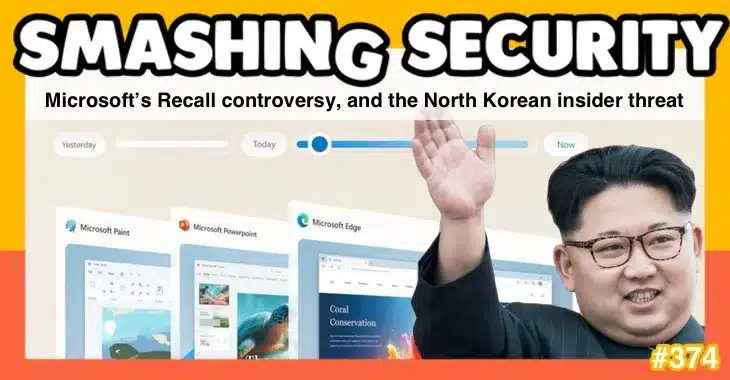
But this month, Satya Nadella, the CEO of Microsoft, he announced a new feature being built into their new AI-augmented Copilot Plus PCs, a feature called Recall.
Have you heard about Recall?
Everything you type, everything you look at, every webpage you visit, every app that you open, every photo that you edit, Microsoft's Recall feature built into these new PCs, it sees and records it.
And I said, not that revolutionary. And you said as well, because bloatware, malicious spyware has been doing this on your PC for years and years.
So right now, if you know where to look on the web, it doesn't even have to be on the dark web. These things have been openly advertised.
There's plenty of software you can grab and install and plant on your partner's PC to do just this, to surreptitiously watch everything that they're doing, who they're talking to, what they're looking at.
It's a kind of spyware. It's loved by stalkers and abusive partners. But of course, they have to go onto your PC and install it in order to spy on the person of interest. Right.
But what Microsoft is planning to do is to build this into their PCs, which you can preorder right now. So this feature will be there and it's just a question of turning it on.
So your partner won't have to— your jealous partner won't have to go and grab the software and install it.
They've just gotta grab your computer for 3 seconds and turn on this feature.
So you're saying they could turn it on without you knowing, and I'm just wondering if they could demand an admin password, but actually a partner often knows that anyway.
You can imagine those kind of scenarios. And with this recall feature enabled, at a click of a button, you will be able to rewind a PC back in time.
You could go back to, say, you know, last November 23rd at 5:15 PM, and find out what happened then.
So if you happen to go to a webpage which contained a photograph of a leather bag, even if it doesn't have the words leather bag on it, you would be able to search for leather bag.
I saw something about a leather bag. It would find that webpage.
It's on there somewhere. If I really have to find it, I'll spend 24 hours and find it. It's needle in the haystack work.
But it just classifies stuff based on file size, type, kind, everything. And what it's seen.
But if there's lots of websites where you can either choose to reveal, show your password in plain text, or it just, when you type it in, it appears in plain text.
And so you put it up in one window and then may transfer it by hand because those irritating sites which don't allow you to do it.
So, you may be wondering at this point if there are any privacy implications of what Microsoft's doing.
Some people have gone, excuse me, this doesn't sound entirely brilliant as you seem to think it is.
Yes, you've fixed the whole searching problem of finding information on your computer.
But now, if people log into their online bank, this feature is going to record their account numbers, their bank balances, their purchases.
It's all going to be available for anyone who has access to that computer to look up.
I can't imagine someone in one of the meetings didn't bring this up, but I have a feeling that this, "Let's go AI, let's go. We don't wanna be late.
Let's go quick, quick, quick," kind of mentality means we're skipping serious things. If Microsoft does this on a security front, it's pretty serious.
And I think if you are a person in a technology company who has that view, you probably don't last very long.
Because you're just seen as a bit of an obstacle and a bit of an Eeyore character.
So that's how they come out with this nonsense, 'cause nobody goes, "Hang on a second." And the person who does that gets fired.
And as soon as that happens, then the privacy nightmare kicks in for me.
So Microsoft says, well, you don't have to worry because it's all being stored safely, they say, and securely on the local computer.
It's not using the cloud in any way, at least at the moment it isn't, right?
Who knows what feature they might roll out in the future, which is, oh, now we've given you this cloud option too.
So they're not storing it in the cloud, but of course a hacker could remotely infect your computer with malware.
And just like they can steal other information from your computer, like the passwords from your browser or databases, they could just as easily steal or access this database, which recall has very helpfully been collecting for months and months and months about everything you did on your computer.
They're trying to argue, oh, but you know, that's just an edge case.
But I don't think it is an edge case because there are, of course, countries in the world which don't have the sort of glorious, beautiful, sunlit uplands that the United Kingdom has.
And may have totalitarian governments, they may have overreaching intelligence agencies, may have law enforcement who, once they've got access to a computer which has this turned on, will be able to delve through it or indeed remotely hack something and turn on these kind of features.
So I think it is a privacy and security nightmare and it's really going to bite people in the bottom.
Which, at one stage, was revealed to have installed spyware on, I think it was phones and tablets being shipped into the country, that did exactly this, stored screenshots.
The thing that bit North Korea on the bum about it was that the phones was constantly storing these screenshots, and the memory filled up. So the phone stopped working.
People took them to the shop, and the shop said, "Oh, the memory's full." "Oh, it's full of everything that you've ever done." And so they got found out.
Microsoft following in the footsteps, no less, of Kim Jong-un is not exactly a brilliant model, I'd say.
So Microsoft reckon that by default, they're going to store around about 3 months' history of what's been happening on your PC.
They reckon they're going to take up 25 gigabytes of space on a device.
Are we all going to need even more space?
That's the key thing. Can you— is it switched off by default when it's arrived?
Some people have suggested maybe it is on by default, but regardless, someone else could turn it on or you may not realize the implications or you may think, oh, this is so cute, I'll keep this going because it was helpful that one in a million times when you can't find the file any other way.
Anyway, the ICO says that it's investigating, and I imagine others will be investigating around the world either to try and put a stop to it or maybe positively encouraging Microsoft because it will help their investigations into people who are of interest to them.
But so this is an astonishing story, which I've been told about by a security researcher who's been looking a lot into this, a guy called Michael Barnhart at Mandiant, which is part of Google now, the cybersecurity bit of Google.
He's been talking about this for a while, and suddenly we get this US Department of Justice indictment, a criminal complaint, which maps out what he's been talking to me about, and it's this.
It's effectively infiltration of big US companies by North Korean spies, effectively, computer hacker spies.
But I'm going to try and tell the story in the sort of Graham Cluley style. So I'm going to say—
Somebody approaches you and says, "Hey, you know, can you help me?" Now, on LinkedIn, you are a web developer, and so you've got IT experience.
The person who approaches you says, "Hey, I really need your help.
I want to get a job at a big US company, but I'm not in the US, and I don't think I can really manage to get the job myself. Can you help me get the job?
When I get it, I will split my salary with you." So you think, "Oh, it's okay. I'm gonna help this person get a job. They're overseas somewhere."
Steal their identities and use their identities to apply for the job.
The next stage is you actually are successful, the scheme is successful, and you manage through working with this person overseas to get them the job at this US company.
The US company, because remote working is a thing, sends out a laptop that they want this new employee to use.
But of course, the new employee is overseas, so they can't send laptops. So they send the laptop to your house.
And then the person overseas says, "Oh, right, could you plug that in, keep it connected to the internet?" install remote access software on it, and just allow me to remote into that laptop in your house so I can then work for that American company.
It's like the red lights are a-flashing. I would've dropped out at various points.
I mean, we should— it's not their fault, is it, that they're in North Korea and just looking for a harmless job? Are they really doing any harm?
But you have at this point breached international financial sanctions.
A woman called Christina Chapman in the US, and we should say this is an accusation by Department of Justice. She has not been tried. I haven't heard her side of the story.
But what they say is she was approached on LinkedIn by these people who turned out to be North Koreans.
Now, what's amazing about this is dozens of US citizens' identities were harvested. To apply for the jobs.
We're talking dozens of companies who were infiltrated by these new job applicants. They send out laptops to Christina Chapman's house, is the accusation. She sets them up.
These hackers from North Korea were remote accessing into the laptops and using the VPN to get into the company.
Now, not only did they make money out of this, about $6 million of money they made out of these various companies they were working for, of which the accusation is Ms.
Chapman got a cut. That money goes back to North Korea.
Now, again, to your point, Graham, sending money back to North Korea might be helpful for people there, but it is also breaching international sanctions. Okay, okay. Really worrying.
But I mean, first it's murder, Graham, and then it's sanctions busting. This podcast is outrageous.
No, guys, just— But so the other thing that happened, and this is the really terrifying bit, is that not only were they working for these companies and getting money in breach of sanctions, they were also apparently stealing data from inside these companies.
Effectively, you've got the ultimate insider threat, somebody you've given a job and a laptop and remote access to. And so, I mean, these are Fortune 500 companies.
I do not have the names of the companies, much as I'm trying, but one of them is a big automotive manufacturer in Detroit. Another is a big clothing company based in California.
So you start to put two and two together. These are big companies and they got infiltrated by apparently North Korean hackers. It's an astonishing campaign, this one.
And just to bring this to a close as well, what I've been told is that this is just one case of one person in the US.
There are multiple cases of people around the world, including, I've been told, the UK, where there are similar operations being run.
And that would involve probably infiltrating UK companies. So this is just the opening salvo in what might be a slew of court cases trying to bring these things to justice.
You could be installing ransomware, all kinds of nastiness.
And I think that the really big thing, and we came across this when we did the book and the podcast about this sort of infiltration type stuff, 'cause crypto companies were being subject to this, you know, North Korean hackers accused of getting jobs at crypto companies.
All of those attendant risks of data theft and stealing money.
The thing that really kept people awake at night was what if this person who I've hired to do computer coding for my company has introduced some kind of logic bomb or vulnerability that they haven't told me about, obviously, and then years from now, it could even be years from now, they trigger it and drain my bank accounts or break in all over again if they left backdoors all over the place.
So that's the really big worry, but it's an astonishing campaign. There was a Department of Justice indictment against Christina Chapman. Just have a read through it.
It's absolutely remarkable, the accusations they've made.
A bit like a server farm mining cryptocurrency, but they were all being used by people over in North Korea.
Now she's, you say small fry, yes, she's sort of a small cog, but a small cog servicing multiple dozens of people. So a small but vital cog at the center of this is the accusation.
Again, we wait to hear her argument on this. Yeah, but just astonishing case.
So I've seen that the FBI, they're now warning firms and recruitment agencies to be on the lookout for North Korean IT workers, you know, freelancers who may obviously not realize that they're based in North Korea.
They're telling them to look out for things if someone's working odd hours. Yes. If you're obviously, if you're working into the North Korean time zone.
But then, of course, programmers, they do work odd hours anyway, don't they?
So for crypto company, you've got almost no way of verifying this employee. But these are standard non-crypto companies that pay into bank accounts.
So part of this again was setting up the fake ID to get the job, 'cause the company would say, "Well, great, you're hired. Where do we pay you?
What's your bank account details?" Well, then you've got to give bank account details that ideally match up with the person who's just got the job.
Or maybe you set up a company instead of a bank account as a company. There's a whole financial crime aspect to this of sort of laundering the money back.
One of the parties that's prosecuting this woman is the IRS, the Internal Revenue Service in the US.
Because of course, you know, tax has been paid and tax has been dodged on these things.
So there's a whole sort of network of financial charges and wrongdoing attached to all of this. It's all spiralling out of the part of the case.
This is the US federal agency that enforces, you know, civil antitrust laws, promotes consumer protection, that sort of stuff.
Now, they put out some research and analysis on scam reports that it received during 2023.
And there are two things I thought we could guess about with respect to impersonation scams. So what's changed, if anything, since 2020?
And what companies are impersonated the most in the US? So which are the ones that are kind of being flagged the most, looking at all the reports that came into the FTC last year?
Okay. All right. Yeah. So impersonation scams. This is where scammers pretend to represent a well-known or trusted business or a government agency.
Apparently there were 500,000 reports of impersonation scams, two-thirds business impersonation, one-third government impersonation.
It's a hard word to say, impersonation, combined losses of these scams topped a whopping $1.1 billion in 2023. Right. And that's 3 times more than what it was in 2020.
So either impersonation scams are a big growing business or people are reporting the scams to the FTC and reporting their losses more often, or a combination of the two. Right.
Could be either.
So messages about supposed activity, like suspicious activity or unauthorized charges. So, you know, you're already alert that these things can go wrong.
You get a message saying, "Oh yeah, you have been scammed," or it's a bank and there's a phone number and they ask you to text back yes or no.
And these, you know, basically they're scammers trying to fix a problem that doesn't exist, to fix a fake problem. There's phony subscription renewals.
So this looks like routine email notices claiming to refer to an account you never opened but is about to auto-renew, maybe a gym membership or something like that.
And they say to you, "Well, we need to connect to your computer in order to process the refund." Once in, they make it look like too much money was refunded and demand a return by buying gift cards, da da da da da.
It's like, "Oh, you're going to charge me, therefore I have to deal with that right now." And so you've sort of cut off your regular common sense at that point.
So you're like, "Thank you very much." Another category is fake giveaways, discounts, or money to claim.
So discounts from your internet provider or giveaway from a big retailer or sweepstakes winnings, that sort of thing. Number four is bogus problems with the law.
So pretending to be government agents saying that your identity has been stolen or been used to commit a serious crime.
Did they say, "We'll help you clean up the murder"? Is that what— did they say that? Because that's apparently what they do.
They offer you help to fix the problem, which always involves them telling you to move money, right?
Sounds like the world's worst strippers. I don't think you should tip them. Cops or strippers, that's always— yeah. Oh, dear.
US Postal Service, UPS, FedEx, problem with the delivery, includes a link, but it doesn't go to the real website.
So all these we kind of know, but they do say there's some differences, there's some changes in what's going on. So way back in 2020, phone calls were big business, right?
Scams would start with a phone call, but this type of scam has plummeted in the last three, four years. Yet we're seeing an increase in text or email scams.
So, okay, I've got a list of the top 10 companies in the US that are used or impersonated. This is from the FTC. And they issued it just last week.
So I want to see how many you guys can get.
I'm making value judgments there.
It offers bulk mail direct marketing of merchandise and periodicals. And get this, it's most widely known for its sweepstakes and prize-based games, which were introduced. Oh, nice.
But they were subject of legal actions regarding whether consumers were misled about the odds of winning. So by 2010, the company had reached settlements with all 50 states.
And in 2023, the FTC ordered this house to overhaul its sweepstakes process.
You got Wells Fargo, you got Apple, you got Comcast, Norton and LifeLock.
But interestingly, it's Microsoft and the Publishers Clearing House that have the best ROI, which means they have capped the biggest amount of money per transaction.
They account for $110 million combined in 2023. So I guess at the end of this, it's what advice do we have for people?
So you have people basically taking advantage of people like us that say, hey, beware out there.
A lot of these scams are telling them, hey, something's gone wrong and we're here to help. Is our advice no one helps you? You're screwed?
Don't go through the channel through which you've been approached. Go independently to the company direct. That's always been my approach.
Vanta automates compliance for ISO 27001, SOC 2, GDPR, and more, saving you time and money.
With Vanta, you can unify your security program management with a built-in risk register and reporting, and proactively manage security reviews with AI-powered security questionnaires.
Over 7,000 global companies like Alsation, Flow Health, and Quora use Vanta to build trust and prove security in real time.
Smashing Security listeners get 10% off Vanta at vanta.com/smashing. That's vanta.com/smashing for 10% off Vanta.
Kolide Device Trust helps companies with Okta ensure that only known and secure devices can access their data, and that's what they're still doing, but now as part of 1Password.
So if you've got Okta and you've been meaning to check out Kolide, now's a great time.
Kolide comes with a library of pre-built device posture checks, and you can write your own custom checks for just about anything you can think of.
Plus, you can use Kolide on devices without MDM, your Linux fleet, contractor devices, and every BYOD phone and laptop in your company.
Now that Kolide is part of 1Password, it's only going to get better. Check it out at kolide.com/smashing to learn more and watch the demo today.
That's K-O-L-I-D-E.com/smashing, and thanks to Kolide for supporting the show. Legacy managed file transfer tools are dated.
They lack the security that today's remote workforce demands. Companies that continue relying on outdated technology put their sensitive data at risk.
Well, this podcast is sponsored by KiteWorks, who enable organizations to effectively manage risk in every send, share, receive, and save of sensitive content.
To do that, they've created a platform that delivers content governance, compliance, and protection to customers, tracking, controlling, and securing sensitive content as it moves within, into, and out of organizations, all while ensuring regulatory compliance on all sensitive content communications.
KiteWorks provides the industry's first private content network for protecting risky third-party communications with secure email, secure file sharing, secure mobile, secure web forms, managed file transfer, and governed SFTP servers.
Visit kiteworks.com to get started today. That's kiteworks.com, and thanks to them for supporting the show. And welcome back. Can you join us for our favorite part of the show?
The part of the show that we call Pick of the Week.
Could be a funny story, a book that they've read, a TV show, a movie, a record, a podcast, a website, or an app. Whatever they wish.
It doesn't have to be security related necessarily.
I've been using a service called, I don't know how to say it. Is it Udio or Udio? It's U-D-I-O is the name of this particular service.
And all you have to do is give it a little bit of text. And say, can you write a song? And it goes away, and 30 seconds later it comes back with a music and all the words.
It's been trained on a vast collection of diverse musical styles.
I imagine they've already predicted the lawsuits which are going to happen.
But what you can do is you can say, can you do this in the style of a jazz pianist or some electro punk or something like that? And it's quite remarkable.
And of course, as this is an audio podcast, there's only one real way to demonstrate how remarkable this is.
Just before we recorded this podcast, I went up to Udio And I said, can you write me a song about our guest this week, Geoff White, and his new book about money laundering?
Oh, good. Okay. So here is— yep. So here is Rinsed, the song.
Take the bills, make 'em clean, rinse said Geoff, it's pristine. Take, spin the wheel, which it turned, the game of green. So much to learn, Geoff White's tales.
They got our hands rinsed, he says, in foreign lands.
Yeah, you can say, "Oh, I don't like that outro," or, "Can you create another verse?" or, "Can you put in a longer instrumental at the beginning?" You can do all things like that.
And it does it. And all kinds of different styles as well.
I chose a sort of swingy, jazzy kind of upbeat style, but it could just as easily have sounded a bit like Leonard Cohen or some sort of—
And I was like, "Oh, is it?" It's usually chocolate or biscuits, which is great.
Though this was a poem generated about me and my talk by Woodsy and YA, two award-winning poets who use AI to write the second half of the poem.
So it's interesting that I'm getting this from all angles of people throwing content at me. Amazing. I thought it was incredible. Yeah, absolutely incredible.
My pick of the week is slightly less cheery, but it is important. And I really, really, really want to flag this book up. It is a book, not mine, is by a woman called Annie Jacobsen.
And it is simply called, and this will give you a clue as to what's in it, Nuclear War. Whoa. This book is astonishing.
It is a hypothetical minute-by-minute play of what happens if North Korea launches a nuclear weapon. What? The research in it is amazing. It's meticulously researched.
Because there are all these hidden arcane systems that kick in all around the world within seconds of anything, that they've got radars trained, satellites trained on everything.
And as soon as this happens, there's a whole chain goes into effect.
What's amazing about the book is, on the one hand, it's extremely detailed is actually what it is in terms of who decides what and so on.
But because it's a hypothetical scenario, the author, Annie Jacobsen, occasionally throws in a curveball, an event happens that takes things off in a new direction, a new slightly terrifying direction.
I know there's this cliché of, I was so engrossed in it, I missed my tube stop or train stop, whatever. I did.
I actually missed the stop and got off the wrong stop because I couldn't take my nose out of this book.
I know it's a really serious subject, and it is particularly in our current world, I'm sure, not one that people want to dwell on too much.
But this book, honestly, it's just amazing.
And you come out of it with a new appreciation of the weapon that we have built and how incredibly stupid it was for us to do it and how dangerous it's created the world for us all to be.
It's called Nuclear War, Annie Jacobsen. I cannot recommend it highly enough. I think everybody, particularly children at school, should read this.
It's not new, it came out in 2022, but I just saw it, so, and I found it super gripping, so that's why it's my pick of the week.
But effectively, the gist is this: you've therapist Alan Strauss, played brilliantly by Steve Carell.
And this therapist is being held prisoner by a patient who has revealed himself to be, shall we say, not a super great guy. Read into that what you will.
And Sam has some unusual therapeutic demands, right? This is our patient Sam, for our therapist Alan. Curb his urges.
So as he's there, he's a prisoner, he's kind of kidnapped, and he's tasked with unwinding this patient's disturbed mind.
But the patient refuses to address critical topics like serious mom issues and that sort of stuff.
But in parallel, we have this therapist ruminating over his own life and decisions because he's now trapped and he's got a lot of bored time. And I was totally sucked in.
It was really, really good. Graham, I recommend it highly, particularly to you. I don't know if Geoff, this is your thing, but— Sounds good.
So that's my pick of the week this week. It's called The Patient, starring Steve Carell, and it's available on Disney and I think Hulu.
Geoff, I'm sure lots of our listeners would like to follow you online, find out what you're up to, and maybe learn more about Rinsed. What is the best way for folks to do that?
And don't forget to ensure you never miss another episode, follow Smashing Security in your favorite podcast app, such as Apple Podcasts, Spotify, and Pocket Casts.
For episode show notes, sponsorship info, guest list, and the entire back catalog of more than 373 episodes, check out smashingsecurity.com.
Hosts:
Graham Cluley:
 @grahamcluley.com
 @
@
 / grahamcluley
Carole Theriault:

Guest:
Geoff White – @geoffwhite247
Episode links:
- Microsoft’s new Windows 11 Recall is a privacy nightmare – Bleeping Computer.
- Statement in response to Microsoft Recall feature – ICO.
- Arizona woman charged in North Korean IT worker scheme that raised millions – CNN.
- Charges and Seizures Brought in Fraud Scheme Aimed at Denying Revenue for Workers Associated with North Korea – US Department of Justice.
- New FTC Data Shed Light on Companies Most Frequently Impersonated by Scammers – FTC website.
- Who’s who in scams: a spring roundup – FTC.
- Udio.
- Geoff’s Labyrinth ext v2 – Graham’s AI song about Geoff White’s book “Rinsed”.
- “Nuclear War” by Annie Jacobsen – Amazon.
- The Patient – Disney+.
- Smashing Security merchandise (t-shirts, mugs, stickers and stuff)
Sponsored by:
- Vanta – Expand the scope of your security program with market-leading compliance automation… while saving time and money. Smashing Security listeners get 10% off!
- Kolide – Kolide ensures that if your device isn’t secure it can’t access your cloud apps. It’s Device Trust for Okta. Watch the demo today!
- Kiteworks – Step into the future of secure managed file transfer with Kiteworks.
Support the show:
You can help the podcast by telling your friends and colleagues about “Smashing Security”, and leaving us a review on Apple Podcasts or Podchaser.
Become a supporter via Patreon or Apple Podcasts for ad-free episodes and our early-release feed!
Follow us:
Follow the show on Bluesky at @smashingsecurity.com, or on Mastodon, on the Smashing Security subreddit, or visit our website for more episodes.
Thanks:
Theme tune: “Vinyl Memories” by Mikael Manvelyan.
Assorted sound effects: AudioBlocks.