


The iPhone 8 is on its way and may use 3D facial recognition rather than a fingerprint sensor to lock out intruders, and the UK’s Automobile Association claims it hasn’t leaked any credit card data, so why is it getting so upset about security researchers publishing screenshots of leaked data?
All this and more is discussed in the latest edition of the “Smashing Security” podcast by cybersecurity veterans Graham Cluley and Carole Theriault, joined this week by umm.. nobody.

Show full transcript ▼
 This transcript was generated automatically, probably contains mistakes, and has not been manually verified.
To give people greater insight into emerging threats. What's really going on out there.
So you can either sign up to be one of their customers, obviously, or you can get their free Cyber Daily newsletter and get the latest insights in your inbox at no charge whatsoever.
All you have to do is go to recordedfuture.com/intel.
Hello, hello, and welcome to another episode of Smashing Security. Smashing Security, Episode 32.
And I, my name is Graham Cluley, and I'm joined as always by my good buddy, Carole Theriault. Hello, Carole, how are you?
So I hope he's all right. Now, in his defense, we are actually recording this on the morning of July 4th.
But shall we just— I mean, you've got a plane to catch and things, haven't you?
Which is about the AA, not Alcoholics Anonymous, crew. No, this, I know that's what you were thinking. This is the Automobile Association, which sounds really grand, doesn't it?
It is the British Automobile Association. They are the fellows in the yellow vans who come out and rescue you when your car blows up and try and sort you out.
Now, unfortunately, something a little bit odd appears to be happening with the AA, because it looks like they've had a bit of a security incident.
Somebody found that the AA's online store, which in fairness is run by a third party, appears to have made a boo-boo.
Because a backup database of user information, things like names, email addresses, partial credit card details, had been left exposed.
And so this guy was able to download details of hundreds of thousands of AA customers.
And he said to them, he said to them in June now, so this was a couple of months later, because he was waiting for the AA to send a message to its customers.
Regarding telling our customers, we are following internal AA policies." I think you can read between the lines on that.
Certainly, I would lean more towards informing customers and certainly informing the Information Commissioner's Office, ICO, the regulatory body who look after these things, if an incident has occurred so that they can determine what's gone wrong and what remediation may need to take place.
So anyway, the breach was discovered in April, there was no notification to customers. May, no notification to customers. June, no notification to customers.
You know, if you get an email which appears to come from us talking about a password reset, please don't act upon the email. Don't click on the link. Don't phone us up.
And people were very confused about this because the link really did go to the AA's website and the phone number really was the AA site.
But there were still some customers who were very confused about this because some customers reported that they had tried to log into the AA website and their passwords had stopped working.
There was one user on Twitter who had actually contacted AA's support team via the telephone, and they claim that they were told that the AA had been hacked.
And yet the AA was now sending emails to people saying there's been no hack, there's been no data breach. You know, don't panic, everybody.
Please forget that email which we sent you about password reset.
But all of this talk of the email, of course, got people thinking about the earlier breach, and people started talking about that more.
And people started saying to the AA, hang on, you had some kind of credit card breach. Data was compromised.
It's full of inaccuracies. And none of our credit card data has been exposed.
And meanwhile, the BBC were reporting that there appeared to have been a breach and Motherboard and other sites and security researchers Troy Hunt were tweeting about this as well.
And Troy, for instance, was confirming with people in that database which had been exposed that they were indeed AA customers.
And yes, the partial credit card information contained in that database did match their credit card numbers. And yet still, the AA said nothing happened. No, there was a problem.
We fixed it on our store website, but credit card information has not been compromised.
But this morning on Tuesday, I posted a blog post 'cause I've seen all this and I thought, hang on a minute, I got my hands on a screenshot of some of the credit card data, the part of the AA database containing people's credit card information, expiry dates, the last 4 digits of the credit card number, as well as there was additional information in the databases such as the users' names and contact details and so forth.
And I posted a redacted version of that on my website and said, "This doesn't make sense because this looks credit card data to me, but the AA say none of it has been exposed." And do you know what happened?
I want to give him a platform. But so far, all he's sort of said to me is that no passwords were changed in the email error episode.
Well, you know, I didn't necessarily say that they were. I just said that some customers reported they couldn't get in. Also, he's saying no credit card information was compromised.
And it's just like, well, I can see some. And other security researchers are saying they see some as well. So it feels very shambolic. It feels like a complete mess.
I prefer to think that rather than deliberately trying to cover up the facts.
If people don't feel like they trust you, they don't wanna be with you. And there's a lot of competitors, right, to the AA?
No one's immune to a security incident happening. And I have sympathy for that happening. You know, we don't know the full details of how this particular one happened.
It sounds like there was a third party involved as well who may have some culpability, who knows?
However, if something like this happens, the first thing you need to think about are your customers and being open and transparent with them.
But it's their data that's gone.
What did him? It wasn't so much the bugging of the Watergate building. It was the cover-up afterwards, which eventually got rid of him.
And that is what so many organizations need to learn, is you will get in a much worse mess than the data breach if you fumble and screw up your customer communications and they lose your trust.
And it should be open and, you know, for all of us to read.
He doesn't have to go into details about the breach or how the hack worked, because he doesn't know, but he should be able to explain the process of finding— because we know, we've been in these situations.
We know information dribbles out, in a non-orderly fashion and you have to piece all these things together to figure out what happened. Sometimes it takes a while and it sucks.
And yeah, I think you're right. I mean, it's been a bit of a mess.
It's not completely unrecoverable, but it feels to me like they've got themselves in a much worse mess than even the original data breach could have potentially caused.
Right, Graham? Great. Over to Jed's topic. Great, but I can't wait to hear what you're going to talk about today.
So for the first time, there's gonna be 3 phones available and they're expected this fall, 2 of which are gonna be upgraded versions of the current models, but one is a top-of-the-line kind of handset with a completely overhauled look.
And this is all according to Bloomberg. So predicted features.
Now, of course, we all know that Apple keep this very close to their chest and people, you know, and they put out loads of prototypes to be tested, to be produced, to try and kind of confuse it.
So it's quite fun. It's a bit like a movie. Now, so predicted features include a curved glass front, a stainless steel housing, better color display.
So like deeper blacks, whiter whites, better camera.
It's the darkest black ever.
Based on smaller 10-nanometer production. Now that's down from 16 nanometers, which is what's in current existing phones.
And smaller processors are quite cool because they're more efficient and they will help you provide more features, allowing Apple to retain battery life while giving you new cool stuff.
So that's quite a cool balancing act that they've gotta face.
That's what I actually want. I don't want something which is gonna— And I also don't want one of those clown shoe phones. You know, they now have these enormous— Samsung do it.
And there's the iPhone 7S. Is it the 7S? The stupidly large one, which makes me look like I've got hands the size of Donald Trump.
So can we just have a better battery, full stop, rather than trying to squeeze everything into a smaller space?
It's huge, looks like a monster. And the other one looks like an old rotary phone on the back. It's twice the size of the phone in terms of width.
But 3, I think it's easier for them to hold and see the screen because they have their little hands and they, you know, they're holding this plastic bit in their arms and they can see the full screen without their fingers kind of, you know.
Okay, sorry, sorry for the interruption. No, no, it's fine. Now, one of the cool changes is they want to do away with the bezel.
So the edge around the screen where the home button sits.
So some have suggested, so people are thinking, oh, if they're going to make the whole front of the screen, you know, an actual screen, where's the button going to go?
Some have suggested it might move to the side or the back of the phone.
I think it would feel that I was locking my phone, you know, I would be touching it all the time in a way that would be annoying. And also what about phone cases?
Anyway, doesn't matter.
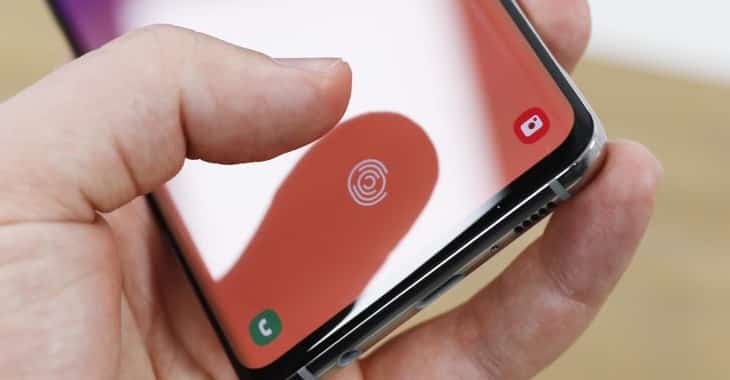
But some are suggesting that actually what's actually gonna happen is they're gonna introduce 3D-based facial recognition sensors combined with eye scanning technology.
So users rather than using their thumbprint or index print will actually scan their face and eyes in order to log in.
It wasn't as though your fingerprint data was going to Cupertino so they could put it in some evil database.
It was kept in a secure enclave, I think they called it, on the actual device. So they were keeping it very securely.
And I would imagine if they are going to do any kind of 3D facial recognition, eye scanning stuff, I think Apple will be very conscious of that.
And they will want to store that securely on the device rather than, frankly, they don't want to hold that kind of toxic data. Who wants to store that data?
Because if it ever was breached, that'd be a problem for them.
Is that part of, you know, is that kind of, so they're basically saying we can't access, we can't decrypt a phone.
And so they will not jump through hoops for law enforcement, and that's why law enforcement finds it so difficult sometimes to unlock these devices.
I mean, they sell, as you were saying, they sell the phones, right?
This, I think, is quite an important difference between Apple and some of the other manufacturers out there and some of the other technology companies.
Apple charge you an arm and a leg for some of their devices because they want to make money selling the hardware.
They want to make money selling you apps and things like that, right? That's how they've made themselves a fortune.
There are other companies out there, naming no names, who are much more interested in giving you devices on the cheap.
And then they will make money through advertising or collecting your information and monetizing that information instead. So there's a fundamentally different approach.
And as you can imagine, working in the security and privacy field, we lean one way a little bit more than the other.
Actually though, I am going to try and stick with my 6S as long as possible because I really like the whole cable headphone thing. I don't want to have— I want the cable.
And I don't want it.
I think the amazing thing about the Apple iPhone, and here we are at the 10th anniversary, the incredible thing is there has been no major malware outbreak for iPhone.
But also to give them credit, thinking about security and privacy, I think in a way which other companies maybe could take a lead from.
Recorded Future are the real-time threat intel firm whose machine learning technology analyzes the open and dark web to give you great insight into emerging threats.
Sign up to their Cyber Daily Newsletter and get the latest insights at recordedfuture.com/intel. That's recordedfuture.com/intel. On with the show.
So I thought, you know, maybe I should go first and you go second.
Okay, now, Mona Lisa is a kind of channel that features this couple doing dares and stunts, and, you know, a few family videos and that kind of thing. So this is their idea.
You tell me what you think. Tell me if you would try this at home, right? So you set up two cameras to capture your wife or your girlfriend firing a gun at you.
So imagine Mrs. Cluley pointing a gun at your chest, right, a foot away.
Okay, now you're thinking, okay, maybe what kind of gun were they using? That was the first question I asked. What kind of gun did they use, right?
Now, I of course had to Google this, knowing absolutely nothing about guns, but was quite shocked to learn that the .50 in that title actually refers to the bullet size, and that means that the bullet is half an inch in diameter.
This gun is a massive handgun. It can shoot— the bullet can go, if uninterrupted, 200 meters is its maximum length.
I'll put links in the story so you can actually go see how much bigger it is than this.
Now, what makes this kind of tragic is that he did a bit of testing on this beforehand, and he shot it through a stack of books, I think on a bookcase, and he was able to show his friend that the bullet did not go through the entirety of the first book.
But of course, the pressure of all those books being together may have made that different, right? It might have changed that.
Taking the book out and just holding it in front of you. And also, wouldn't the force of the gun slam that book to your chest so fast? Oh, anyway, I just think it's so crazy.
So I thought, God, could this actually be a Darwin Award? Could this be a Darwin Award? So I looked up the Darwin Awards. I know, I know, but come on, come on.
It is a silly thing to do. But however, it doesn't because, you know, yes, yes, you know, he has died. So that's one, that's one category, one criteria.
Astounding misapplication of judgment, which I think this qualifies. But the problem is he didn't cause his own demise, did he? Even though it was his plan.
There's videos that are still on their channel that you can see from the day before and a few hours before saying, we're really hoping for that. Anyway, so this is my tip.
Don't do this. You know, when we have to learn— I know you don't like us talking about these kind of things, but we have— I think we have to learn about these things.
The more people talk about it, they'll think, okay, not a good idea, think twice.
What better way to spend my time? Okay, I do this.
And earwax naturally is supposed to come out of your ear, and it typically comes out of your ear at night. Right? Now, if you've got your earphones in, your earwax does not come out.
And if you keep on wearing earphones all the time, and I'm talking about these in-ear earphones, as it were, then— Like the iPhone?
So I started to get— I had a bit of sinus trouble the other day, and I started to get some pain in my right ear. And initially I thought— Poor Graham. Yeah, exactly.
And I went to the doctor, and the doctor said, well, we can't actually see what's going on with your eardrum because you've got too much earwax in this particular ear.
And I said, okay. So I got that sorted out. Turns out these days they basically use a vacuum cleaner to get rid of earwax, right? They don't syringe it anymore.
They've got this little micro suction thing. Very cool. So I went and got it. And so I had the earwax removed and I thought, once I've done that, I'll be able to hear properly.
Because the problem was, when I began to suffer, it felt like my right ear had not popped. And so I was constantly underwater.
And so they got rid of the earwax and unfortunately that hasn't changed anything.
And I've got some infection or some liquid fluid in my middle ear, which makes me feel like I'm underwater.
But one of— but don't worry about that, you know, I'm getting medication, and it may be that I have to have a little operation.
There are these things called sleep earphones or sleep headphones, and they're kind of cool.
So, Carole, if you are like me and you love to listen to podcasts and fall asleep listening to podcasts, you can wear this— you can get them on Amazon and things like this, different priced ones, but you can get these things which are like a John McEnroe style headband.
So it goes, so it's like, you know, hey, I've just been down the gym or whatever like that. But they have slipped into them very, very flat speakers on the side.
But anyway, you can sleep on these quite comfortably and you can still have your little voice. It's even possible to get wireless ones.
Now, I thought that was a bloody stupid idea, to be honest, because why would I want some very clunky Bluetooth device in my headband connected to my phone?
So I've got one which is on a wire, but it means I can listen to my podcasts and there's nothing actually in my ear. And of course, Mrs.
Cluley hopefully will not be irritated by any extraneous noise coming from whatever I'm recording.
You could actually— if you could put a speaker into that, you could actually just have it under your pillowcase, right?
Because my mom listens to podcasts— listens to radio all the time, right? She does it through— she has a tiny speaker that she puts underneath her pillow, right?
And then the sound comes through her pillow. Apparently it doesn't bother my dad at all, and because she doesn't things in her ear. So yeah, interesting. Well, that's cool.
Okay, yeah, I'll look into that.
So look after them.
And if you do the podcast, be sure to go and give us a good review on something iTunes or Stitcher, or I don't know if you can give reviews on Google Play, but we're up there as well.
Carole, thank you for showing up. I showed up to every single episode.
You can find our email form as well if you want to drop us a line and a link to our Twitter. But until next time, toodle-oo, bye-bye.
Hosts:
Graham Cluley:
 @grahamcluley.com
 @
@
 / grahamcluley
Carole Theriault:

Show notes:
- Yes – despite what it says – AA customer credit card data was exposed
- Apple Readies iPhone Overhaul for Smartphone’s 10th Anniversary – Bloomberg
- The World's Blackest Material – An Inside Look At Vantablack — YouTube video.
- About Touch ID advanced security technology – Apple Support
- He thought a book would stop a bullet and make him a YouTube star. Now he’s dead. – The Washington Post
- Firik Sleep Headphones — For those of you who want to look like John McEnroe when you’re snoozing in bed.
Thanks to our sponsor:
This episode of Smashing Security is made possible by the generous support of Recorded Future – the real-time threat intelligence company whose patented machine learning technology continuously analyzes technical, open, and dark web sources to give organizations unmatched insight into emerging threats.
Sign up for free daily threat intelligence updates at recordedfuture.com/intel. Thanks to Recorded Future for their support.
Follow the show:
Follow the show on Bluesky at @smashingsecurity.com, or visit our website for more episodes.
Remember: Subscribe on iTunes or your favourite podcast app, to catch all of the episodes as they go live. Thanks for listening!


I can't believe that couple was so stupid. They took down the video. There are plenty of videos showing .50 cals shot through books,