A conspiracy spreads on social media about Coronavirus tracing apps, US police find decades’ worth of sensitive data leaked online, and is there a Bitcoin bonanza to be had from watching Elon Musk YouTube videos?
All this and much more is discussed in the latest edition of the award-winning “Smashing Security” podcast by cybersecurity veterans Graham Cluley and Carole Theriault, joined this week by BBC technology reporter Zoe Kleinman.
Show full transcript ▼
 This transcript was generated automatically, probably contains mistakes, and has not been manually verified.
That's how it works.
Hello, hello, and welcome to Smashing Security episode 184. My name's Graham Cluley.
It is BBC technology journalist and co-host of Backspace and Beyond the podcast, Zoe Kleinman. Hello, Zoe.
Do you know what article it might be?
That's not me.
Now, on today's show, Graham shares bitcoin investment advice, Zoe Kleinman gives us the latest on COVID track and trace apps, and I share what I've learned about the BlueLeaks archive.
All this and much more coming up on this episode of Smashing Security.
And now, of course, we have another— But what about the lizard?
There are new types of spacesuits now as well.
He is a master of getting attention for himself and his company, of course, whether it's launching a Tesla car into deep space or messing around with Johnny Depp's ex or giving his child a ridiculous name, whatever it might be.
He wouldn't fancy it.
Now, with someone like Elon Musk, it wouldn't be a surprise for many people if, you know, because he's so charitable, if you ended up watching a live stream from Elon Musk's own YouTube account telling them about an incredible offer, saying 500 bitcoins up for grabs, that's $5 million, or in British money, £32.50, which you could get your hands on.
And the live stream says that all you need to do, right, is send some bitcoins to Elon's account and he will charitably give you double in return, or maybe even 10 times as much.
You know how when you're watching BBC News, you get all those tickers and all those— all the things filling up the bottom third of the screen. What are they called?
And then the— where you get the name of the person speaking and their job title or whatever, we call those Astons.
But yeah, so, and then you get a message at the bottom of the screen maybe saying, "Look, here is Elon's wonderful offer to make lots of bitcoin." Now I know what you're thinking.
'Cause you're cynical types, you're skeptical people.
Where people have created fake Elon accounts, they've added his picture and tried to trick people into believing it's him making an offer.
So how do we know that this particular scam this particular YouTube channel live streaming is a genuine offer.
And it's not necessarily straightforward because you may have been taken there by YouTube's own recommendation algorithm, right?
If you regularly search on YouTube for things like, I don't know, Tesla or SpaceX or rocket launch and things like that, it's quite possible that this YouTube channel is shown to you as well.
Okay, I'd see his name there and I would go look at the playlist or the videos that he had pushed out.
I mean, it's not beyond the realms of possibility that he would tweet something like this at 4 o'clock in the morning, is it?
And so people— and what they do is when they look at the Bitcoin address, now normally, I don't know if you've ever looked at a Bitcoin address, it's normally a jumble of random characters.
You know, it's— I don't know, it's probably about 26 characters, something like that long.
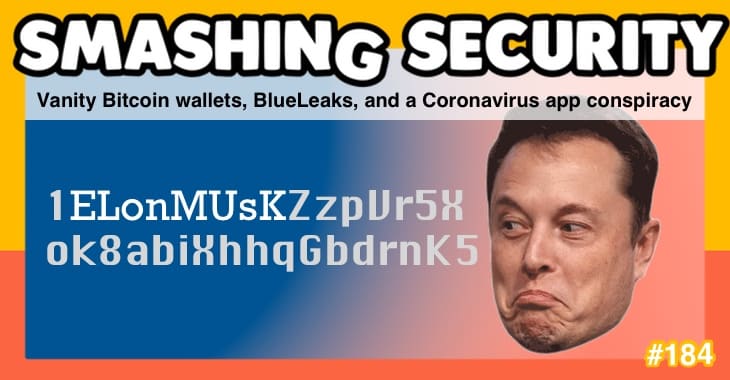
You know, it's just all— but in this particular case, these are what appear to be vanity Bitcoin addresses.
So you will have a Bitcoin address which is mostly all jumbled up, but at the beginning, you might have 1 and then Musk, or 1 Elon Musk, maybe with a couple of characters small.
So it looks like these are special vanity bitcoin addresses, which only a crazy tech billionaire would be mad enough to pay the fortune.
So—
And then therefore I own that fucking statement. That's how it works.
YouTube accounts which aren't properly protected or maybe are reusing passwords, don't have multifactor authentication. They are changing the names of those YouTube accounts.
Is that easy to do? Yes, it's an absolute doddle.
And they've already got hundreds of thousands of followers. And YouTube then begins to point people to these videos.
And basically they're helping form the whole world that we live in.
They were sort of saying, you know, this is going to be our currency, you will be able to live here just on bitcoin. So I went along with my producer, a good friend of mine, Sarah.
We went for the weekend and the thing we were trying to do for the radio, we were trying to survive for a weekend on bitcoin on the Isle of Man.
So I discovered that it's quite hard to do that. We managed to get a taxi and pay in bitcoin for the taxi, which was cool.
And we managed to get a pint of beer in a pub and pay for it with bitcoin. But that was kind of it. So we were pretty hungry and pretty drunk most of the weekend.
It had a lot of the kind of tech heads rolling their eyes and a lot of normal people getting very freaked out. It's one of those sorts of stories.
So the story is about COVID-19, as all stories are at the moment.
But specifically, you know, there's been this saga, hasn't there, of the track and trace app that was going to happen, wasn't going to happen, was trialled on the Isle of Wight, didn't work.
Apple and Google said, look, we've come up with a tool that could help. And the UK said, no, no, we don't want your tool. We want to do our own thing.
And now they've sort of said, actually, can we use that tool as well, please? And, you know, negotiations are ongoing.
Anyway, as part of the fairly recent updates to both the iPhone and Android phone operating systems, this little widget appeared which says COVID-19 tracing tool.
And probably it's been on people's phones for several weeks in some cases, and nobody's noticed it because it's kind of hidden away, I think, in Apple's iPhone, it's sort of hidden in the privacy settings.
What this is, is the API that Google and Apple have built together, which would enable any future tracing app, bear in mind there isn't one, to work.
So, if we were to get an app, and you were to download it and use it, and you were to activate that thing, you would be tracked and traced via the app that we don't have, right?
And the conspiracy theories have gone nuts. People are furious, whether it's the government or Google and Apple, the tech giants, doesn't seem to make any difference.
They're still furious that this has sneaked on.
Would this crazy conspiracy theory that they'd secretly installed a tracing app onto our phones, would that perhaps have been spread on a site like Facebook, maybe?
And I was in the position where I was working on Saturday, right, which is, you know, never a good spot to find oneself in, but there I am working on Saturday and I'm seeing this going nuts.
I'm like, I wouldn't normally write a story about an operating system update, you know, unless it was spectacular.
And this is not in itself spectacular, it's just, it's pretty obvious what it is, but the chat and the fear around it is so great that I feel like we need to spell it out.
So I wrote this little story about it, just basically saying what I've said to you, you know, and I put in the headline, the headline of this story was, 'New COVID-19 tracing tool is not an app,' right?
And then hundreds of people got in touch going, 'Oh my God, what is this app?' And I'm like, 'Oh my word, have you actually even read the headline?
You know, it is not an app.' And one person I had a back and forth with on Twitter, because I don't believe that you should be smug about these things, just because you know something doesn't necessarily mean that someone else does.
I'm trying to be calm and reasoned. And in the end, I'm like, I really can't say this in any other phrase, you know, I don't know how else to put this to you. It is not an app.
So Google and Apple work together to build some kind of system that would allow tracing apps to work better with Bluetooth connectivity and phone distance and all that.
So this stuff is just there as laying the groundwork on our phones or devices for a subsequent app that the government might put out.
You know, you have Apple or Google Pay, you might not want to use it, but your phone is set up so that you can use Apple, Google Pay if you want to.
And this is really an extension of that. But I think there's so much anxiety and fear around it.
And, you know, some of the sort of tech bros were like, well, didn't they read the update to terms and conditions?
And obviously that's when that update might have happened, and I didn't read it.
Normally I'm a bit of a stickler for that, but because I guess I trust Apple and its updates and I can't, you know, I'm not going to leave it unprotected anyway, I just sometimes do it blindly.
Yeah, that means that I can understand why people might have gotten freaked out by seeing this. So good that you wrote the story to tell people.
And I was like, you know what, in terms of my life's priorities, you know, I'm a mother, I'm a journalist, I'm working, I've got family.
Existing to downplay operating system updates is pretty low down in terms of my techniques.
But, you know, a lot of people did say thank you very much because they were frightened by it.
And I think the more people were, you know, like you just did, Carole, like, what's this?
And then you sort of go through the menu because somebody tells you about it, you're like, whoa, I've got it as well! When did I get it?
And that, you know, it all kind of became a big fear thing, right?
Immediately you think, oh, hang on, some— you know, even though you know that those devices are harvesting data left, right, and center. That's what they do.
But still, seeing it written down like that is potentially alarming, isn't it?
So there's read more, read more, and I can't say that it's done in a very friendly manner, accessible to all. You know, people that are 13 have iPhones, right?
People that are 90 have iPhones.
They've secretly installed an app onto our phones.' And I said, 'No, no, no, they haven't. This is just your regular iOS or Android.' Did you use your Jesus voice?
'No, no, children, calm down.' I don't know if they had that.
'Let me advise you.' I don't know if they had such a classy English accent as that, but— Carole, what have you got for us this week?
So this is all according to investigative security blogger Brian Krebs, that hundreds of thousands of potentially sensitive files from police departments across the US were leaked online last week.
And the whole thing has been named the BlueGeek Archives. So this is not a tiny, tiny little dump. This is a huge treasure trove, 270 gigs strong.
I don't know, I was trying to work out how many pieces, if you're printing that off, how many files that would be. It's a lot, a lot, a lot.
Apparently it's the size of the typical computer back in 2009. So if your entire computer was just this, that's what it would be.
So a group called Distributed Denial of Secrets, or DDoSecrets, I guess that's the way I could do it. So they're dubbed as alternative to WikiLeaks.
And on Twitter, they have this Latin strapline, I guess, that loosely translates to something like, "To know the truth, let justice be done." All right.
You know, or expose the truth, let justice be done, something like that. My Latin's pretty rusty.
And I sort of think, thank goodness, because if somebody presented me with, what did you say, a load of files that would fit on a 2009 computer, pages and pages, I just think I can't be bothered.
I might read first 3 lines, go and have a cup of tea.
So they said, so this DDoSecrets group on Twitter said that the BlueLeaks archive indexed 10 years of data from over 200 police departments and centralized interjurisdictional centers and law enforcement training and support resources.
Basically all the kind of systems that the authorities use across America.
And the perps behind this said that among the hundreds of thousands of documents were police and FBI reports, bulletins, guides, and more. So they reported this on Twitter.
So you had things like Austin Regional Intelligence Center, Boston Regional Intelligence Center, California Narcotic Officers Association, Delaware.
So you can say I'm going alphabetically. So it went on and on and on.
An official confirmed the leak to Brian Krebs from the authority side, saying that the data in the leak actually didn't span 10 years, but probably 24 years.
From August '96 through to June 19th, 2020.
And he says the documents included names, email addresses, phone numbers, PDF docs galore, images, large numbers of text, video, CSV, zip files. So a huge gamut of information.
These guys are in Houston, Texas, and they are a web development firm that basically provide web managed services to loads of law enforcement agencies across the state.
And I wanted to ask you, can you harden a website against that?
They're just saying they got through this way. Now, also, BlueLeaks Archive released on June 19th, which was known as Juneteenth.
This is the oldest nationally celebrated commemoration for the end of slavery in the US. So, all those are important facts for my— we're now going into the weeds, Zoe and Graham.
You cops don't play fair in your communities and across the state, so we're fighting back by putting all this information online. But there are a number of concerns online.
So Reddit has a number of posts on this with thousands and thousands of comments.
And it appears that when the documents were initially published, both victims of crimes and suspects of crimes were initially searchable in the database that they published.
One Redditor said that the BlueLeaks archive was searchable by reason for investigation, suspect's name, suspect address, suspect's birth date, known associates, bank account numbers, bank account routing, etc., etc., etc.
And that's echoed by someone else, a lawyer that was representing one of the officials on this, because most of the information comes from these Interjurisdictional Investigation Coordinating Service.
So basically, if you were in Texas and you need to work with cops in Delaware, you would use these services to share information.
And you tend to use that in an investigative sense, not to put in reports of misconduct, because misconduct doesn't necessarily happen across jurisdictional borders.
So it's kind of frightening for people that, you know, if you think of abusers and criminals being able to find victims that have not been protected.
So it's yeshi, yeshi, yeshi, yeshi.
But if it's going back that length of time, then people will have moved house or their phone numbers will change.
And the DDoS Secrets team started redacting victims' names. But as I said, it's a humongous dataset, right? So people are saying they've definitely missed some.
You know, people are now online going, I've seen one here and I've seen one there. So in a way, they're kind of helping the been rejected, but how many times has it been downloaded?
And it's because they wanted to hit that date. It's a very important date, not only this year, but in the States every year. So I can understand that.
But at the same time, you know, when you are going to out some wrong, you need to protect the innocent. Otherwise, it turns you into a villain.
Time is for me, there was a real change in tech reporting at about the time of WikiLeaks.
Because up until then, the way in which a message was communicated was as interesting as the message itself.
You know, going back into the archives, we did stories that are, man orders pizza on internet, you know, because it was so amazing that he'd done it.
Now these days, that would not be the story. The story would be what was on the pizza, or what happened to the pizza, or did the man die, or you know what I mean.
And with WikiLeaks, it felt like a shift from, you know, this is not a tech story because this information was leaked via email.
And in the old days, that would be, "Oh, right, email, that's a tech story." But actually, the global politics of the content of those messages was much more important.
And so it became not a tech story, it became, you know, a global politics story. And I sort of feel I struggle still with that now.
I'm thinking about this BlueLeaks story of yours and thinking, is the story the leak itself, or is the story, as you said, the victims who are named within the leak?
Is it a data story, or is it a politics story? Where would you put it? It's interesting, isn't it?
But, you know, but as we learned with Julian Assange's Icarus moment, there's also— Responsibility is an important role to play.
You can't just put out information with people's names in it and expect everyone to go, "Oh, well done. Thanks so much for that," especially if there's victims through it.
So I think they got this huge treasure trove and they didn't read it. So the same as you were saying earlier, someone put that on my desk, would I go through it all?
I think they said exactly the same thing.
LastPass by LogMeIn is a password manager both for consumers and the enterprise.
In a company, you get extras like central admin oversight, controlled shared access, automated user management, and everything is protected with multifactor authentication.
Learn more at lastpass.com/smashing. Oh, and if you're a home user, LastPass is available for free, so check it out— lastpass.com/smashing.
In the guide, you will learn what cybersecurity awareness means for your organization, how to implement a cyber risk awareness campaign, the critical role of policies to establish safe baselines, how to maintain momentum and staff engagement, 10 cybersecurity awareness best practices, and oodles, oodles more.
Grab a free copy of the Cybersecurity Awareness for Dummies book from MetaCompliance now at smashingsecurity.com/cyberaware.
Could be a funny story, a book that they've read, a TV show, a movie, a record, a podcast, a website, or an app. Whatever they wish. Doesn't have to be security-related necessarily.
I have a website, and I like nothing more, if I have a spare moment, to tinker around with my website. And I think, oh—
I also had Google Analytics, which is free in quotes. I didn't really like that they were getting all that data and it felt uncomfortable.
And I want stats on my website because I have sponsors on my website and occasionally they say to me, do you get any visitors on your website, Graham?
And so it'd be nice to be able to say to them, yes, I do. I do, but I don't want to use Google Analytics anymore, right? And I don't want to use WordPress's Jetpack thing.
Koko with Ks. It is a free open-source WordPress plugin and it's marvelous. Marvelous.
That is one which you pay for, although there's also an open source version on GitHub as well.
When you see a series and they go, there's 5 series of this and each series has got 30 episodes, and everyone goes, yeah, brilliant.
And I think, oh no, that's half my life that I'm not going to get back.
I've sort of forgotten about Amazon Prime. There's so much video streaming out there now, isn't there? I'd forgotten all about it. But they've made this show called Upload.
And I watched it all in 3 days. They're only 25, 28 minutes or something, I think, each episode. So, it's doable and there's about 10 of them.
And what really freaked me out about it and gripped me was that it's set in the not-so-distant future, really.
So, basically, there's a guy is killed in a driverless car crash, right? The car drives into a parked vehicle and he dies.
And there is this company that's, I guess, kind of Google-esque in a way, that offers a digital afterlife.
They found out a way of uploading your brain at the point of death and then kind of recreating you within this virtual world as an avatar, and you just carry on.
And there's sort of scenes where he's staying in what looks like a big hotel by a lake, and when he goes to the fridge to get a drink, it's an in-app purchase, you know.
And his clothes, he has to sort of buy an in-app purchase. And I just loved — I mean, it's funny. It's had mixed reviews, but it's quite funny, isn't it?
So he's got this girlfriend who's still alive, who's very beautiful, but they don't really get on. They fancy each other, don't they?
So there's some really interesting scenes in which they're sort of using this.
And there's one bit where he decides he doesn't want to be sort of sponging off the heiress girlfriend anymore, and he wants to go alone, but he hasn't got any money.
And so he — the lowest tier that you can have is something that I think all phone users will recognise. You get a data limit, you have a data plan, right?
And once your data plan runs out, you're just kind of frozen until the next month rolls around.
Yeah, and it was just such a — and they're like, you know, everything uses data, so you can't think too much because that uses data, and you've got to try and kind of slow your life right down so that you eke out enough data to kind of exist, you know, because you can't carry anything.
It was just a really interesting idea.
She's a business journalist and I'm a tech journalist, and we just sort of started doing this thing where we thought, you know, we just want to chat about some of the week's news.
And because we come at it from very different perspectives— she knows all about the investment and the money, and I sort of know more about the tech and the gadgets, I guess— it's just kind of become something that's worked really well.
We started doing it thinking nobody's going to listen to it, and then about a month ago we got a call from Radio 2 because Steve Wright, of all people, had found it and liked it.
I know, and I know it's a— I know you're going 'Yeah, well, you work at the BBC, you guys know each other.' No, no, but we really don't.
We really don't, I was amazed that he'd sort of found it. So, it's just a little kind of project that's become a really fun thing to do.
And then lockdown happened and we were like, 'Well, what on earth are we going to talk about? You know, we haven't got any content anymore. We can't see each other.
This is going to be really hard.' But actually, it's not that bad, is it?
Like, we're doing it now, you know, you sort of get used to talking remotely and I guess sort of broadcasting remotely and it's not been as difficult as we thought to keep it going.
So yeah, we're quite proud of it.
So this is by no means a new podcast, it's been around for years, but I hadn't gotten around to listen to it until the Rona hit.
So, this podcast has won many awards, strong, strong Patreon backing, consistently puts out high-quality shows.
I've listened to over 100 of them, but they're nothing like us, they're nothing like Smashing Security. They're really good, Graham.
So, okay, it's a weekly horror fiction anthology podcast. Okay, so I know right now it's not for either of you two.
Zoe, you've made it clear that it's like hearing that there's more than 100 shows, you're probably just—
So you've got stories are written and really written really well and narrated super well by Jonathan Sims. And they're directed by Alexander Newell. They're a great little team.
There was one, for example, where the person kills a spider, right? Spider, they move into a flat, they see a spider, they kill the spider.
The next day, spider's in the same spot looking at them directly with their little 8 eyes.
She kills again, shows up closer, and ends up being in her face when she wakes up in the morning.
Oh my God, this thing is called something like the spider viper, right? It's a massive snake, enormous, scary snake, poisonous snake.
And it hides in spiders in the little crevices in the cliff tops. And on the end of its tail is this thing that looks like a big spider.
So it sticks its tail out the end, waves it about, so it looks like this big spider, right? And the birds fly and go, "Ooh, that looks like a spot of lunch.
I'll go and have that." Get close to the spider viper, at which point it flips around and goes, "Aha, you idiots!" What kind of evil thing is that?
Oh my word, I need to find out where these things are so I can permanently avoid them. I feel like, you know, oh, even talking about it is making me shiver.
So thank you so much, whoever recommended me. I can't remember who it was. It's great. Magnus Archives, a great horror podcast with excellent pace, writing, and delivery.
Check it out wherever you get your podcasts from, and I'll put some links on our Smashing Security page.
What is the best way for folks to do that?
His or their Twitter handle is the capital ZSK, because I always know when he's in concert because suddenly all these amazing German rock fans start tweeting me about how brilliant I am in the stadium, and I'm like, yeah!
And you can also join us on Reddit in the Smashing Security subreddit.
And don't forget, if you want to be sure never to miss another episode, subscribe in your favorite podcast app, Apple Podcasts, Spotify, or Pocket Casts.
Also, thank you to this week's Smashing Security sponsors, MetaCompliance and LastPass. Their support helps us give you this show for free.
Check out smashingsecurity.com for past episodes, sponsorship details, and information on how to get in touch with us.
And the guy who ran the exchange, who I'd also interviewed for this piece, he said, oh, look, I'll just stick a little bit in there for you just so that you can — I think it was, I think it was when we were buying the pints.
For some reason it wasn't working. And he put whatever it would be, £4 or £5 worth of bitcoin in this account, right, so that I could buy these drinks for the thing.
And afterwards came back, did the piece, whatever, forgot all about it. And then suddenly there was that thing, wasn't there?
It's Christmas one year when suddenly bitcoin was worth 20 grand.
Because I can't remember, I couldn't remember, but you know, he'd put in a little bit more money than the drinks actually cost.
There was a little bit of bitcoin sitting in this long-forgotten wallet of mine. So I was right, I gotta dig this out. So I dug it out, found it.
It was quite hellish 'cause of course I couldn't remember what on earth I'd used to get into it, but I managed to get back in and it was worth about £200, right?
This little bit of bitcoin. I thought, well, you know, this is an interesting scenario. I don't know what I'm gonna have to do with this.
I'm gonna have to give it to charity or something. I can't keep it, but you know, I'd to sort of access it.
So I went all the way through this, I want to withdraw my bitcoin, yes, I want to do it in British pounds, yes, blah, blah, blah, through we go.
And then I hit this wall where it goes, currently you can't withdraw your bitcoin in pounds, but try later. So I'm oh, okay.
So I, you know, do that thing where you refresh, refresh, refresh, it's not happening. Oh God, I'm going to have to wait till tomorrow. So I wait till the next day, still nothing.
I wait a month, still nothing. I wait 6 months. And actually, I think I last tried it about a fortnight ago and I still can't get it.
And now I don't know 'cause bitcoin has massively slumped back down again.
I don't know whether — because I hit exchange it to pounds at that moment — I don't know whether it's still worth £200 or whether it's now 54p or something.
I feel completely in limbo here.
Hosts:
Graham Cluley:
 @grahamcluley.com
 @
@
 / grahamcluley
Carole Theriault:

Guest:
Zoe Kleinman – @zsk
Show notes:
- How photographs are airbrushed — A 2010 BBC News article, starring Zoe Kleinman.
- Elon Musk Bitcoin vanity addresses used to scam users out of $2 million — ZDNet.
- Kate Winslet responds to Bitcoin scam faking her endorsement — Decrypt.
- Bitcoin scam uses Prince Harry, Meghan Markle to dupe would-be investors — Decrypt.
- Covid-19 tracing tool on smartphones is 'not app' — BBC News.
- ‘BlueLeaks’ Exposes Files from Hundreds of Police Departments — Krebs on Security.
- Koko Analytics — A privacy-friendly analytics plugin for WordPress.
- Fathom — Fast, simple and privacy-focused website analytics.
- Upload trailer — YouTube.
- Backspace and beyond — Audioboom.
- The Magnus Archives — Horror podcast.
- Smashing Security merchandise (t-shirts, mugs, stickers and stuff)
- Support us on Patreon!
LastPass Enterprise makes password security effortless for your organization.
LastPass Enterprise simplifies password management for companies of every size, with the right tools to secure your business with centralized control of employee passwords and apps.
But, LastPass isn’t just for enterprises, it’s an equally great solution for business teams, families and single users.
Go to lastpass.com/smashing to see why LastPass is the trusted enterprise password manager of over 33 thousand businesses.
People are the key to minimizing your Cyber Security risk posture. Create a more security-conscious workforce with MetaCompliance’s Cyber Security Awareness for Dummies book. Download it for free at smashingsecurity.com/cyberaware now.
Follow the show:
Follow the show on Bluesky at @smashingsecurity.com, on the Smashing Security subreddit, or visit our website for more episodes.
Remember: Subscribe on Apple Podcasts, Spotify, or your favourite podcast app, to catch all of the episodes as they go live. Thanks for listening!
Warning: This podcast may contain nuts, adult themes, and rude language.