


Earlier this month, at the Black Hat security conference in Las Vegas, a company called Crown Sterling gave a talk entitled “The 2019 Discovery of Quasi-Prime Numbers: What Does This Mean For Encryption?”
Crown Sterling got to speak at Black Hat because it had purchased a “gold” sponsorship package – meaning its talk had not been peer-reviewed or vetted for quality.
And clearly, as the company’s presenter regaled the audience with talk of “infinite wave conjugations” and “quasi prime numbers”, not everyone was impressed.
Amid heckles and boos directed at Crown Sterling’s spokesperson Robert E. Grant, conference staff ejected some members of the audience from the room.
???????? @dguido pic.twitter.com/vOkrthMQck
— JP Aumasson (@veorq) August 8, 2019
Having paid $115,000 for its gold sponsorship, one imagines that this isn’t the kind of reaction Crown Sterling was hoping to receive.
Instead, it was an ignominious day for Crown Sterling, as it attempted to launch its new “TIME AI” product which it claimed represented “a paradigm shift in data encryption.”
https://www.youtube.com/watch?v=yd_2HwAmge8
We discussed the controversial talk and – more specificially – the audience’s reaction in a recent episode of the “Smashing Security” podcast:

Show full transcript ▼
 This transcript was generated automatically, probably contains mistakes, and has not been manually verified.
My name is Graham Cluley.
One of my favorite things about listening to Smashing Security is that as the episode goes along, towards the beginning of the episode, you bleep out the curse words.
But then as you make your way through, it's like whoever's turn it was to do the edit that week, because it's "ah, screw it, just let them through."
Now on today's show, Graham talks about ransomware that holds your pics hostage. David pokes fun at a Black Hat sponsor who made some truly unbelievable claims.
And I'll be putting Dave and Graham into a wacky scenario. It should be fun to see how they're gonna get out of it.
All this and more coming up on this jam-packed episode of Smashing Security.
What if you had a way of making their candid pictures of you with coleslaw down the front of your shirt worth peanuts so they weren't able to sell them to the rags?
They found a way to exploit vulnerabilities on DSLR cameras, specifically the Canon EOS 80D. Now, do either of you have a DSLR?
It's still, I think they're better than the typical smartphone photograph, but of course you've got to lug them around.
And Nikon and Canon are sort of the two big names, aren't they? And unlike cameras of old, modern DSLRs, they have a way of transmitting images to your computer.
You can either do it via USB or via Wi-Fi using a protocol called Picture Transfer Protocol, PTP, PTP they call it.
And researchers at Check Point discovered that just as cybercriminals can encrypt the sensitive data on your computer, they can also hold your pictures to ransom on your actual camera.
Yes!
If you are at, for instance, a wedding or on holiday or something like that, the sort of thing where you might actually take your DSLR camera because you care about it, you think, "I don't want my smartphone camera." I want a proper camera to take really good photographs.
They're going to be the most precious ones. They're going to be the ones for the big family occasions, the baptisms, the— I was going to say burials.
I was going to say, well, maybe not.
And so the folks who are using these for, I mean, imagine that you're a wedding photographer and you've been paid a good amount of money to photograph someone's wedding.
And that's a once in a lifetime event.
No one knows the wrath of a bride and the mother of the bride.
To show up and be told where to stand?
Dave, have you got an Instagram account?
So updating the firmware with something malicious, which would encrypt the pictures which were currently being held. On the camera before they were transferred to the computer.
And they even added a picture, which was a lovely little, very attractive little screen that they've put there.
And we'll put a link to it in the show notes so you can check it out as well, which says, "Your pictures have been encrypted. We're white hat hackers. Don't worry, smiley emoji.
A malicious actor—" I hate, by the way, they call them actors. I find that very confusing when hackers are called actors all the time.
Anyway, "A malicious actor would have taken your camera, encrypted all your images for ransom.
To stay protected, update the firmware." So this isn't something which, as far as we know, has been done by bad guys out there, but has been done by researchers.
Well, what's the point of the smiley face then if they know, like, you know? A good point, actually. Yeah. Why have they done it?
Is it because they were worried that there could be someone in the vicinity who they accidentally, in fact, maybe they weren't doing it in a Faraday cage? I don't know.
Or is this just purely for the purposes of the press release? I don't know, but—
And the main thing you're worried about is, have I charged the battery? Is there enough room on the memory card?
You're not looking in the options to see, is there a firmware update or should I be downloading something to install on this thing?
So I suspect they are left for much, much longer than the typical laptop computer is. I don't know.
I think the researchers say that although they found these vulnerabilities in the PTP protocol implemented by Canon, that they're probably also present in other cameras as well.
So there may be other models which are affected and so probably other cameras which need to be updated.
But it feels to me like there's an awful lot of faffing about for the bad guy, you know, where they could just infect your laptop instead. With a malicious email attachment.
I mean, in the report they do give some scenarios, like for instance, they say, well, an attacker could set up an infected Wi-Fi access point at a tourist destination to pull off a camera ransomware attack.
Again, it feels like an awful lot of effort to go to when there's so much easy money to be made elsewhere.
But if you were celebrity Dave Bittner and you didn't want those sort of things—
If you could press a little button or something and initiate an attack. Maybe that's just the British pronunciation of my name.
Don't let your camera automatically join Wi-Fi networks. That's a bad idea.
In fact, you should probably turn off your connectivity functions in your camera when they're not being used.
It makes sense anyway, because Wi-Fi is going to be a real battery hog, and that's the last thing you want happening, isn't it, if you're taking some photographs of a family event.
And update and obviously install any software patches, security patches, firmware updates which come out for your camera, just like any other gadget.
So keep yourself protected that way.
This is some folks gave a presentation that was titled "The 2019 Discovery of Quasi-Prime Numbers: What Does This Mean for Encryption?" What a title, eh?
Just on that alone, you'd just be like, "What?" Yeah, so the presenter was a gentleman named Robert E.
Now I'm going to read part of the pitch here.
It goes a little bit like this: "A new understanding of how mathematical constants interact with primes and quasi-primes to propagate and mirror-reflect in infinite wave conjugations.
Academic researchers believe this discovery may be the key to unlocking a new unified physics cosmology, a theory of everything.
Time AI is an entirely new classification in data privacy called quantum encryption, an impenetrable system utilizing 5 dimensions of encryption technology."
So while this gentleman was giving this presentation, there were folks in the audience who understand high-level mathematics and encryption.
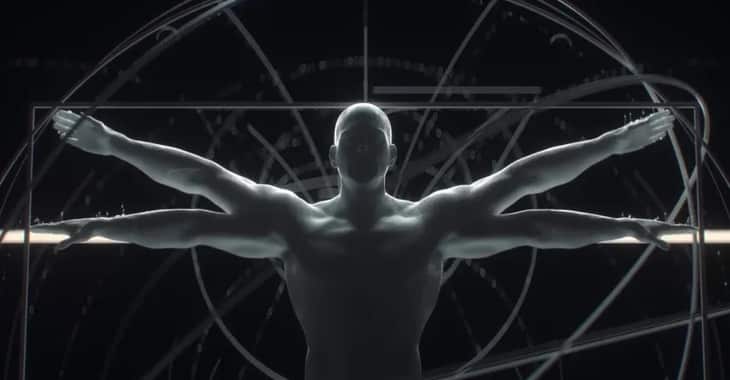
There is a YouTube video that this company Crown Sterling has put out promoting their discoveries, and it is a lot more of this sort of, dare I say, word salad.
"Infinite variations within music composed real-time by artificial intelligence."
These quantum keys change at the nanosecond scale of time, directed by state-of-the-art AI technology harnessing time's entanglement."
I didn't hear Doctor Who, so I'm not paying attention." Sorry, Carole, what were you saying?
So that gets to the next point, which is that this was a sponsored presentation.
And the way that many of these conferences work is that you can do a keynote if you pay to have the space. There's nothing wrong with this.
This is the way that many of these conferences pay the bills. These keynote presentations are not cheap. They can run in the six figures for the privilege of doing a presentation.
But as is sort of demonstrated here, the vetting of these presentations could be a little more lax than the folks who are just on the academic track because, well, money talks, right?
They've marked it as a sponsored keynote and everyone goes in knowing that they've paid to pitch.
And then a bunch of people, people that would never normally go and attend this stuff, probably read the intro, and it was probably written very similarly to the quote you read out, and they probably just thought, what, WTF, what is going on here?
So they paid to be able to say that. And maybe that's all they were after. That's money well spent as they're trying to go out and raise money for this endeavor.
You know, they don't always want to sponsor the lunch or they don't always want to sponsor the bags. They want to have an opportunity to speak to your audience, don't they?
And I think as long as it's clearly marked as a sponsored presentation, most people, if they see sponsor presentation, they're kind of going, oh, you know, do I really want to go to that?
We certainly vet our sponsors. We don't just allow anyone, right? So you kind of want people to kind of look into the message.
And I mean, even just reading what you wrote here, just the quote is ridiculous, and you just want more information.
It's not like most of these companies will have the presentation available. It's not like they're going to make changes if you request them.
They're going to say, "Well, this is what we want to talk about, what we think will be of interest to your delegates."
So it's kind of, if it's $100 grand, that's a big benefit to everybody else.
You have to be talking about some kind of technology or something like that, which they were doing here. It's just lots of people in the audience say they're selling snake oil.
I don't know.
And of course, I'm going to hand over now the editing of the rest of the podcast to you. So prepare yourself, everybody, for the swears. Strap it in.
Now I want you to imagine you're at a conference in your preferred field of interest and you're there because you are an authority on this topic.
And they have asked you specifically to present the keynote. Dave, you were at the musical theater shindig, and Graham, you're at a regional model village convention.
In other words, this is a big deal, guys. Yes.
Now, of course, you arrive on time, fully charged MacBook under arm, your presentation's all ready to go, all with the Comic Sans fonts and the multicolored text and the whiz-bangs and the annoying switching.
So you're scrambling through your bag, in your pockets, looking for the freaking Lightning cable. Maybe I'll beep that out. Maybe I won't.
So you can steal some of the MacBook juice, right? Okay, yes. But you can't find it anywhere. You stupidly forgot your Lightning cable at home. Imbecile.
Now sweat starts to pinprick at the back of your neck. You repeatedly mumble expletives like Graham, you'd be like, "crumbs, crumbs, crumbs," right?
It's always food related with you, isn't it? It's always food related. And Dave, you'd be swearing like a sexually frustrated pirate, I'm sure.
And she rummages in her fanny pack and offers you her very own Lightning cable. And you're so grateful, right? You actually kiss her on the top of the nose, right?
You grab the cable, plug your phone into your MacBook, and hoover up a sliver of power to get the phone call. And everything goes tickety-boo, right?
Your MacBook recognizes and detects your phone, asks whether you wanna trust this device, blah, blah, blah. And as a thank you for saving your proverbial bacon, what do you do?
A, do you offer an autograph and a podcast sticker as a special thank you?
I might borrow her smartphone and go to the podcast app and subscribe her to the show and say, "Oh, I'll give you a shout out next episode." Something like that.
You know, that's what I normally try. I'd normally try and steal someone's phone to subscribe them to the podcast.
Because you've kept your hands on that cable. And this Lightning cable, the one that Janine gave you, looks like every other Lightning cable you've ever used.
You know, pretentiously white. But actually, it's a powerful data-snarfling and snooping snake of a thing. So this is all according to an article in Vice penned by Joseph Cox. Yes.
So basically this dude who goes by the moniker MG physically upgraded real Lightning cables to basically allow an unauthorized third party to basically give them full control.
So he made these by hand, modifying them to include mini powerful implants that could action various things like payloads or scripts or commands.
And a hacker could even remotely kill the USB implant, hopefully hiding evidence of its existence or that it's even been used. Oh, I see.
It's not doing anything," but you throw it away. Yeah.
Oh my God. Yeah, see, really funny. See, Graham, that's the kind of caliber of joke I expect from you, okay? That's what I want more of in the show.
Now, Vice reports that MG said Apple cables are simply the most difficult to do this to. So if I successfully implant one of these, then I can do it to any other cable.
What a great thing to have in your repertoire is, see this Lightning cable, let me plug it into your laptop. Oh, I now own your laptop.
So it's kind of a cool party trick from that point of view. I think a lot of people just to have these things in their ownership.
So for those that don't know, red teaming refers to a kind of attack team in a cyber scenario, right? Red team tries to break into—
So we're so fun, we're so fun in our industry. But I can totally see an argument for someone a vengeful ex-partner, for example, a furious employee, for example.
One, you know, if you're saying this is for legit uses pen testing et al., wouldn't you just double check and control the orders and accept them only from proven white hats or consultancies or whatever?
What about someone who's fairly good at sleight of hand walks into an Apple Store with one of these all packaged up in the package that looks just like the Apple Store package, just puts it on the shelf without anyone noticing.
So some innocent person goes to the Apple Store, buys what they think is a proper cable from a trusted source.
The cable doesn't look any different from a real Apple cable because it started its life as a real Apple cable.
So buy some loudly patterned electrical tape. Wrap it tightly around your personal cables. And that way, well, no, but that way you always find your own earbuds.
Like, how gross is it when you grab someone else's earbuds and they're all waxy?
And then you tend to spot them more easily when you have the cable nest, which I have many of around my desk.
You know, the big boxes full of ginormous cables, you can kind of find the ones you need.
So, you know, I do the ones that I take out of the house to charge my phones and to listen to stuff or whatever.
Anyway, so top tip from yours truly, and just don't use my color, green and yellow stripes. So stay away from that.
But is it not the case that if it is a device you've previously attached, like your iPhone, your computer won't pop up and say that again?
And it could be something I don't want to plug into my— anyway.
So boy, they've been popular or they had a very, very short run. It will be interesting to see if they bring them back and see what people think.
On Reddit and different forums, people seemed really excited about the availability of these.
But again, for a variety of different reasons, some from very ethical to some maybe questionable.
It has come to my attention in the past week that on your side of the pond, the word fanny— oh my goodness, that even stops— has a different meaning than it does on our side of the pond.
Is this true?
And when it comes to cybersecurity, that is super important. So listeners, listen up.
If you do not have a password manager in your organization, please check out LastPass Enterprise.
They offer centralized admin oversight and control shared access, and automated user management. All this stuff makes your life easier.
Plus, you can even use LastPass's single sign-on to protect all your cloud apps and give seamless access to employees. Check it out at lastpass.com/smashing.
We also are sponsored by MetaCompliance. Now, MetaCompliance reduce cybersecurity risk by providing a platform for training.
It's animated e-learning, teaches you and your staff all about the risks of phishing and other threats which may impact them inside business.
And save yourself a ton of cash because you're a Smashing Security listener. Go to smashingsecurity.com/metacompliance.
Could be a funny story, a book that they've read, a TV show, a movie, a record, a podcast, a website, or an app. Whatever they wish. Doesn't have to be security-related necessarily.
Better not be. Well, my pick of the week this week is a YouTube documentary called Remain Seated Please: The Hoot and Chief Story. And it runs for about 30 minutes or so.
And I watched it a little while back and I really enjoyed it.
It is about a couple of young lads who really love going to Walt Disney World's Epcot Park, if you remember that, back in the '80s and the '90s. And they would make regular visits.
And the ride they loved more than any other was a ride called Horizons, which was an animatronic trip into the year 2086. I've been on it. Have you really? Yes, of course. Oh my God.
You've got to watch this documentary then. I have. Oh, you have?
And so a bit like Pirates of the Caribbean, but not as exciting, not as much drama or something like that. But, you know, you're seeing things.
And sadly, by the mid-'90s, Disney realized folks were more interested in exciting rides. And so they closed it down.
And these two kids who really enjoyed the ride were a bit disappointed because they had gone on it so many times and they used to hop off the ride and go behind the scenes and they'd become very comfortable.
They were hanging out there. They would eat dinner there, wash themselves in the waterfall.
They even invited their friends and they knew this ride inside out and always trying to avoid detection from the security team.
And that's a really important part of the story is that somewhere along the lines they either figured out or got the intel that Horizons was the only ride on Disney property that had no security cameras.
So they had to choose a particular carriage in order so that they wouldn't be spotted. Anyways, it's fascinating.
So the ride got closed down and then a couple of years later, it was briefly reopened for some reason or another. And these two kids were so excited.
It's like, oh, you know, it's come back. We need to document this. We need to go in and video what goes on in this place. And so that's what they did.
They went back to the ride, and while it was briefly reopened, they made the film. Oh, cool.
And they took photographs, and it's now this fabulous documentary about what they discovered there. And it is really quite touching.
And obviously, eventually it was time for their final ever ride because they knew the ride was going to be closed down. The staff had told them permanently.
And at the end of the documentary, I'm not going to ruin anything by spoiling it, but it is genuinely touching what happens at the end of the documentary. Did you cry?
Well, Carole, you know I'm quite an emotional type, so let's just leave it at that. But, you know, it's a touching movie and I would recommend it to everyone. Really good fun.
And I'll also link to some articles about it as well in the show notes so you can read some more.
Where characters, well, I have fallen asleep quite a lot in Doctor Who in the last year because it was quite dull.
But this documentary, Remain Seated Please: The Hoot and Chief Story, really recommend it. Cool. That is my pick of the week.
He was a writer on The David Letterman Show, and they did a regular bit on The Letterman Show that was called Dave's Record Collection.
And they would go find funny albums, funny albums with funny names and funny covers, and they'd write jokes about these funny records that were allegedly in Dave's collection.
You can go online and find videos of the old Letterman show with him doing Dave's record collection.
So Steve Young was the person who was tasked with going out to find these funny records. And so he would go to used record stores in New York City.
And he kept coming across these odd recordings from industrial musicals. So imagine it's the 1970s, the heady times of the 1970s. I'm there already.
There's a corporate sales meeting and business is going well and you want to really just razzle dazzle your sales team, get them pumped up and ready to go for the new 1976 model year.
Okay. Yeah. I'm with you.
And so what you would do back then, if you were a big corporation, is you would hire Broadway producers, Broadway writers, Broadway actors, Broadway choreographers.
Are you trying to make a work pitch here?
The Mighty O, which stood for Oldsmobile, not what you were thinking about, Carole. And my personal favorite, The Bathrooms Are Coming.
And the budgets for these shows were quite often bigger than actual Broadway shows. Budgets were in the millions. And there were some big names who performed.
When a typical Broadway show had a budget of around half a million dollars, these shows had budgets in the several millions of dollars.
And they talked to some of the big names who are in these shows. They talked to Chita Rivera, Martin Short, Florence Henderson, people who came up doing these shows.
And for working actors, this was a really good gig because they were union gigs, they were well paid. And so you could make a living doing these industrial musicals.
A pretty good living. It's a forgotten part of theater history and also that kind of Madison Avenue advertising era. So it's a charming documentary.
Steve Young, he goes and he himself becomes fascinated with this. So he goes and hunts down some of the composers and the performers. And it's a real charmer of a documentary.
So I highly recommend it. It's called Bathtubs Over Broadway. It's on Netflix. We have a link to the trailer for it as well. Just a real charmer. So do check it out.
One time it's the bathrooms are coming and then it could be the dishwashers are arriving or something like that.
From glorious Plymouth to Oxford, so I had to keep myself entertained, which I did with The Amelia Project. A fictional podcast by Pip Thorne and Brager Øystein.
And it seems to be a collaboration of a lot of artists across Europe.
So basically the show opens with this kind of answerphone message that says, "Congratulations, you've reached The Amelia Project."
You'll hear back from us within the hour. If you don't hear back, please consider the whole thing a hoax. Leave your message after the beep. Okay, quirky, quirky. Okay.
And the whole thing, the idea behind it is that the Amelia Project is a very special business or service. It fakes its clients' deaths.
And its eccentric clientele include cult leaders or scientists or politicians, all desperate to disappear and start over.
And so the podcast is basically an interviewer, and we eavesdrop on the first meeting between the interviewer whatever client. So each episode is named after a client.
And then they present this bizarre request to this interviewer representing the Amelia Group to help them disappear, or die, or whatever. It's very interesting.
And it's, you know, the one show I just listened to, the concept behind it was really complicated to pull off on radio.
And they did it without sounding contrived, or just trying too hard. And they did it beautifully. And it's a little bit hammy, but delightfully so.
So if you like The Bright Sessions, which I did, and I think it was my pick of the week at one point earlier, but I tried to look for it. I couldn't find the episode number.
So if someone knows off the top of their head, let me know. Check this out if you like The Bright Sessions. It's very original. It's fun. And it's basically an audio drama.
Is it a set number of episodes or is it a serial kind of thing where it's a series but each episode kind of has its own stand?
However, as we're all podcasts here, let me discuss one little dynamic that they have with the pod offering, right?
So the free pod, the ones I'm talking about, are these initial interviews.
But if you want to know what happens when the agreed plan is set in motion, you need to become a patron, right? So I don't know, clever or nasty? Clever, nasty?
Because it's not nasty.
As if we didn't—
Go to smashingsecurity.com/reddit and it'll take you straight to our subreddit.
Their support helps us give you this show for free, so be sure to check out their wonderful offers.
And today, a special shout out out this week to all those of you who have left us a lovely review telling us what you like and what you want more of. We need, need some good jokes.
I was hanging out with some kids and I don't know any jokes appropriate for an 8 to 12 year old. No surprise.
So why not use the review messaging place to send me your best appropriate joke?
Check us out on smashingsecurity.com for past episodes, sponsorship details, and info on how to get in touch with us. What? Okay, then.
A few, well yes, but especially those called Dave, because a few weeks ago we did complain that there weren't anyone who supported the show called Dave.
But now there's a huge number of people called Dave and variations who've come forward.
Perhaps even some people have changed their name — they may have changed their names just to cheer us up.
Black Hat responded to negative media reporting of the quality of the talk by removing details of it from its website.
Well, what happened in Vegas didn’t stay in Vegas, and now the organisers of the Black Hat conference are being sued by Crown Sterling.
As Ars Technica reports, a federal lawsuit alleges that Black Hat USA breached “its sponsorship agreement with Crown Sterling and the implied covenant of good faith and fair dealing arising therefrom.”
Crown Sterling goes on to accuse the conference organizers of “other wrongful conduct” connected to events surrounding the presentation of a paper by Crown Sterling CEO and founder Robert E. Grant. In addition to legally targeting the conference, Crown Sterling has also filed suit against 10 “Doe” defendants, who it claims orchestrated a disruption of the company’s sponsored talk at Black Hat.
One thing is for certain, this whole episode has generated more publicity for Crown Sterling and TIME AI than a regular sponsored talk at Black Hat would ever normally have received.
And now they’ve created an even bigger deal about it. Whether this is going to end up as a positive thing or not for Crown Sterling is an entirely different question – I wonder if they’ve ever heard of the Streisand effect?




I guess this boils down to a simple contention. Crown Sterling thought they'd bought a compliant audience, while Black Hat believes they simply sold a speaking slot (along with some other sponsorship perks).
I cannot see how Crown Sterling can with this (or even remain viable in the face of hacker ridicule).
Wow. Where to begin?
The video graphic is some of the best eye candy seen lately; absolutely beautiful and likely cost a lot of money. Too bad it is totally irrelevant, jammed with jargon and devoid of information. It reminds me so of the movie "Tron". Likely most of the black hat folks are technologically savvy and listened to the jargon and asked for real data. Likely also they got jargon and hype from marketing.
In this case the AI in Crown Sterling AI likely means Aggregated Ignorance which explains the outrage. Had they stayed to simplicity and said we figured out how to add a time factor to encryption (is it patented?) but "Quantum AI", really?
Candidly, it sounds similar to a pump-and-dump stock scam. Get lots of media attention, watch the price rise sell stock and then collapse.
Thanks Graham, I had heard about it but you brought it together in a quick blog. Yup the Streisand effect!
Yeah, the video gave us a few giggles when we recording the podcast. :)
Can you say Theranos? Snapping its fingers like Thanos. The judge will send their claims home in a Thermos.