13 years jail for spoofing scammer, a rogue IT security expert’s Bitcoin blackmail goes wrong, and Facebook’s eyewatering GDPR fine may be only the beginning of its problems.
All this and much much more is discussed in the latest edition of the “Smashing Security” podcast by cybersecurity veterans Graham Cluley and Carole Theriault, joined this week by the Imposter Syndrome Network podcast’s Zoë Rose.
Warning: This podcast may contain nuts, adult themes, and rude language.
Show full transcript ▼
 This transcript was generated automatically, probably contains mistakes, and has not been manually verified.
Yeah, hush, hush. Tell no one.
Hello, hello, and welcome to Smashing Security episode 323. My name's Graham Cluley.
So it's anybody from security to engineering to, I don't know, anything you really want to do. Developers as well.
And yeah, we're just talking about why the bloody hell they're there, what they're doing, and how they got there.
And it's been really interesting because some really good advice has been shared about how to overcome not just feeling like an imposter, but also overcoming mistakes.
Because that's probably been a huge part of my career, is I've made slight errors that have been massive.
But it's awesome because it's we'll interview somebody, and the entire time I've just sat there, "Bloody hell, you're so amazing." And then they're talking about all these simple things that they've done wrong, and I'm just, how is that possible?
You're just so perfect. It's just really cool.
Their support helps us give you this show for free. Now, coming up on today's show, Graham, what do you got?
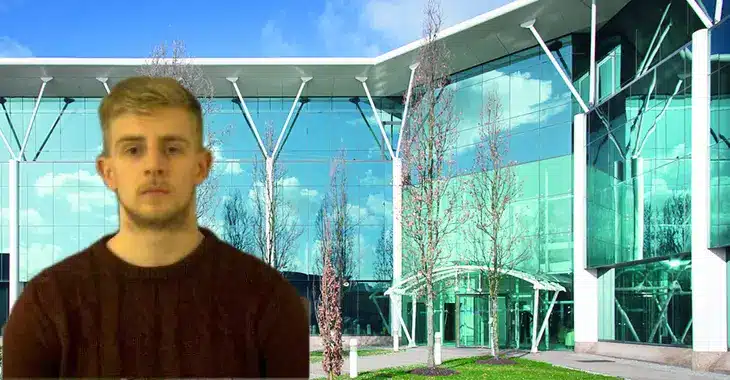
Oxford Biomedica, just down the road from you. Very swanky building, lots of glass. It's near your neck of the woods, Carole. If you know where Lidl is, near the big Tesco's.
They worked on Parkinson's disease, they partnered with Microsoft to use their AI and machine learning to work on treatments for a large number of sicknesses, and perhaps most famously, they manufactured a vaccine for COVID-19.
Oxford Biomedica.
What happened was a hacker accessed their systems and senior members of the company received a ransom demand from the attacker.
I did search, and it doesn't look like they ever actually admitted it. But anyway, it's now come out into the open because of the story I'm about to tell you.
So a hacker accessed their systems, senior members of the company received the ransom demand, and what do the bosses at the company do?
What do you do when you receive a ransom demand?
So they have people obviously inside their company, IT experts, and they said, look, we've received this email, slightly worrying. Have we been hacked? What should we do?
And so they brought in the geeks inside the company, which included a 23-year-old IT security analyst called Ashley Lyles.
Because obviously there was the threat that maybe a hacker had broken in, stolen sensitive information, maybe planning to leak it.
They were obviously demanding money as well from the company.
They've got the blackmail email, they've got the communications which are going on. They're trying to work out, have we been compromised? Has any data been taken?
They're working alongside the police. The thing is, Ashley's company, Oxford Biomedica, and his colleagues and the cops didn't know that Ashley had plans of his own.
No, no, no, he didn't. He was just a regular IT security guy at a company which happened to get hacked, which happened to receive a ransom demand.
And maybe you can understand why an IT guy inside your company would want to see that email, maybe want to access the member of staff's email account with their permission once or twice to see what the hacker had demanded, if there were any follow-up emails.
Et cetera, et cetera. That, I think, would be understandable. That'd be understandable. But what Ashley did was he accessed the board member's email account over 300 times.
He'd say something "Please, can we eat doughnuts again in the office?" Or, "Can the toilet paper be improved in the staff loos?" Or—
But no, he changed the bitcoin wallet address to which the ransom should be paid.
I'm just thinking, you know, it makes sense, right? They'll go away." "I don't wanna make it public." "Yeah, hush, hush.
And he began to email his employers at Oxford Biomedica, pressurizing them to pay the money.
It was just sort of applying the thumbscrews, going, "You know, your data's gonna get it." You know, that kind of thing.
So, police officers from Southeast Regional Organised Crime Unit, the cybercrime unit there, they identified that someone had been accessing the board member's email, traced the hack back to Lulz's home address, presumably his IP address.
Which makes me think he didn't cover his tracks properly. It's unclear whether he's using a VPN or not.
So I could understand he maybe didn't think of all of the solutions.
Now, apparently Ashley Lyles had realised the police investigation was heating up. So a few days before he was raided—
I know that's silly because, you know, obviously— He's 23.
He asked for £300,000 ransom. He was denying everything until this week at Reading Crown Court. He did finally plead guilty, and he is due to be sentenced. I think—
If you were popping down to Lidl or Kennington Flooring, you could just pop over the road. I would love that. Zoe, what are you going to talk about this week?
But Meta decided somewhere in their processes that if people signed standard contractual clauses— apparently is the term— but people signed it, the consumers of Facebook specifically— this fine is related to Facebook— then they can transfer the data from the EU to the US.
And it was since the 16th of July, 2020.
So at the time they had that whole agreement with transferring data between US and EU, but obviously that was recently decided that wasn't good enough.
But they were still sending massive amounts of data consistently from the EU to the US because people sign those clauses and they're, it's okay.
Well, no, that's not true. There are privacy people that do actually read these things. They are excellent people.
So basically you're saying inside the EULA or whatever privacy notice, they're saying, yeah, yeah, we transfer data to and back from the States, we've got an agreement, cool, cool.
And then when you sign it, you've effectively agreed to it. And that's what they're using as their argument, essentially.
So in organizations protections, you know, you send data to wherever you store your data and you process it or whatever, and it makes sense.
The problem is they did the EU data in America, which you're not allowed to do without having appropriate protections.
And I think the reason it was that the American agreement or whatever was declined essentially is because they didn't have appropriate protections protecting European data from, what was the term they used, the spy agencies or something?
But the thing is, because they did this on a consistent process and it's essentially all the data, like it's a massive amount of data, they are being issued with, or they've been issued with, the largest GDPR fine ever.
How much is it? €1.2 billion.
We should stop the podcast right now just because the thought of Facebook possibly having to pay over $1 billion is rather wonderful, isn't it?
Privacy Affairs has tracked the fines. And all 1,701 of them for a grand total of over $4 billion American. Meta accounts for 50% of all GDPR fines. Wow, 50%.
Yeah, they are keeping EU running.
And I feel like this probably has something to do with the fact that they've been fined multiple times.
So I think they've just been like, bloody hell, like, I'm done, I'm done, just bloody pay us, because we're, you know. But here's the other part that I found really interesting.
It wasn't just that they have to pay a fine. It's also that they have to become compliant.
So it says, so actually, if you follow Privacy Matters on Twitter, he's a lovely man, and he clarifies a lot of privacy issues and concerns and news. I found him so interesting.
But so he's highlighted on his Twitter the three demands, essentially.
The require Meta Ireland to suspend any future transfers of personal data to the US within a period of 5 months. That might sound long, that is not long.
I remember when we had a year to prepare for GDPR and there were people, there were organizations that were like, within this year we won't even know if we're able to be compliant.
But they've got to do this in 5 months and then they've got that €1.2 billion fine, which is quite exceptional.
And then also they have to bring its processing operations into compliance with Chapter 5 of the GDPR by ceasing any unlawful processing, including storage in the US, personal data of EU/EEA users within 6 months.
So in the next 5 to 6 months, they have to have a massive digital transformation. They also have to pay an exceptional fee.
This is why when they changed their name to Meta, I thought it was absolutely hilarious because when I think of Meta, I think of metadata, which is like, hey, we've got all your data.
I think they claimed it was beyond, beyond social data. But I was like, no, no, no, it's the data, but whatever.
But I think the other interesting thing is, not only is this a scary big thing that's going to happen for them, but also, is this setting a precedent?
Are other organizations going to be less likely to want to transfer— do you want to deal with EU data, or are they going to be more cautious?
Hopefully, because the risk of misalignment is quite an exceptional fine.
And maybe we're going to begin to see more silos of people dotted around different parts of the world rather than just in one single place.
So the data doesn't have to be moved to that part of the world in order to do some work.
Do we have them, you know, not just do we have them in different locations for resilience, but also so do we have EU-specific, you know, when we go to get contracts with third parties, do they keep their data in the EU?
This is not new.
It's almost like a, well, is it really financially worth it to care?
You know, you have to dupe staff members into giving you credentials, and all the time you can't tell anybody. You got to stay on the down low.
You never reveal, haha, I'm the one who did this. And it's got to be difficult.
I mean, Graham, I bet even if you empty the dishwasher, I'm sure if someone's around you'd be, I just want you to know I emptied the dishwasher, because you would want to get the points.
You wouldn't want, you know, them to think someone else had emptied the dishwasher.
They have to stay schtum because if the information gets into the wrong hands, they gotta say sayonara to their big fat bank accounts, their big houses, their yachts, golden slippers.
So if anonymity is key, you might be tempted by a service that claims to guarantee that for you, ensuring that if the authorities got wind of a cyber heist, they would have no idea who was behind the crime.
Now we spoke about iSpoof.cc in our 300th episode, but I wanted to revisit the story because there's been some very interesting news that broke only this week.
So to recap, this is an underground website created in 2020 that sold spoofing services to ne'er-do-wells, people that want to pretend they're someone else.
And the business model was very simple.
For a handsome fee, iSpoof would allow its users to display a false caller ID, one that matched the services they are pretending to be, which were normally banks.
So were you to get one of these calls, they say they were from your bank saying that maybe there was suspicious activity on your account, and you wisely would look at the caller ID number and say, oh my God, that is correct, that is my bank.
You'd be inclined to think the call is legitimate and provide any information they requested, right?
You'll go, "What up, asshole?" Well, yeah, well, that's how I would tell it was you rather than someone pretending to be you.
If you spoof someone's phone number, then it's a large part of the social engineering you've already got.
I was going to say something witty, but I couldn't.
At its peak, it had almost 60,000 users who paid up to 5 grand a month in bitcoin to access software.
And at one point they say as many as 20 people every minute were being targeted by callers using technology bought from iSpoof website. So big deal, right?
And they say that the iSpoof services is said to have helped fraudsters nab around $100 million from victims all around the world.
Now, in 2021 and 2022, it was part of an investigation by numerous law enforcement agencies. We talked about this bit in episode 300, so you can go listen to that.
It was shut down in November 2022 as a result of Operation Elaborate. That was the name. And this was a multi-agency investigation.
So you had the Met, the Netherlands police, Europol, and Eurojust. But what happened to iSpoof.cc ringleader TJ Fletcher, right? Because he got arrested as part of this.
Interesting.
'Cause I'm thinking if they have that many customers with that many accounts and that much money sloshing around, they must have been accessing European— And it's global. Exactly.
I'm thinking, let's stop imprisoning people for the scams. Let's just get them for GDPR. It's the old Al Capone thing, isn't it? Where they got him for tax evasion. Love it.
There's all kinds of ways of presenting it.
It's not this poor TJ Fletcher guy who was just too busy running his site and didn't realize what the bloody marketing people had written on some of the web pages.
I should have been on his defense team. Oh really? I could have got him off this.
But with the skill set that I have to develop in my career, funnily run into situations where people are like, I don't trust you because you're a hacker.
And I'm like, no, not really. And they're like, no, no, you're gonna hack me. And I was like, why would I hack you? You know, such a weird thing. But also, but that's a valid point.
I mean, if I create a solution that's very privacy-focused, does that mean I'm enabling hackers?
Bitwarden's password manager securely stores credentials spanning across personal and business worlds.
And every Bitwarden account begins with the creation of a personal vault, which allows you to store all your personal credentials.
These are unique and secure passwords for every single account you access. And it's easy to set up. It's easy to use. I honestly love Bitwarden.
I use it at home, use it at work, use it on the go.
Get started with a free trial of a Teams or Enterprise plan at bitwarden.com/smashing, or you can even try it for free across devices as an individual user.
Check it out at bitwarden.com/smashing, and thanks to Bitwarden for sponsoring the show.
Well, if a device isn't compliant, the user can't log into your cloud apps until they fixed the problem. It's that simple.
Kolide patches one of the major holes in zero-trust architecture, which is device compliance.
Without Kolide, IT struggles to solve basic problems like keeping everyone's OS and browser up to date.
Unsecured devices are logging into your company's apps because there's nothing there to stop them.
Kolide is the only device trust solution that enforces compliance as part of authentication. And it's built to work seamlessly with Okta.
The moment Kolide's agent detects a problem, it alerts the user and gives them instructions on how to fix it. If they don't fix the problem within a set time, they are blocked.
Kolide means fewer support tickets, less frustration, and most importantly, 100% fleet compliance. Visit kolide.com/smashing to learn more or to book a demo.
That's k-o-l-i-d-e.com/smashing.
The company operationalizes the world's largest collection of threat intelligence in real time to protect your company from every cyber threat.
Now available as a cloud-based deployment, Centripetal's Clean Internet service is a revolutionary approach to defending your assets from cyber threats by leveraging dynamic threat intelligence on a mass scale.
The addition of AWS Clean Internet Cloud protects your enterprise, whether on-premise, remote, or in the cloud, removing the need for a more costly cybersecurity infrastructure.
Learn more about Centripetal's intelligence-powered cybersecurity solutions at smashingsecurity.com/centripetal. That's C-E-N-T-R-I-P-E-T-A-L.
And thanks to Centripetal for sponsoring the show.
Could be a funny story, a book that they've read, a TV show, a movie, a record, a podcast, a website, or an app. Whatever they wish.
It doesn't have to be security related necessarily. Better not be. Well, my pick of the week this week is not security related. I love a documentary. I love a good documentary.
I'm not really interested in that drama nonsense so much. But give me a documentary, and I'll be very happily eating my popcorn. And I have been watching a documentary this week.
Not for very long, because it's only 16 minutes long. It's 16 minutes long.
The documentary is called John Was Trying to Contact Aliens.
And he spent 30 years of his life all on his own, not really making any friends, poor chap, trying to find extraterrestrial life from his cottage in rural Michigan.
And unlike the rest of us who, I don't know, may have filled up a balloon with helium and thought maybe it will get through the atmosphere, or how about I write a really large word in the crop circle, he actually built transmitters, enormous amounts of electronic wizardry, which began to dominate his grandparents' sitting room.
In the documentary, you begin to see pictures of the grandparents sort of sat in front of the TV, you know, on a typical evening, and they're just surrounded by all this electronics and this bearded guy.
And he's playing jazz, he's playing world music into space. I think I'd like him. Incredible array of electronics.
And then he gets really serious and thinks, I have to take this up a notch because just going a bit past the moon with my transmissions isn't going to be powerful enough.
I need to send them further. Now, this documentary isn't really about aliens. It's actually about love.
And I'm not going to give away everything which happens in the documentary, because it is only 16 minutes long.
And so I wanted to share it with you two and all of our gorgeous listeners today. And it is my pick of the week.
I had really severe insomnia for many, many years, exceptionally bad, where I would only sleep for two hours at a time.
And then now I'm a mum and sleeping is vital but also not very readily available. So I figured, here's some ideas that I've had that have worked for me in the past.
Mind you, if it is really severe, I would still recommend seeing a doctor, going to your GP. But yeah, so one of the ones that I— the most important thing for me was eye covers.
And I know that sounds really silly, but—
And then I was feeling, I don't know, silly, I guess, and ended up spending probably more than I expected I would spend on an eye mask.
Quite expensive, but I did add a link because I think that one wasn't quite that much. And I don't know if that's the exact model I have, but it's similar.
It looks similar to the one I have.
But I put the mask on and I didn't look at my phone because I have my mask on. And if I do that, I have to take it off. And, you know, I didn't look around the room.
It made me focus, forced me to focus. It's going into those— what is it called where you reduce the senses? What is it? An isolation tank?
And it was this routine that when I started to get a bit tired, I put it on and it required me not to do anything because I have a very short attention span and I'm not so good at that.
So it's had a huge impact in my sleeping quality, which has been great. But for people that do not stuff on their face, which I understand. I'm very picky about materials.
There's also the option of blackout curtains, and if you rent me, you don't want to install them, and you don't really usually have the money to buy really fancy curtains anyway.
And so what I found is suction cup based blackout blinds. So it's basically blackout material, but they suction cup to your window, and so you can remove them.
So they're good for travel, they're good for a variety of sizes of room because you can suction them, and then they also have Velcro to reduce the size if you need to.
They're not perfect, but it does make your room quite a bit darker because you put it on there and then you put your curtains that you do have over.
And one of their kids sleeps in that room and now the sun's out all the time, but getting a blind in that shape was super expensive.
So I was just suction cups and we looked it up and there they were. So yeah, really cool. Makes such a smart idea.
So last week I had a lot of mundane tasks to do, you know, signing stuff, putting things in bags, all kinds of— because I was doing this little art thing and I needed something that was good but not great, right?
So I'm not a reality TV, you know, I don't have much knowledge of this area, but, you know, occasionally I binge a bit, you know, Doritos, you know, sometimes you just need to have a few Cool Ranches.
So I was talking to my friend telling him about I needed something this, and he said, try this show. He said all his friends, all his Jewish friends love it, right?
So, you know, typical reality show, you have all these beautiful people who say they're looking for love or looking to start a family, and they hit up our Aleeza Shalom.
She's our very Jewish matchmaker queen to find them the perfect person.
And so a typical scene will be Aleeza's talking to her 30-year-old client Ori about the date she sent him on with a gorgeous, vivacious, intelligent, brown-eyed brunette Israeli Jewish actor who spoke Hebrew.
Okay. And how did it go? Meh, says Ori. She wasn't the gorgeous, vivacious, intelligent, it was a blue-eyed, blonde Israeli Jewish woman who spoke Hebrew that he requested, was she?
When I saw that you were going to recommend this, I've actually spent this afternoon watching a couple of episodes of this in readiness for the review.
I liked the very first woman on it because she was looking for a man with strong eyebrows.
What's the best way for folks to do that?
I probably won't see it, but you could try.
And make sure to never miss another episode, follow Smashing Security in your favorite podcast apps such as Apple Podcasts, Spotify, and Overcast.
It's thanks to them all that this show is free.
For episode show notes, sponsorship info, guest bios, and the entire back catalog of more than 322 episodes, check out smashingsecurity.com.
Hosts:
Graham Cluley:
 @grahamcluley.com
 @
@
 / grahamcluley
Carole Theriault:

Guest:
Zoë Rose – @RoseSecOps
Episode links:
- Man convicted of blackmail and other offences – SEROCU.
- EU hits Meta with record €1.2B privacy fine – Politico.
- Police text 70,000 victims in UK’s biggest anti-fraud operation – BBC News.
- iSpoof fraudster guilty of £100m scam sentenced to 13 years – BBC News.
- Fraudster pleads guilty to £100m iSpoof scam – BBC News.
- 300: Interplanetary file systems, iSpoof, and don’t delete Twitter – Smashing Security.
- “John Was Trying to Contact Aliens” – Netflix.
- Sleep mask – Amazon.
- Blackout blind with suction cups – Amazon.
- Jewish Matchmaking – Netflix.
- Smashing Security merchandise (t-shirts, mugs, stickers and stuff)
Sponsored by:
- Bitwarden – Password security you can trust. Bitwarden is an open source password manager trusted by millions of individuals, teams, and organizations worldwide for secure password storage and sharing.
- Kolide – Kolide ensures that if your device isn’t secure it can’t access your cloud apps. It’s Zero Trust for Okta. Watch a demo today!
- Centripetal – Centripetal’s CleanINTERNET defends your assets from cyber threats by leveraging dynamic threat intelligence on a mass scale.
Support the show:
You can help the podcast by telling your friends and colleagues about “Smashing Security”, and leaving us a review on Apple Podcasts or Podchaser.
Become a supporter via Patreon or Apple Podcasts for ad-free episodes and our early-release feed!
Follow us:
Follow the show on Bluesky at @smashingsecurity.com, or on Mastodon, on the Smashing Security subreddit, or visit our website for more episodes.
Thanks:
Theme tune: “Vinyl Memories” by Mikael Manvelyan.
Assorted sound effects: AudioBlocks.