Why are students faking their own kidnappings? What’s the story behind Garmin’s ransomware attack? And a genetic genealogy website suffers a hack or two.
All this and much more is discussed in the latest edition of the award-winning “Smashing Security” podcast by cybersecurity veterans Graham Cluley and Carole Theriault, joined this week by Ray [REDACTED]

Show full transcript ▼
 This transcript was generated automatically, probably contains mistakes, and has not been manually verified.
This week we give a shout out to Fantastic Wolf, Divorced Pop, Andrew Minko, 636B, Dave Barker, Susie V, Heisenberg, Eric Hoople, Robert Martin, Dave B, Habmala, Thom Courtney, Matt Weir, and Alex.
Thank you all. We couldn't do this without you. If you want to join our Patreon community, we would be thrilled to have you.
Check out more information at smashingsecurity.com/patreon. Now let's get this show on the road. RAY [REDACTED].
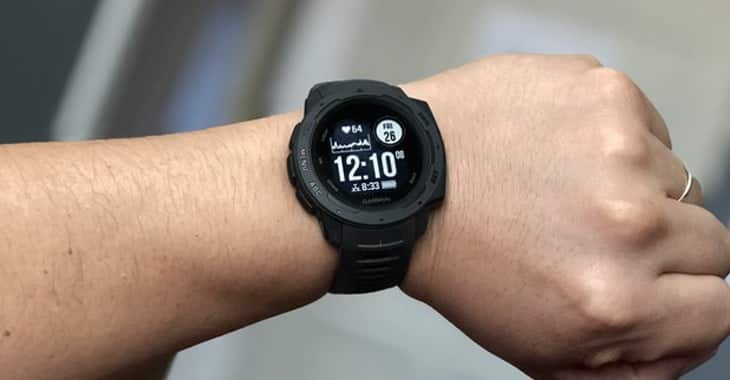
Last Thursday, millions of people noticed that their Garmin watches were no longer tracking that activity or any GPS data.
Smashing Security, Episode 189: DNA Cockup, Garmin Hack, and Virtual Kidnappings with Carole Theriault and Graham Cluley.
Hello, hello, and welcome to Smashing Security, Episode 189. My name is Graham Cluley.
Second of all, I was not born with that name. That was not the name that my parents gave me when I was born.
And third of all is I have a brand new podcast called Tribe of Hackers Podcast. That's tohpodcast.com that I've just launched during the pandemic.
Carey and Jennifer Jenn, including Security Leaders, including Red Team, and an upcoming Blue Team book.
And we basically just chit-chat and talk about current events and everything security-related.
We're not letting you use the hacker term as a negative connotation. No way.
Now, coming up on today's show, Graham delves into a DNA cock-up, Ray questions whether Garmin should pay the ransomware or not, and I'll be looking at an international phishing scam with pretty shitty stakes.
All this and much more coming up on this episode of Smashing Security.
And he is thought to have killed at least 13 people, been responsible for 50 rapes and over 100 burglaries. Not a terribly nice chap.
Yeah, they were interviewing suspects left, right, and center, and then they'd clear them.
They'd say, oh, well, your alibi turns out, yes, all right, you were with Granny that night, or the DNA doesn't match the evidence.
And the evidence wasn't pointing in any particular direction.
There was a good chance that they were never going to solve the crime and unmask the Golden State Killer, because, you know, coming on for almost 50 years. RAY [REDACTED].
Cold case getting really cold after 50 years.
He said, "Yep, it's me." He had a good reason to do that, which was he wanted to be spared the death sentence.
So he did a plea deal and he said, "Yep, I admit killing these 13 people, the kidnappings, numerous other crimes, the rapes, everything else." Wasn't he a former cop or something?
Yes, he was. RAY [REDACTED]. Yes!
So, interesting thing was, how after all of this time did the police manage to find him? And it's quite a fascinating story.
I knew nothing about this particular case until I began reading about this in the last day or so.
It turns out the vital clue was DNA, which was collected at the scene of a double murder in Ventura in 1980.
And what the cops managed to do was they used an online genetic genealogy database, and they built a complex family tree dating all the way back to the 1800s with a partial match on the DNA.
And they found someone who was DeAngelo's great-great-great-great-grandfather. RAY [REDACTED]. Oh, wow.
But that meant was they were able to go down the family tree and say, okay, well, who's descended from them? Who may be related to them?
And they came up with 1,000 people, a shortlist, as it were, of 1,000 people. And over a few months, the investigators eliminated them based upon their age or their sex.
So they tailed him, right? You know, you tail someone, Ray, right? You're American, yeah? RAY [REDACTED]. Sure.
Do you have a buddy?
Once you've given someone a doughnut, to then take it back and use it as criminal evidence, you might need a warrant for that, I don't know.
Anyway, they tailed him and they picked up some of his DNA. Now, you have to be careful picking up people's DNA to make sure that it's evidence you can actually enter.
In all the reports I've read, they've not gone into detail. Okay, well, there you go.
The challenge for the police officers is to maintain the chain of custody. We all learned this during the O.J. Simpson trial way back in the day, remember?
So when this really high-profile case was publicized and how the cops got them, GEDmatch did get it in the neck a bit from some of the users who said, hang on a minute, what do you do?
This isn't why I did this. What I want to do was increase my family tree, not to help law enforcement searches. So GEDmatch gave its million-plus users the choice to opt in.
Yeah, I was surprised too. Opt in if they wanted their data to be available for law enforcement.
So, you know, good that they did it the right way around. Everything was fine and dandy, and there ends the story. A success. Not so good.
Because what happened was everybody's profile, the settings had been updated so they were no longer hidden from the police.
They were all now configured to be available for the cops.
What happened was a hacker had come in and changed everyone's setting, which meant that profiles were updated so the police could use them for their own investigations.
Not very good at all.
That's actually called involuntary opt-in. And Facebook has kind of pioneered the involuntary opt-in when it comes to your privacy rights changing.
Another genealogy website, one based in Israel called MyHeritage, said that its users have been targeted by a phishing attack trying to steal their passwords.
And what was the common denominator between all those targeted users of MyHeritage was that their email addresses had been the ones they had also been using at GEDmatch.
So a hacker had taken email addresses from GEDmatch and targeted MyHeritage users as well in order to gather more data.
So this appears like a concerted effort to get hold of an awful lot of data about people. RAY [REDACTED]. Sure.
And that's actually the main key issue is that any one of your distant relatives can make that choice and you are therefore dragged in as well. Yes!
And I will tell you, one of the things that I always recommend to people, you know those knowledge-based authentication questions like what street did you grow up on or what was your first pet?
I always tell people to lie on those, right? But with DNA, you can't.
If you send in fake DNA to 23andMe or one of these other companies, they will reject it and send it back and say you violated our terms of service, and they'll even threaten to sue you.
Well, certainly not the dog's, but I'm talking about if you wanted to put an entire different human DNA in there, you're going to have to co-conspire with a lot of your relatives because they use genealogy databases to cross-correlate.
Oh, actually, there is synthetic DNA, but it does not look very human at all.
You know, they sold it as, "Oh, we're gonna find all these diseases that you don't know you have, or these things that you can take for yourself." But what they didn't really tell you is that they were also looking at the diseases of your cousins and your grandparents and your uncles.
That's how they got in." No, it's always a sophisticated attack. On one of its servers, via an existing user account. I'm not sure what that means.
I wonder whether maybe the hacker came in through a staff account or something.
But as a result of the breach, they say all users permissions were reset, making profiles visible to all users. They say it was only open for everybody for 3 hours. RAY [REDACTED].
It certainly cannot be exfiltrated in 3 hours. I mean, my goodness, right? That's mathematically impossible.
At the same time, Carole. I will tell you, I was actually shocked to find out how small our DNA files are.
They're really not nearly as— you would expect yours to be hundreds of gigabytes or something, but it'll actually all fit on a single DVD or I think even maybe even a CD-ROM if you remember those.
That's not going to hold your entire DNA, but it's not a super amount of code. And, you know, it can be compressed as well. So.
So they're open and they say, look, we have disclosed our user details to law enforcement. So 23andMe and Ancestry, for instance, they do that.
So they've been a little bit more open things. GEDmatch doesn't offer that. RAY [REDACTED]. Yes.
And on the transparency reports in the United States, they cannot publish if they have an NSL. That's a national security letter.
By law, you're not allowed to divulge if you've even gotten one of those, much less if you've acted on it.
In theory, people have said that that might work, but it has not been widespread adopted to success.
Well, certainly big questions as to who might have been behind this hack, and also questions, I suspect, as to whether GEDmatch is going to be trusted by users in future with their DNA data, whether people will begin to delete their accounts instead.
But do not fear, because they have now emailed all of their users, telling them they take security very seriously. RAY [REDACTED]. Well, that's good. That's a relief.
Well, my story is not nearly as thrilling as the tale of DNA and murder, but it does involve some criminals, and they're actually really sophisticated cybercriminals that historically were known as the Dridex gang until in December of 2019, the United States Department of Justice issued several indictments.
And in the process, or right around that same time, the Dridex gang did what any major corporation does when it faces a lot of negative press. They rebranded.
And so they have henceforth become known as Evil Corp, which is a pun on Mr. Robot, the Mr. Robot show. They did not choose F Society, which would have made the most sense.
They actually chose Evil Corp.
And in the process, one of the other things that they did was this organization has a very sophisticated, what's called a kill chain, a way of actually infecting companies and inserting ransomware.
What they decided to do was to target highly specific companies in the Fortune 500 with individual malware that actually has the name of the company that they're targeting.
And they went after manufacturing, and they went after oil companies, and they went after all of the major companies in that space.
And the one solace that many of us actually have, because we certainly cannot go to restaurants or movie theaters, is actually running or walking outside.
And last Thursday, millions of people noticed that their Garmin watches were no longer tracking that activity or any GPS data.
Lots and lots of airline pilots use it for both flight plan fighting. It's using satellite technology, Garmin Explore, GPS navigation, etc.
And all of this is being held up for reportedly $10 million in ransomware. But here's where the story gets a little bit tricky.
However, because of the indictments against the Evil Corp last December, it would actually be a violation of the federal sanctions placed on Russia for them to do so.
And so they have an entire other legal quandary about they could be breaking federal law by violating international sanctions to simply send that money in.
No, they've not paid and everybody is still locked out.
So, well, so get this, Graham, you made the joke about if you exercise and it doesn't count on your watch, then does it really count?
Restoring from backups for them might very well mean that you lose a couple of weeks worth of exercise activity on this, on the tracker, so to speak. Right.
But the other thing that it really shows off that I wasn't that aware of is how many other services use Garmin underneath.
So just like so much of the internet relies on Cloudflare or AWS, so much of navigation services including cars and everything else, actually relies on Garmin data without you actually knowing it.
But the biggest lesson here is the fact that to my knowledge, this is the first time when a company has actually been prohibited from paying ransom because of federal sanctions.
But I don't get this because surely Evil Corp, if presumably they've been in negotiations with Garmin and Garmin have said, well, look, we'd love to pay you.
Unfortunately, we can't because of this. Can't Evil Corp rebrand themselves again? Say, "Oh no, we're not Evil Corp."
RAY [REDACTED].
Well, now, Graham, as a fan of Smashing Security, I do know that you once had a story about where the negotiations had been made public and people could see the gangs negotiating with the ransomware authors the victims.
But in the Garmin case, we really don't have visibility to that particular aspect.
Here is the human known as Ray [REDACTED] to give you an update. RAY [REDACTED]. Hey guys, just a real quick update.
Since we recorded this podcast, apparently Garmin has, quote, acquired the decryption key and begun decrypting files and restoring services.
Now, that's an interesting choice of words.
It's not clear whether they paid or somebody else paid, or perhaps the government got a hold of it, or the law enforcement, or maybe there was a GoFundMe and I just wasn't invited to it.
But regardless, Garmin has apparently acquired the decryption key and services are being restored.
Again, I mean, this is a mathematical exercise to me. $4 billion in revenue. This has got to be costing them hundreds of millions of dollars in lost business, right?
And then, you know, they don't need a cut. RAY [REDACTED]. For sure.
He's probably just as frustrated.
They would have never attacked something that Vladimir Putin was actually using himself.
The best school for me to study at is actually in Russia." Oh, and you're like, uh, sorry, we live in Oxford. And he's like, yeah, forget that, Dad.
I need to learn Russian cultural norms. I need to learn directly from the Russians. Don't you get it? Geez, Dad.
And he tells you— I'm going to ask you what you're going to do at the end of this, okay? So pay attention.
He tells you the British Embassy in Russia, okay, or some other authority has just contacted him and said he's been implicated in a crime in Russia and that he needs to pay thousands of pounds to avoid getting arrested.
And they told him not to contact you, but he trusts you or something. And he's like, what do I do, Dad? So what would you say to him?
My guess is this has all been underreported, but you guys let me know at the end what you think. RAY [REDACTED]. Sure.
If someone picks up the phone, the fraudster informs them all in Mandarin that they've been implicated in a crime in China or facing some other threat, that their loved ones back home are at risk as well.
This appears to be involving a blitz of automated phone calls sent to anyone with a Chinese surname in the public phone records. That's how they're kind of contacting them now.
They threaten the victims with risk of legal action and possible arrest in China and persuade them to transfer money in order to avoid arrest or deportation.
So they really kind of scramble up a huge sense of urgency. This is where things get absolutely insane.
In some cases, the students are even convinced to cease contact with their family and friends, rent a hotel room, and fake a hostage situation to obtain funds from their relatives overseas.
I need this ransom money for my safe release." I remember when I was at college, I sometimes ran out of cheese sandwiches and I'd send an urgent note home.
And my Auntie Hilda came around once with a hamper. But I mean, this seems a little bit extreme. RAY [REDACTED]. I've gotten calls like this before.
If you are in the United States and you get robocaller calls in Mandarin, it's probably this exact scam. And I've gotten tons of those on some phone lines I have.
Oh, these pictures are crazy. These pictures are crazy.
Oh, she added bruises to her ankles so it looks like she'd been bound.
Well, they start with those automatic phone calls, right? The automatic phone calls.
And then the people that fall for it call back that number, which is, you know, the spoof caller ID is showing a Chinese voiceover IP number or something that they answer as if it was the embassy or whatever.
And then they basically set the hook at that point. Right, so it all starts with robocalling. But eventually people really do start to fall for it.
And I'm assuming these are people with parents that have money.
Or Chinese authorities.
So there were 8 known virtual kidnappings this year and it has netted $3.2 million Australian dollars.
So payments normally range between $20,000 and $300,000, but in one case, a father paid more than $2 million Australian— that's more than a million pounds or $1.5 million USD— in ransom payments before receiving a video of his daughter gagged and bound in an unknown location.
So already having paid a million quid— wow— he then got a video of his daughter gagged and bound, and then is when he contacted the Sydney Police, who after an hour's search found her safe and well in a hotel room in the city.
RAY [REDACTED]. But she was hiding though, right? She was hiding under instruction. She was told to go hide, make sure you hide and turn off your phone and everything else, right?
They think, oh, little pink ear. RAY [REDACTED]. Well, you could check the DNA. You could just run it against the GEDmatch database and see if it matches.
And some of the explanations seem quite interesting to me. So one was Australia relies a lot on international students.
So something like there's 750,000 international students and they make a huge hotbed of money for the universities and for, you know, renters and landlords and restaurants and everything.
But international students were not approved for government welfare during the pandemic.
Okay, so number one, they don't have any cash from the government, from the Australian government. RAY [REDACTED]. Interesting.
Australia universities apparently have long been accused by researchers of not providing better support for international students.
So they're saying there's some struggles to develop social bonds with Australian-born peers. There's some prejudices. So there's a number of pieces of research suggesting that.
There's also the political skirmish that's heating up.
So you might remember that Australia kind of sided with the US when the US said, hey China, we would really like to have a bit of a dig into this whole virus thing and how it started.
Since then, China's been poo-pooing students who chose to stay or return in Australia.
Beijing said in a statement in June that students should be cautious— is the word they used— when choosing to go or return to Australia.
That said, quote, "The spread of the new global COVID-19 outbreak has not been effectively controlled, and there are risks in international travel and open campuses." And during the epidemic, there were multiple discriminatory incidents against Asians in Australia.
So Oz retorted, and they're kind of saying, no, no, no, we provide world-class education. We're one of the safest countries in the world.
So there's a bit of a spitting fight there between the two nations.
I wonder whether word has got round the Chinese student population in Australia. Here's a scam to get a whole load of money out of your parents. Pretend that you've been kidnapped.
And then when people investigate, say, oh, I got this phone call and it told me this and it told me that. And so I had to do it. RAY [REDACTED]. Oh, I disagree. I disagree, Graham.
I understand your skepticism and it certainly does kind of set off some alarm bells about skepticism, but that would easily be uncovered by now.
I mean, it's very difficult to keep a secret like that, right? I mean, some of these pictures have knives in them and cash in them, etc.
You don't think that that's being investigated extremely heavily after the fact?
Like, just because the TV show would have showed it, made it look more real.
So you do have to wonder if any students would engage in copycatting it though.
That, to Graham's point, you might actually see people doing this now themselves just to get that laundry money or those cheese sandwiches.
I might tie myself up now and send them a text message, see if I can get some cash out of them.
If you know of any international students that are outside of their country and they happen to be living in the States, in the UK, anywhere in the world, can you please just make sure they're okay?
Is really hard, potentially, during— because a lot of people couldn't travel due to money, they didn't have enough cash to go home and they're stuck where they are.
And Carole, in the United States, by the way, anytime somebody contacts you and says they're from the IRS or the FBI— the FBI actually has a number that you call to verify and check whether they are actually who they say they are.
So you should always do that rather than calling back the number that's sent on the caller ID.
I'm just returning your call. And if enough people do that, they'll realize something's going on. RAY [REDACTED]. And I bet you the embassy immediately says, no, that's a scam.
We've been dealing with it all week long.
You know, I think as a parent though, when your child goes away to college, if you do happen to have, you know, $200,000 in bitcoins or something and you get these photos, I would absolutely want to pay that ransom immediately.
This is not Garmin, this is actually my child.
Get a better camera next time.
Immersive Labs gives security professionals practical and gamified content to keep pace with the latest threats.
Sign up to get instant access to more than 24 hours of free labs and a new lab to try out each week.
Latest being their red and blue team labs on the SaltStack vulnerabilities, which were in the news last week. Go check it out at immersivelabs.com/smashingsecurity.
If you want increased security without impacting productivity, if you want to secure every entry point to your business, if you want to unify access and authentication, then check out LastPass.
They have the tools to make your life easier. Learn more at smashingsecurity.com/lastpass. Oh, and the rest of you out there, don't freak out.
There's a free password manager for home use. Check it out at smashingsecurity.com/lastpass.
Could be a funny story, a book that they've read, a TV show, a movie, a record, a podcast, a website, or an app. Whatever they wish.
It doesn't have to be security-related necessarily.
And I went through that list and I have to say, I'm not sure about the Hallelujah song.
You know, I do feel it's been really overplayed, and going through some of those, I thought some of them—
But anyway, you did also give us an exclusive recording at the end of last show of a brand new version of Hallelujah. RAY [REDACTED]. Great, great. It was great.
And Secondhand Songs, you can go to, and you can find cover versions of just about any song you would like, including links to it on Spotify and YouTube, if they are available as well.
Slightly racist song, to be honest, now.
Oh, it's gotta be a Beatles song. It's gotta be the Beatles, right? Something from the Beatles?
'What a Wonderful World.' That'd be a good one too.
RAY [REDACTED]. What?
Well, first and foremost, I am not gonna use pick of the week to plug my podcast, The Tribe of Hackers Podcast, because that would just be tacky.
Instead, what my pick of the week is, is actually a mathematical formula or algorithm, if you will.
Now, this is a programmer's parlor trick that will allow you to know what day of the week any date is in history. So it's actually called the Doomsday Algorithm.
And it allows you, if you know the date, the month, the day, and the year, to know what day of the week it is. So the name Doomsday was sort of a pun and kind of a joke.
But because this is the year 2020, I thought Doomsday was very, very relevant.
So what that means is that Saturdays occur on January 4th, February 29th, March 14th, April 4th, May 9th, June 6th, July 4th, August 8th, September 5th, Halloween, November 7th, and December 12th.
Now, once you actually know this trick and you know the anchor date for each and every year— and I've got them memorized from 1898 to 2100, but other people can go all the way back to the very beginning, right?
But once you actually know that, you can figure out what day of the week anything was. So here's an example.
On November 24th, 2014, the employees that worked at Sony Pictures Entertainment came in and saw that their laptops had been wiped and basically destroyed by North Korean hackers.
Do you guys remember?
Which means that that Friday occurred on January 3rd, February 14th, March 14th, April 4th, May 9th, June 6th, July 4th, August 8th, September 5th, and November 7th.
Now, because it happened on 11/7, or November 7th, okay? Because that was a Friday. We now know that 11/24 was a Monday.
This year, the last day of February is the 29th and it's a Saturday. And once you know that, you can use this mnemonic to work out every day of the week. RAY [REDACTED].
So give me a name, name a year for me real quick. Just name any year.
So, you know, all of those days are Tuesdays. So to figure out any other day of the week, you can actually just go forward and backwards.
But here's— well, we're going to link to some ways that you can actually memorize this and stuff. But here's another example. Do you guys remember Y2K?
It's very easy to do it in your head once you actually get this down. It's a great parlor trick.
It's a good way to impress people because you know what date their birthday is of any given year or anniversaries.
You can even use it to calculate bank holidays and other things like that as well. That's the Doomsday Algorithm.
I don't like to talk about wiping schedule, wiping and DNA and sex all in one paragraph. It's a little bit uncomfortable.
You drag and drop sound icons onto different characters— there's about, what, 8 on the page— and you make them beatbox.
And there's an automatic mode, so you can actually go to the automated mode and you can just go, okay, jam with my beats. And you optimize my beats into a new jam.
From So Far So Good. Very good.
And I look forward to seeing you all on Twitter and online.
And don't forget, if you want to never miss another episode of Smashing Security, subscribe in your favorite podcast apps such as Apple Podcasts, Spotify, or Pocket Casts.
Also, hot kisses to this week's Smashing Security sponsors, LastPass and Immersive Labs. Their support helps us give you this show for free.
Check out smashingsecurity.com for past episodes, sponsorship details, and information on how to get in touch with us.
4/4, 6/6, 8/8, 10/10, and 12/12.
And they're always those are always the same day of the week, and they're always the Doomsday. Okay. But the Doomsday is either February 28th or in leap years, 29th.
And then you will now know where that day is on February. And you will also know 4/4, 6/6, 8/8, 10/10, and 12/12.
Okay, then the other ones, the ones that you've already lost I don't know, those are always the same day.
Hosts:
Graham Cluley:
 @grahamcluley.com
 @
@
 / grahamcluley
Carole Theriault:

Guest:
Ray [REDACTED] – @RayRedacted
Show notes:
- Tribe of Hackers Podcast.
- Golden State Killer pleads guilty to 13 murders — BBC News.
- Joseph James DeAngelo — Wikipedia.
- Hackers Attacked Two Leading Genetic Genealogy Websites — Buzzfeed News.
- GEDmatch confirms data breach after users’ DNA profile data made available to police — TechCrunch.
- Garmin outage caused by confirmed WastedLocker ransomware attack — Bleeping Computer.
- Charges Announced in Malware Conspiracy — FBI.
- Garmin staggers back online after ransomware attack — Graham Cluley.
- Coronavirus: China warns students over 'risks' of studying in Australia — BBC News.
- Chinese students in Australia targeted in virtual kidnapping scam — BBC News.
- Chinese students in Australia are being targeted in kidnapping scams, police warn — South China Morning Post.
- Chinese Students in Australia Are Faking Their Own Kidnappings. Here’s Why — Vice.
- SecondHandSongs.
- Doomsday Algorithm — Just in case you didn’t understand Ray’s explanation…
- Incredibox.
- Smashing Security merchandise (t-shirts, mugs, stickers and stuff)
- Support us on Patreon!
LastPass Enterprise makes password security effortless for your organization.
LastPass Enterprise simplifies password management for companies of every size, with the right tools to secure your business with centralized control of employee passwords and apps.
But, LastPass isn’t just for enterprises, it’s an equally great solution for business teams, families and single users.
Go to lastpass.com/smashing to see why LastPass is the trusted enterprise password manager of over 33 thousand businesses.
Immersive Labs gives security professionals practical and gamified content to keep pace with the latest threats.
Listeners can signup at immersivelabs.com/smashing to get instant access to more than 24 hours of free labs AND a new lab to try out each week.
Follow the show:
Follow the show on Bluesky at @smashingsecurity.com, on the Smashing Security subreddit, or visit our website for more episodes.
Remember: Subscribe on Apple Podcasts, Spotify, or your favourite podcast app, to catch all of the episodes as they go live. Thanks for listening!
Warning: This podcast may contain nuts, adult themes, and rude language.