WannaCry’s “accidental hero” pleads guilty to malware charges, Samsung and Nokia have fingerprint fumbles, the NCSC publishes a list of 100,000 dreadful passwords, and Apple finds itself at the centre of an identity mix-up.
All this and much more is discussed in the latest edition of the award-winning “Smashing Security” podcast by cybersecurity veterans Graham Cluley and Carole Theriault, joined this week by John Hawes.
Show full transcript ▼
 This transcript was generated automatically, probably contains mistakes, and has not been manually verified.
Hello, hello, and welcome to Smashing Security, Episode 125. My name is Graham Cluley.
He, of course, was arrested in the United States.
And in August 2017, as we discussed way back on episode 38, he pleaded not guilty to charges related to writing and potentially selling malware called Kronos.
And plot twist, he has now done a plea deal and admitted that he did create, and in partnership with someone else called Vinny K, sell malware between 2012 and 2016.
Knowing the little that I know about the American system, 98% of cases are pled out, and often you're facing such huge incarceration or such long sentences that it's not worth trying to fight for your innocence.
He says it was in his years prior to his career in security. It's interesting seeing how people have responded. Some people have said, "You're a bad man, Mr. Grinch.
You know, you've done bad. You could never be good." Other people think very much, "Oh, he should be forgiven for what he did." In his youth, although he wasn't that young.
He was still doing these kind of things when he was about 21, 22.
You can learn everything you need to know legally. Stick to the good side. Quite sort of wise words. We will link to the court documents.
We can read more about the case if you're interested in the show notes. My guess is he's going to end up with some time in jail.
He's already been stuck out in the States for a long time, but I'd imagine maybe he'll get 6 months to 12 months or something in jail before he eventually comes back.
He became an internet celebrity through the WannaCry thing, then his arrest, and now through this as well. May end up on the speaking circuit, who knows?
Anyway, one of the hot stories going on in the world of computing right now. What else we got coming up on this episode of Smashing Security, Carole?
John's delving into the truth about how we use passwords, the good and the bad. And I'm looking at how some young guy is planning to get payback from an identity theft snafu.
All this and so much more coming up on Smashing Security.
In the original days, I mean, I think probably most famously we had Touch ID, didn't we, on the old Apple iPhones? It was part of the case, as it were.
It was part of— on the bevel, wasn't it? There was a big round circle which you pressed to scan your fingerprint.
Well, more modern smartphones like the Samsung Galaxy now actually have an in-screen fingerprint scanner. So last month—
You just touch the actual visible screen where it's displaying a fingerprint icon, and that will scan your fingerprint. You see, it's really clever technology, right? If it works.
Now, last month, the Samsung Galaxy S10 came out, and one of its big features was its next-generation vault-like security with its ultrasonic fingerprint scanner fused directly onto its front screen, which it said could even work when your hand was wet.
I don't really know how this works, Carole, I should be honest. Let me refer to the blurb from Samsung themselves.
They say, using ultrasonic pulses, we detect the 3D ridges and valleys of your fingerprint, so only you can access your phone. It's secure and convenient, they say.
Well, so what happened was a couple of weeks ago, so just a couple of weeks after this phone came out, an Imgur user called Darkshark, he posted a video demonstrating how he was able to unlock the Samsung Galaxy S10 with a 3D copy of his fingerprint.
And he was able to make this at home. He captured a photograph of a print he had left on a wine glass, and he then printed it onto the finger of some gloves.
And he was able to give these rubber gloves to people and they could open his phone.
And the outcome of all this was he said, well, look, there's nothing really stopping me stealing your fingerprints without you ever knowing, then printing gloves of your fingerprints, and I can go about and commit crimes and break into your phone.
And some people said, well, hey, whoa, whoa, whoa. They said, well, where are you gonna get our fingerprints from?
Unless you're wearing gloves, Carole.
If he just steals your phone, he takes it back to his lair inside the volcano where he then gets the photograph of your fingerprint and creates his gloves, right?
So phones are being lost all the time and they're covered in fingerprints. They're covered in the very thing that you use to unlock it.
And he has found a way to make them viable again because he can break in.
It's just that the ease and speed with which he was able to do this, and it didn't require a lot of technical know-how from the sound of things, required a decent 3D printer to create these things.
Now, I thought that would be hard to beat. I thought, well, that sounds pretty impressive.
Here we've got new technology which has been vaunted as more secure than past fingerprint technology, turned out to be not very good at all.
And Samsung hopefully are going to release an update. And then The Nokia 9 PureView Android smartphone came out.
An update was pushed out to this in the last couple of weeks, which purportedly improved its in-screen again. So it's inside the screen fingerprint scanner.
In fact, Decoded Pixel discovered that it could be unlocked by someone wearing leather gloves or even something as banal as a packet of chewing gum.
So he's made this video and you can go and check it out online and we'll link to it in the show notes again, where there's a locked phone.
And he demonstrates, first of all, himself unlocking it with his thumb. And then he takes a packet of chewing gum, plonks it on the screen, and it recognises that as his finger.
And then he tries it with a coin, and he even got someone else's finger involved in the video, a stunt finger, which unlocked it as well.
And lots of other users of the Nokia 9 are discovering this as well. So the actual smartphone fingerprint scanner, which was supposedly updated, appears to be weaker.
I think there's potentially an awful lot of emphasis being put on maintaining security and privacy of your smart devices by fingerprint scanners, but you might be wise not to rely on them, at least not to rely on them only to secure your devices.
Maybe a good old PIN would be better.
Whereas if you're wearing a pair of marigolds and that will unlock it, you know, that's— Or a packet of Wrigley Spearmint gum will open it.
But interestingly, this update, supposedly one of the improvements was supposed to be to the fingerprint sensor because some users have actually said they had problems with earlier versions of the Nokia 9 as well.
And maybe it's actually even got worse with this latest update. So if you have a Nokia 9, be very careful. Could it be—
Could it be that he just left a fingerprint on the screen and the reader was scanning that fingerprint rather than whatever was on top of it?
I know that's something that all security people tend to talk about pretty much all the time, but it's something that always seems to come up.
So the last few weeks we've had a whole bunch of password snafus. Facebook was storing possibly hundreds of millions of passwords in plain text, I think, from Instagram users.
And then a week later said, oh, well, actually there's another few hundred million we forgot to mention as well.
I think it was last week, maybe the week before, where they were asking people for password to their email service, claiming it was required to verify their login or something.
And then they went into 1.5 million people's email accounts and scraped all their contacts and fed them into the great Facebook mall.
They just grabbed people's address books and took them and who knows what they were planning to do with them.
But if they hadn't been caught out by the press and maybe they'd have never fessed up to this.
And then at some point they took off the message but kept on doing the scraping or something. Yeah, it was a horrible mess basically.
Facebook has not been doing very well on the security front lately. Yeah, but you know, both those cases, those are both pretty bad things from both sides though.
I mean, storing passwords in plain text, that's a bad thing to do from the provider side.
But from the user side, you know, if someone says to you, can I have a password for your email account?
And that person is not your email provider, you shouldn't be giving it to them. You shouldn't give anybody a password for something that is not their service.
So if it doesn't matter that it's Facebook asking for your Yahoo password, you should be equally skeptical about that.
And Facebook even doing that sort of normalizes the behavior, doesn't it?
I mean, dozens of organizations release lists like this every few months and they make very easy fodder for quick blog posts and articles and very easy to do.
I'm sure all of us have written several dozen of these pieces and they've done it quite nicely.
You know, they've kind of flicked through it and gone, oh, look, here are the most popular superhero passwords and the most popular football team passwords.
Just to kind of really broaden their reach out into various different kinds of publications to pick up the story for them.
If your password is something that has ever been used anywhere else, then you shouldn't be using it.
And good way to just block stupid answers, or that maybe requirements of length or complexity might not be really popular. So you could just say, uh-uh, not that one.
So when a user creates password, it will say, actually, this is a password that has been previously breached and this many times and encourages more random use of passwords.
And of course, is encouraging password management as well.
I find a certain irony here that The NCSC, who of course are part of GCHQ, an intelligence agency which hacks into people's accounts and acquires information from foreign governments, they are actually sharing with the world what appears to be a list of the most commonly used passwords.
That in itself sort of makes an endorsement for this list, doesn't it?
Because if you wanted to hack into accounts, maybe this list would be quite a good place to start if you wanted to work your way, you know, spraying passwords into a system.
This is the GCHQ-approved list.
We're not publishing anything that isn't already out there.
But really, I mean, the solution to all of these is two-factor authentication. I mean, that's pretty much—
And as long as your two-factor authentication is secure, then you're fine. Using fingerprint readers, even face readers on phones these days are becoming pretty mainstream.
So more and more people are getting on board with what two-factor authentication is.
They're understanding it better, and I think that is something that's really going to ramp up in the next 6 months or so because of PSD2, the European Union Payment Services Directive.
So when you go into a physical shop, you have your card, you have a chip in the card, that's something you have, and then you have the PIN as something you know.
So it's kind of two factors, but they're also looking at putting an extra factor on there.
And there was a big rash of stories around Christmas time that some of the UK banks had already started implementing this and there were people who were turning up in the shop and trying to use their card and being told, oh, we need a special code off your phone and their phone was dead and it was a nightmare and they couldn't buy their Christmas presents and their children were crying and—
So basically that kind of stuff is going to be picking up quite a lot through this year because by the middle of September, all banks across Europe are going to have to implement some kind of better, stronger authentication for payments, especially mainly on the internet.
But it looks like it's also going to be happening in person as well.
Do you know anything about this type of 2FA, people trying to basically persuade me to write about their 2FA, but a lot of them are talking about contextual data.
So that's getting the something you are component of a two-factor system just based on something you are being the sort of person that goes to the corner shop at 2 AM and buys 50 quid's worth of booze.
It basically just means the bank is monitoring everything you do and building a profile of you so it can say, oh, he's not the sort of person that would buy a TV online at 4 AM and have it shipped to Nigeria.
Maybe the supermarkets will start using their loyalty card data to guess whether their customers are really the person they claim to be based on what they're buying.
And the misentry impacted mobile phone usage purchases, traveling, credit scores, tax payments, health records, everything. Both guys suffered, right?
And it was a total pain to sort out. The two guys ended up getting in touch, and both were contacting the various bodies to get the problem rectified.
So I can only imagine how annoying it would be if your identity was stolen and used for nefarious purposes without someone wanting to help you fix the whole snafu.
I mean, how the heck do you regain your identity? And how do you seek retribution for the sheer pain and the assness of it all? I thought you'd like that one.
Now, I have a story all about this, okay?
And I want you to hear me out and put yourself in the protagonist's shoes because I want you to tell me what you would do if this were to happen to you. Okay?
It's 4 AM. WTF is going on? You look outside, you see cops and they're there with an arrest warrant for you. Okay, and you are panicking. You asked to see the arrest warrant.
And while all the information is correct, your name, address, the mugshot is not you. It doesn't remotely look like you.
This is the actual New York 18-year-old who was bolted awake by the sound of cops pounding at his door to arrest him, and they hauled him in anyways.
Now, it turns out Ba was a person of interest in an Apple Store theft that happened in Manhattan, and sadly, Ba was no stranger to these accusations.
Now, the following is with much thanks to insurancejournal.com because they laid it out really well.
Now, Apple has a security firm that it hires called Security Industry Specialists. Now, they help protect Apple stores from theft.
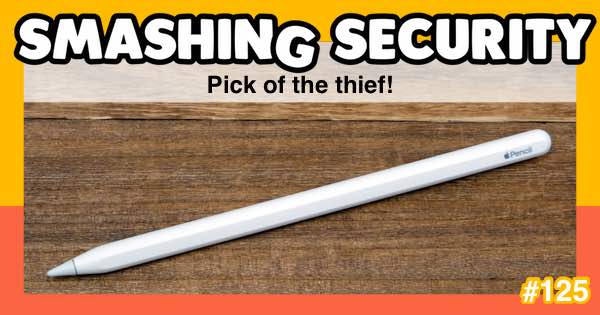
And they sent a rep to these proceedings in Boston, and the rep said he witnessed a suspect steal Apple Pencils on a security video.
Okay, so when Ba's attorney said, hey, let me see this video, the guy said, sorry, it doesn't exist anymore. Huh, weird.
One in New York City, one in Delaware, one in New Jersey.
And then months later, at 4 AM in the morning, we have the New York City Police rapping on his door with an arrest warrant for robberies at the Manhattan store.
And this is where the arrest warrant has the right information but the wrong mugshot.
But yeah, there is— Yes, so what happened next, Carole?
So apparently Apple security technology identifies suspects of theft using facial recognition technology.
The detectives suspect that the person who had committed the crimes presented Baz's interim permit as identification during one of his multiple offenses.
They assumed that that face was tied to that information. So it was Apple's facial recognition software that basically tied it all together.
So the whole thing went away because they were able actually to get their hands on the surveillance footage, the one that the Apple security firm said didn't exist.
So Bloomberg writes that Baz claimed his name may have mistakenly been connected to the thief's face in Apple's facial recognition system, which he says the company uses in stores, you know, to track people suspected of theft.
And he suffered court summons and all this stuff. Woke up at 4:00 AM, right? The worst thing ever, John.
What would be an appropriate amount for that amount of BS?
Even 1% is pretty shit high. You know?
Anyway, I just think it's insane and but an interesting idea on the idea of actually trying to sue based on facial recognition falsely tying you to another person and then confusing that information and making your life hell for a while as you try and clean that all up.
Plus, these guys get passwords, they get GDPR, they get security, and they've won awards for security awareness.
Smashing Security listeners, you guys can get 10% off by visiting smashingsecurity.com/metacompliance and entering the code SMASHING. That's smashingsecurity.com/metacompliance.
Quote, most business security breaches are the result of one thing: sloppy password practices.
Effective enterprise password management is a must to ensure that your employees are properly protecting their accounts.
Sloppy passwords are a huge contributor to security breaches within an organization.
The way to manage that is get a password manager, and the one we recommend is LastPass Enterprise. Check it out at lastpass.com/smashing. On with the show.
Could be a funny story, a book that they've read, a TV show, a movie, record, a podcast, a website, or an app. Whatever they wish. Doesn't have to be security related necessarily.
Instead, it harks back to a wonderful era of television known as the 1960s, and specifically the work of Gerry Anderson, who made such fantastic shows as Stingray and Captain Scarlet and the Mysterons.
Now, you may think that those shows are just part of yesteryear.
If it— for anyone who's listening, has never seen a Gerry Anderson show, the thing is, they were all done with marionettes. And so there was puppets.
And the most famous show of all is one called Thunderbirds.
And International Rescue, you know, there'll be some disaster or something will be falling down or people drowning and they'd come in and they'd come and save them with their fantastic gadgets.
A couple of years ago, a guy called Stephen Larivière, who was obviously a bit of a fan of Thunderbirds, he raised over £200,000 in a Kickstarter campaign to remake some classic Thunderbirds episodes.
Because back in the 1960s, they made three episodes just for vinyl records, just for LPs. So just audio. And he said, why don't we take those recordings and film those episodes.
We've got the original voices, Brains and Lady Penelope and Scott Tracy and so forth, and remake them using superb Supermarionation techniques. And they did it.
Five, four, three, two, one.
Well, I've put a couple of links in the show notes where you can check out some trailers and a short documentary, a half-hour documentary, all about the making. It is wonderful.
And I think it's awesome. And that is why Thunderbirds 50th Anniversary, Thunderbirds 1965, is my pick of the week.
So I have to say there was something very dark and mysterious about Captain Scarlet and the Mysterons. What they did do is they made their own short clip.
There is a TV show called Endeavour, which is about the early days of Inspector Morse.
Inspector Morse is a young man in the '60s, and I believe there was an episode set on a studio where they were making one of these puppet shows.
And they actually remade a classic— they made up their own classic Supermarionation episode to appear in this episode of Endeavour.
Again, you can see some clips of that over on the Century 21 Films website.
And I think it'd be a hard one to beat. So John, what's your pick of the week?
It's quite a different kind of game, although it kind of has some of the same characters in it. And it's a very simple kind of tower defense thing.
You're paired up with a random person and you have to attack their towers and try and stop them attacking your towers.
You have a range of characters you can choose from and you pick your card deck and you have to hope that yours matches up against theirs so you can fight them evenly and stuff like that.
It's very simple and very fun. It takes about 3 minutes to play a game. But my favorite thing about it, it has this little in-game kind of chat system or heckling or something.
And there's just little buttons along the bottom of the screen and you don't really, there's not really a lot of choices.
You can basically say, I think, good luck, well played, good game. Thanks, wow, oops.
And then there's a few little kind of emoticons, things like thumbs up, angry, club, crying, laughing.
They've added a bunch more of the little pictures recently, but they're a bit gimmicky. I try and stick with the old school ones.
But it's amazing how in-depth the conversation you can have with whatever random child in China you happen to be playing against.
With just this little tiny selection of words and images, you can have a proper little chat going on. It's really quite fun.
And I find anybody that basically, there's a lot of people that just use angry face all the time. Don't like them, they're clearly douches. And there's also the laughing face.
Very, very few occasions where you can use that appropriately. So it's actually a very, very small set of things that you can legitimately use to have a polite conversation with.
And you can get a real sense of the sort of person you're talking to.
Is this a replacement for something like Signal? Would the intelligence services be able to intercept what you're communicating with your angry face and your thumbs up?
Someone in China?
That would be difficult.
I don't do that bit.
So there's 500 locations across the county, and there's group exhibitions and individual artists. Some of them are in their own home, right?
And 100,000 people come to this every year, and it's free, and you can see what all kinds of different artists are up to.
And this year, both John Hawes and I, along with a few others, have clubbed together and are presenting our stuff at a venue.
And we also have an artist called Calista, and she's doing these amazing ink sketches on self-help wisdom. So kind of distilling all that.
And we've got another guy called Ollie who does these rude lighting with lampshades made out of cuttings from harlequin romances, and I think he's using Fifty Shades of Grey.
Oh fuck, I think I just got the joke because he's making lampshades shades of grey.
If you the idea of nosing at people's art, you might meet Graham because Graham's certainly going to come and visit during Art Week.
What a delight that'll be to see you in the clay.
We've got an active community up there. Quickest way to find us is at smashingsecurity.com/reddit.
We'd be lonely souls without you. Thank you for listening and helping us grow.
Hosts:
Graham Cluley:
 @grahamcluley.com
 @
@
 / grahamcluley
Carole Theriault:

Guest:
John Hawes
Show notes:
- "Gents! Stop airdropping your pics!" — Smashing Security episode 038, where we discussed the arrest of Marcus Hutchins.
- Marcus Hutchins plea agreement — PDF
- Statement from Marcus Hutchins (aka MalwareTech)
- "Stick to the good side." — Marcus Hutchins on Twitter.
- The Samsung Galaxy S10's ultrasonic fingerprint scanner is hacked — Graham Cluley.
- Video of Nokia 9's fingerprint sensor failure — Decoded Pixel on Twitter.
- Nokia 9 buggy update lets anyone bypass fingerprint scanner with a pack of gum — ZDNet.
- Most hacked passwords revealed as UK cyber survey exposes gaps in online security — NCSC.
- Facebook hoovered up 1.5 million users' email contacts without permission… "unintentionally" — Graham Cluley.
- Facebook: we logged 100x more Instagram plaintext passwords than we thought — Naked Security.
- Second Payment Services Directive (PSD2): 8 things businesses needs to know — Information Age.
- Teen sues Apple over accusations of Apple Store thefts — 9to5Mac
- Student Sues Apple for $1 Billion, Blames Face-Recognition Tech for False Arrest — Insurance Journal.
- Thunderbirds – 50th Anniversary Specials — Century 21 films
- Thunderbirds 1965 – Documentary — YouTube.
- Clash Royale: Enter the Arena.
- Oxfordshire Artweeks.
- Details of Carole and John's exhibition — Oxfordshire Artweeks.
- Smashing Security merchandise (t-shirts, mugs, stickers and stuff)
- Support us on Patreon!
LastPass Enterprise makes password security effortless for your organization.
LastPass Enterprise simplifies password management for companies of every size, with the right tools to secure your business with centralized control of employee passwords and apps.
But, LastPass isn’t just for enterprises, it’s an equally great solution for business teams, families and single users.
Go to lastpass.com/smashing to see why LastPass is the trusted enterprise password manager of over 33 thousand businesses.
People are the key to minimizing your Cyber Security risk posture. MetaCompliance makes this easier by providing a single platform for Phishing, Cybersecurity training, Policy, Privacy and Incident management. Listeners can get a 10% discount off their products by quoting the code SMASHING. Visit www.smashingsecurity.com/metacompliance now.
Follow the show:
Follow the show on Bluesky at @smashingsecurity.com, on the Smashing Security subreddit, or visit our website for more episodes.
Remember: Subscribe on Apple Podcasts, or your favourite podcast app, to catch all of the episodes as they go live. Thanks for listening!
Warning: This podcast may contain nuts, adult themes, and rude language.