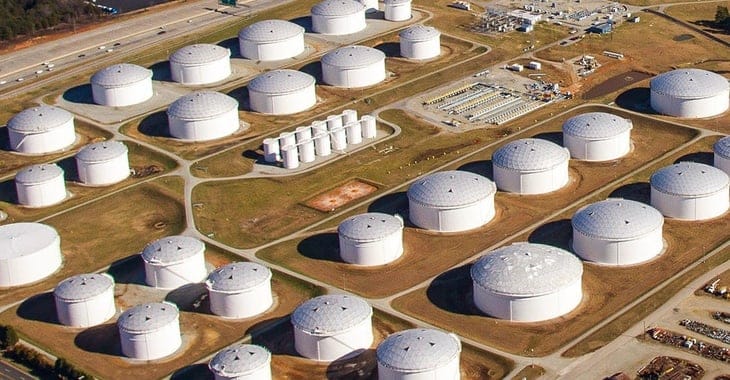
The Colonial Pipeline attack has shone light on the activities of the Darkside ransomware gang, we take a skeptical look at cryptocurrencies and the blockchain, and Eufy security cameras suffer an embarrassing security failure.
All this and much more is discussed in the latest edition of the award-winning “Smashing Security” podcast by cybersecurity veterans Graham Cluley and Carole Theriault, joined this week by BBC technology correspondent Rory Cellan-Jones.
Plus don’t miss our featured interview with Vanessa Pegueros of OneLogin.
Show full transcript ▼
 This transcript was generated automatically, probably contains mistakes, and has not been manually verified.
And at the end of that interview, I wrote a blog about him with the headline "Bonkers but Brilliant," which his PR man didn't like.
And I had to try and explain to him that bonkers in English— this is two nations separated by a common language— bonkers is a really affectionate term. Yes, yes.
He didn't buy it, and I've not had an interview since. But at least that back in 2016, he was a visionary.
Smashing Security, Episode 228: Pipeline Pickle, Blockchain Bollocks, and You Fee Snafu with Carole Theriault and Graham Cluley.
Hello, hello, and welcome to Smashing Security, Episode 228. My name is Graham Cluley.
It's BBC technology correspondent and guru Rory Cellan-Jones. RORY CELLAN-JONES. Yeah, hi there. You can call me whatever you like, as long as, maybe not young. Yeah, young is a bit—
I'm not going to be crude enough to say that's why I'm here, Graham, but it's one good reason. Always on in good bookshops and bad ones right now.
It's their support that helps us give you this show for free. Now, coming up on today's show, Graham, what do you got?
So all this and much more coming up on this episode of Smashing Security.
Is that how you say it? Colonial! RORY CELLAN-JONES. It's got nothing to do with the colon. It's Colonial, for heaven's sake. Do you have trouble with the English language?
Well, not every day. Because for a few days earlier this month, it was not carrying any fuel at all.
It was on May 7th that the company which runs the Colonial Pipeline— they are called imaginatively the Colonial Pipeline Company.
Something rather Aberdeen who've just— RORY CELLAN-JONES. Aberdeen.
RORY CELLAN-JONES. It certainly was.
Those are the same people who turned the post office into Consignia 20 years ago. Not quite, but a similar triumph.
The pipeline was shut down for some days. There was panic buying. There was queuing at American gas stations.
Some folks even tried to stock up on fuel because they thought, well, we need to hoard it. And they had to issue a warning to people not to fill plastic carrier bags with petrol.
I saw that going out from the authorities.
We had to get about 140 rolls. They wouldn't split it up. That's why. We're still going through it.
Belgium? RORY CELLAN-JONES. Russia!
Because worldwide he'd want to say to everybody, nobody would want to tell everybody, of course I know what's going on, but he may or may not, right?
But he has to kind of say, I know everything that happens in my country, everywhere. No one is afraid of me. So he's kind of in a catch-22, I think.
So they said to Colonial Pipeline, they said, we've determined that if you pay us $5 million, we can bring your systems back up again.
And if DarkSide is familiar to you, we spoke about them in episode 201 of the podcast when they were talking about giving percentages of their ill-gotten proceeds to charity, Robin Hood style.
RORY CELLAN-JONES. Hmm. It's ransomware as a service, isn't it? This is the other thing about it.
RORY CELLAN-JONES. And they put out these wonderful statements that are basically their CSR, their corporate social responsibility policies.
And according to CNN and also cybersecurity journalist Kim Zetter, it wasn't the ransomware that affected the pipeline at all.
The reason why they shut down the pipe was Colonial Pipeline realized that their billing system had been compromised, which meant if they delivered fuel, they wouldn't be able to charge for it.
And they wouldn't be able to monitor who was getting what. RORY CELLAN-JONES.
Which is extraordinary, because we all assumed this was the ultimate example of how the Internet of Things doesn't work. But it wasn't that.
I can't believe people were actually filling plastic bags. That has to be just one person in the entire universe.
There could not have been many going, oh yeah, here's my little Walmart bag.
Because this idea of shutting it down because you can't charge properly for what you're delivering.
I remember when I think it was the Vancouver rail system, they got hit by ransomware, which meant that they weren't able to sell tickets.
And what they did is they just opened up the gates and they said, everyone can travel for free while we recover from a backup.
I suppose it's a bit different when you've got an asset oil, which is being taken away rather than a kind of transit system, which, you know, you're running anyway, possibly not for profit.
I mean, maybe originally they shut it off because they had no idea what the hell was going on and they just said, my God, you know, they could be stealing this oil. We have no idea.
So they just shut down everything and then realized—
No, he didn't do that. So he was talking about this ransomware gang in press conference.
You know things got quite serious, and I think DarkSide realized they may have bitten off more than they could chew.
And so they're saying, "Look, oh no, no, hi, yeah, we're nice guys." By ransomware standards, they were saying, "Look, we're not those North Koreans.
We're not state-sponsored, we're not political.
We'll be more careful in future." And Colonial was meanwhile trying to bring its systems back up, and they had been charged, I said, $5 million by the DarkSide gang.
So they weren't being that nice, really. And they ended up paying it. They ended up spending $5 million. RORY CELLAN-JONES. Allegedly.
And what do you think about that, Rory, though, if they did pay?
I mean, the serious side of it is that this is a huge threat to not just pipelines, but hospitals have been hit, schools in London.
I was just hearing a terrible case of a whole bunch of schools where private data of kids and teachers was— they didn't pay, and this private data was splashed online.
And there is a kind of global movement to try and say, we will make it a crime to pay a ransom. But nobody's going to agree to that, are they?
This is how you can better protect your network in future.
They sort of do customer support online, but it turned out it wasn't the best advert in the world for DarkSide because their decryption tool reportedly proved too clunky and slow to fix Colonial Pipeline's systems in a timely fashion.
So they went back to their backups anyway in the end.
They also hoped to get this decryption tool that would allow them to just go back to business as normal.
And was sort of in transit, and they spoke to some web hosts and got those servers shut down, they believe, before the bad guys got the data, according to reports like Kim Zetter.
RORY CELLAN-JONES. What is weird about this is what they thought they were paying for. And do they get their money back now?
Because this darkweb mob claimed to be a responsible company with, you know, consumer-friendly policies, and therefore I think there's a case for Which magazine or someone.
Which of them provide the best service? Once you've been phished.
Its little bitcoin account, according to researchers who've been trying to trace the money, has been emptied.
And word is spreading on the computer underground that they've closed their doors and they're not going to be doing any more mischief.
Now, it's a mystery as to whether it was the authorities who took them down or not. RORY CELLAN-JONES. Hard to say, right?
There was a, I think it was German chemical gang they got $4.4 million out of in the last week or so. So it might be that DarkSide are robbing other criminals as well.
Really hard to know exactly what's going on here.
But it does seem to have had, in fact, all of this media attention and obviously President Biden's attention as well, and the authorities has seemed to have sent a bit of a scare and a chill through the computer crime underground.
For instance, there's a cryptocurrency mixing service — this is something which cybercriminals use to sort of launder their money to make it harder to track where their Bitcoin transactions have gone.
One called Bitmix, that seems to have ceased its operations.
Other forums are saying we're not going to advertise ransomware as a service schemes anymore and help the gangs because we don't want to get into trouble ourselves.
So if you are a ransomware gang leader, Rory— RORY CELLAN-JONES. What are you saying?
Don't target firms which run critical infrastructure, even if you don't hit the critical infrastructure, because that's going to get you a lot of headlines and unwanted attention.
Keep your head down. You don't want the US authorities and Joe Biden knowing your name. And if you want to sleep easier at night, just do something profitable that's legal.
RORY CELLAN-JONES.
I've got to talk to you about one of my favourite subjects, also a subject which has me whimpering under the table when I look at my inbox, and that is cryptocurrency, which I've had a long and tawdry relationship with.
The worst thing is I've actually made a bit of money about it despite hating it with a passion.
So there's a chapter in a book which has just come out called Always On: Hope and Fear in the Social Smartphone Era.
Which is a kind of history of the era which started in 2007 with the launch of the iPhone and tells the story of the way smartphones and social networks came together and changed our lives in all sorts of ways.
But there is one whole chapter on cryptocurrencies and the madness of them.
And the iron entered my soul in 2016 when I got what was supposed to be one of the great scoops of my career, which all went a bit wrong.
This story was given to me, a gentleman from The Economist, and somebody from GQ — what a combination! The BBC, The Economist, and GQ.
And it was to meet the man who was Satoshi Nakamoto. And that was Dr. Craig Wright, an Australian figure.
Yes, the grand master, the guru. He wrote a paper in 2009 called Bitcoin — I think it was called Bitcoin: A Peer-to-Peer Money System.
And ever since, there's been huge mystery about what his or her or their real identity is.
He proved in, in his terms to us that he was Satoshi Nakamoto by engineering this particular transaction or demonstration, and you know, so complex was it that I hadn't a clue what was going on, but there were two people prominent in the bitcoin community in the room who vouched that, yeah, it seemed to be true.
And we put our piece out, luckily not saying he is, but saying he claims to be.
And within hours, the incredibly fighty cryptocurrency community, you know, the People's Front of Bitcoin versus the Bitcoin People's Front, had torn apart his claims.
And it all ended a couple of days later where he promised what he called extraordinary proof.
And I had to send a tiny sum of bitcoin to an address which was something like the genesis block, the original, one of the very first bits of bitcoin that had never been touched since and could only have been controlled by Satoshi.
And he would send it back. And we got our cameras in front of this screen where you could see, you know, it's the blockchain, you could see what's going on.
And you could see my money had gone in and we waited for a red arrow signaling it coming out. And we waited and waited, it didn't happen.
And then we got a statement from him saying he couldn't do this. He was just, you know, it was all too much for him. He'd come over all funny.
And ever since, ever since I've been waiting for my 0.017 bitcoin back from Satoshi Nakamoto, and it was only worth a fiver then, but I think it's worth something like 200 quid now.
Initial coin offerings where people built businesses on the blockchain dating on the blockchain, for God's sake.
Because there was a period when you would meet people who'd say, oh, bitcoin, no, no, no, you don't want to worry about that. That's not interesting.
What's interesting is the thing underneath it, the blockchain. I think the first time somebody said to me, the blockchain is going to be bigger than the internet itself was 2014.
They've been saying it every second day since, and it still ain't, in my view.
And then we come right up to date with what's happened in the last month or so and enter another character in my book, the extraordinary Elon Musk.
And I mean, the great thing about Elon Musk is he's always thought big. He's thought big about transforming the car industry, transforming the space industry.
And at the end of that interview, I wrote a blog about him with the headline, "Bonkers but Brilliant," which his PR man didn't like.
And I had to try and explain to him that bonkers in English— this is two nations separated by a common language— bonkers is a really affectionate term. Yes, yes.
He didn't buy it. And I've not had an interview since. But at least back in 2016, he was a visionary. You could say he was a visionary. He was doing amazing things.
And in some ways, he's still doing amazing things. But he's not talking about them. He spent the last two months talking about cryptocurrency in the most daft and idiotic way.
He first announced that Tesla was going to buy a bunch of bitcoin and accept payment in bitcoin because he has got a huge clique of Twitter followers who hang on his every word.
And then of course the crypto crowd are even crazier.
The people who have profiles with lights coming out of their eyes, that meme, or send you a Simpsons meme if you're at all critical, saying, have fun staying poor.
Yeah, those kind of folks. So he propelled the bitcoin price to new heights, to $60,000, when old Satoshi HoHo When I paid him that 0.017, it was about $5,000.
So you see, that's how much changed. Anyway, he did that.
He also started riffing about Dogecoin, which is this complete joke coin, which was literally started as a joke, and that began to take off.
And then a few days ago, suddenly he decides actually bitcoin is bad for the environment. Who knew?
I think what's happened is that the poor benighted Tesla sales staff are saying, listen, we can't— this is a nightmare accepting payments in bitcoin.
It's worth X one day, X minus 10% the next day, X plus 10% the third day. This is barking mad. And he's finally listened. But it's caused endless ructions.
And still I come back to the fact that bitcoin and all cryptocurrencies are just not a good idea. Well, there are two ways of looking at them.
Either you believe in them and you believe in the philosophy behind them, which is an interesting philosophy and an extreme libertarian philosophy which says all banks will basically melt away, all fiat currencies, your pounds, your dollars will go away, and bitcoin will rule the world, or other cryptocurrencies will rule the world.
So you can either believe that, and there are some people who believe that.
Or you can be in it, frankly, for a quick buck, which is, you know, the best reason to be in it, thinking it's worth $10 now, it'll be worth $20 tomorrow.
Those are the only two reasons to believe in it.
And what's extraordinary to me is about a month ago, I was on not a podcast, I was in a Clubhouse room talking at an event, and a senior figure in the London fintech community, when I was going on one of these riffs I just have, said, big guy in London, he was a nice guy, and he said, Rory, you've got it all wrong about cryptocurrency.
It is now being seen in financial circles as a recognized asset class, honestly. And I thought, yeah.
And then I open up the Financial Times this week and find the city suddenly has decided, after a month of Elon Muskery and all this nonsense, oh, it certainly isn't an accepted asset class, brackets, wouldn't touch it with a 10-foot barge pole.
So which kind of shows that don't believe the latest craze that even the establishment tells you is great.
Don't forget that in 2007, 2008, they were telling you that CDOs and all those complex derivatives were the future just before they tanked the world economy.
So that is my view of cryptocurrency. And it will— people do listen to this podcast, don't they, Graham?
Can I give you a quote which I use in my—
It is included in a very recently published book, Always On, available in all good bookstores and online. Hunter S. Thompson. This is how he describes crypto.
It's not actually, but I'll tell you what he's describing in a minute. Because he was dead before crypto.
A cruel and shallow money trench, a long plastic hallway where thieves and pimps run free and good men die like dogs. There's also a negative side.
And he was talking about the music business, but in my experience that's the crypto business too.
Well, some people have invested enormously in it because some people have made a lot of money. Let's be fair.
But the big question is, of course, because there's this culture of hodling. Do you know about hodling?
If you're a hodler, part of the culture is you will never sell, you'll always hold, because bitcoin is, quote, going to the moon where we'll all drive around in Lambos.
Lamborghinis. This is the culture. So some of the— a few of the people I've got who've got out, got out at the top, have done extremely well indeed. Others not so much.
I heard a brilliant tale on the New York Times Daily podcast the other day about a guy who's got into Dogecoin and has always wanted to buy a house and had been saving up for a house and decided that the conventional economy wasn't doing it for him, invested in Dogecoin, and he's now got $2 million.
From having put all of his money into Dogecoin, except that he's insisting he won't sell because his line was, well, the guy who bought Amazon at $10 and then sold it at $20, he's looking a fool today.
And that's my philosophy with Dogecoin.
And you already know who the culprits might be. It's your 5-year-old or your 5-month-old puppy. And you need to know who it is.
So luckily, luckily for you, you have a smart home surveillance in your house.
And it's not your dog or child. But someone else's home entirely, you have access, in fact, to all their controls.
So you can actually change cameras, change the zoom and the tilt, switch between views.
RORY CELLAN-JONES. Yes.
And the post title was "Warning: Disconnect any Eufy security products you own immediately."
So someone on Reddit says, "I was just randomly given someone else's camera feed and had access to all their event recordings.
I was still logged into my account when this happened, so it appears to be a bug within the app itself. I have no idea how this is even possible." I'm like, Eufy, what is Eufy?
So I go looking on their website.
Eufy's motto is "Smart home simplified is what drives us to build easy-to-use smart home devices and appliances that are designed to enhance your life." Yet someone on Reddit compared it to a Black Mirror episode, the fact that they could see someone else's stuff.
So they could, you know, anything they could change, anything they could change the configurations.
So I thought, well, why don't we check out the features of the Eufy security camera just to see what they could get, right?
So this is where marketing can work against you horribly, right?
Sight at night, keep an eye on any room, even in low light settings.
Plus you can communicate from your camera. So say your little poochie was at home, you can kind of go, "Hey poochie, poochie, hey poochie," and they can woof woof back at you.
So nothing. So then I thought, well, how do most people buy this stuff? And I'm going to ask you how you bought your Eufy product, Graham, because I bet that's what I've—
And so I'm looking through all that and there's no security information at all except the very end in some of their marketing blurb at the end, said every Eufy security product is engineered to ensure your security data is kept private.
Have peace of mind that you will have a secure record of everything that happens around your home. And that is it. So what happened? Well, we don't know yet.
We don't actually know what happened, but Eufy has issued a statement. So I would love to see what you guys think of this.
Our engineering team recognizes this issue at around 5:30 AM and quickly got it fixed by 6:30 AM.
And then it says, we recommend all users please unplug and reconnect the device, log out of the Eufy Security app and log in again.
So what they're doing is they're taking security footage and they're putting it up on some cloud server somewhere so you can remotely access your security camera.
And normally you send some kind of ID and maybe some form of authentication to that server to say, I am Graham in Oxford and I want to view this.
And their server was taking that information, you're Graham in Oxford, and then they were just taking someone completely random.
So that's what they made a screw-up, and that's how presumably they've been able to roll out an update to the cloud and fix it.
But they need everyone to log out because they may already have accessed someone else's account.
It's obviously some kind of authentication issue where they think you're one ID and you're not. You're a different ID. That's what I'm saying.
But what it does show us is that even if hackers aren't involved, things can go wrong and your personal stuff can be gawped at by a third party.
I mean, I just don't think I understand why people put home surveillance inside their home or why the benefits outweigh the risks for most of us.
I can understand there's special situations where if you have an elderly parent that's at home alone and you want to check on them or things like that, I get that.
But why do a large proportion of the population think they need home surveillance? I mean, Rory, what about you? Do you subscribe to this? Do you have this in your house?
RORY CELLAN-JONES. I find it weird too, but of course everyone is putting little video cameras outside their house in their doorbells now, aren't they?
I don't know, because you're capturing everybody that's coming along the street and they're being used by the police in some circumstances.
Yes, I do have a camera, but it's what I call my nature camera and it's not online and I stick it on the back fence and I get shots of the fox that walks along my back fence.
The fox is off the cloud.
Skiff is the first collaboration platform built for privacy from the ground up. Every document, note, and idea you write is end-to-end encrypted and completely private.
Only you and your trusted collaborators can see what you've created. Unlike Google Docs, Evernote, or Notion, no one else, not even Skiff, ever has access.
Skiff is offering listeners of Smashing Security early access. Sign up for Skiff's beta at skiff.org/smashing. That's S-K-I-F-F dot org slash smashing.
In today's work-from-anywhere era, CISOs and IT executives work tirelessly to make sure the organization's information assets and technologies are properly protected.
And this increased pressure has led to deteriorating mental health, addiction issues, and even suicidal thoughts and tendencies. OneLogin's message: you are not alone.
Smashing Security listeners are invited to attend their live event on Wednesday, May 26th for free. It's called Keeping the Mind Clear and the Company Secure.
Learn more at smashingsecurity.com/1loginiamok. That's smashingsecurity.com/1loginiamok. And thanks to OneLogin for supporting the show.
All kinds of teams can securely share everything needed to work together. Give employees access to logins, documents, credit cards, and more on all of their devices.
See if company email addresses or credentials have been exposed in a data breach and get alerts when accounts are compromised so you can update passwords right away.
Find out more and try 1Password for free for 14 days at 1password.com. And welcome back.
And you join us at our favorite part of the show, the part of the show that we like to call Pick of the Week.
Could be a funny story, a book that they've read, a TV show, a movie, a record, a podcast, a website, or an app. Whatever they wish.
It doesn't have to be security related necessarily.
I thought, should I plug that? No, he'll probably be doing it. Instead of that, I want to go back to my childhood.
And I remember if I was bunking off school, if I was a little lad and I had a stomachache, I might see some daytime television.
We weren't really allowed to watch ITV in my household. Pure BBC house. RORY CELLAN-JONES. But quite right.
Which was called Crown Court, which was a courtroom drama. I think that's Mastermind, Rory. RORY CELLAN-JONES. Oh, you're right. It was similar though.
But the jury was made up of members of the public. RORY CELLAN-JONES. Okay.
Anyway, so I have found a website, and this is one of the things I love about the internet. I've found a fan website for Crown Court.
And it's called Fulchester Crown Court, where they analyze the episodes. There've been 879 episodes of Crown Court, it turns out. RORY CELLAN-JONES.
It was every— it was lunchtime every day. It was, yes, Monday to Friday lunchtime. Yeah.
And the guy who's accused— I won't give away whether he's guilty or not— was Dougie Brown, who you may remember as a stand-up comedian. Turns out he's an actor.
I was watching another one about this treasonous guy. There's Richard Wilson in there. You would— RORY CELLAN-JONES. I don't believe it.
Or do you do Michael Caine?
Link's in the show notes, or indeed go and watch some episodes of Crown Court yourself. Now, Rory, what's your pick of the week? RORY CELLAN-JONES.
Well, my pick of the week is so classically British and dull at first sight. It's the weather. The weather has been absolutely insane for the last—
Last year, the lockdown, at least the first lockdown, happened in glorious spring weather. This year, April was incredibly cold, grey, and dull. Not a drop of rain.
May has been torrential rain, followed by a brief bit of sun, followed by torrential— you never dry out. And it's been driving me up the wall.
But it is one thing it has taught me is respect, for once, for the science of weather forecasts.
Interesting, because we are all, and we particularly in recent weeks when you have been allowed to have people in your garden but not inside, have been obsessively looking at the weather app.
And of course, the last couple of months that has been taking place in somebody's garden.
Now, one set of people have a bit of an awning, so you can just about shelter under there, shivering to death, while the rain patters down.
You know, so desperate are we for a drink with friends that we would do that. We don't, so we are very dependent on staring at these apps.
And the sad truth is they have become pretty— we all mock the weather forecasters because we always notice when it's wrong.
And I'm looking out right now, I'm in my loft in Ealing, every 10 minutes it lashes down with rain. But I'm looking at the BBC weather app, actually.
And you just have to learn to read it properly, because every symbol for the next 4 hours is sunshine and showers. And you think, how good is that? How useful is that?
But then I've just noticed there is a likelihood of rain percentage: 76%, 72%, 61%, 46%. So you could be pretty damn sure that it is going to rain.
And even better, Dark Sky, which is a more bespoke app, is telling me that rain is going to stop in 60 minutes, followed by light rain, followed by light rain, followed by mostly cloudy.
Anyway, the point I'm saying is the science behind this has got great, but this will never satisfy people. It tells us something about our attitudes to technology of all kinds.
We, you know, 200 years ago, maybe 300 years ago, they used to cut open the belly of a goat and look at the liver and say it's going to rain on Sunday.
And when the seer who did this got this wrong, he was beheaded. And we're still the same today. No, now we've moved on. We've put a lot of science behind it.
Meteorologists use supercomputers. I think the Met Office in Britain has just announced a huge investment in a new supercomputer.
And for instance, when there's snow, the boundary between people who've got snow and people who haven't is incredibly difficult to predict.
And they will— there'll be outrage all over Twitter when people were promised snow and didn't get it.
So I say, let's hear it for the weather forecasters, because pretty much, you know, 80% of the time, on the most difficult thing to predict that there is, they get it right.
No, I would go and whimper in a corner because I spend I must design a filter in my email because the word blockchain needs to be excised from existence, from my life. Yeah, yeah.
I wish you hadn't said that.
And one of the big finds in the New York Times was that weather apps are dastardly in this area. So I would just say to listeners, get weather apps, but get a good one.
I also use the BBC weather app which I found very jolly good. RORY CELLAN-JONES. Really jolly good.
As I'm sure you were making the point, on iOS 14.5, you will find out whether they are tracking you or not.
Have I done that clue? RORY CELLAN-JONES. Oh.
It's an audio drama podcast, 7 episodes, 1 series, start, middle, and finish, right?
So there's 150 million resource-rich asteroids populating the void between colonized Mars— colonized, Graham— colonized Mars and Jupiter.
Basically, there's tons of asteroids full of minerals, and there's super corporations out there that are competing because they're beyond the reach of civilized law.
So there's loads of warring going on. And as the name suggests, there is a bit of a disaster that happens to MRS Hyacinth.
So there are 7 episodes, and you— it's just, it's so great, the show. It's really, the soundscape of it is astounding. And I quite love it. And it's quite emotional.
I dare people not want to tear up by the end of the 7th show.
He's being enthusiastic.
I recommend checking it out if you're into sci-fi audio drama listeners out there.
A few listeners, I told them on Twitter, I DMed a few people looking for other shows and it's coming.
Am I saying your name correctly, Vanessa?
Now, what's involved in being a Chief Trust and Security Officer?
In addition, I do also have IT, which is a function under me, and that's a little different than most companies because typically security reports into IT.
And here at OneLogin, IT reports into security. And I can talk a little bit about why we structured it that way.
Fundamentally, we believe that security is foundational to our customers' trust. And trust is a broad topic.
It's not just technology, which a lot of people think security and technology, but trust is a more emotional component of do our customers believe in our product?
If we mess up, will our customers give us a second chance? Do our customers believe what we say we're going to do and execute? So to me, it's a business term.
And more and more today, because technology is so key to all companies, that security is a big element of that trust.
And so that's why the title is a little broader at OneLogin because we're a security company and because we know that fundamentally trust is critical to our customers.
What can you tell us about it?
They've been under a lot of stress even prior to the pandemic, but the pandemic has even made that stress greater.
We did a survey of about 250 tech leaders in the March-April timeframe, and 77% of the respondents believe that the pandemic actually increased their work-related stress.
And 86% of the respondents reported their workload increased during the pandemic. So not only did the stress increase, but the workload increased. So really a result of a few things.
One is the threat environment is just getting greater and greater. There are more people attacking more companies, their systems.
And there's also this concept of where actually the surface area of potential exploitation, which means that there's more way for hackers to actually compromise or break into systems.
If you think about you're using cloud systems and you're using third-party SaaS applications and you have multiple devices, you have your laptop and your phone and your tablet, there's more and more places for hackers to actually compromise or exploit the person, the individual, depending on the type of service they're using or the device.
So this is just making the job of security professionals more and more difficult.
The environment has changed so, so, so much. So I'm not surprised actually that IT people are finding the pandemic to be even more stressful.
That means they now have to look after remote workers all over with different environments that they're not in charge of.
There were people working from home. We were used to that already, but there are more mature companies that have been around a long time.
That a smaller percentage of their workforce was actually working from home.
And they had to make an abrupt shift and all of a sudden had to get all these people equipped with laptops and make sure the right security controls were in place to do the best they could while they were working at home.
And all of that had to happen very quickly. And that was incredibly stressful on the IT teams, but also the security teams.
And I separate those two because they have different functions. And as I mentioned, we here at OneLogin have IT underneath the security team.
And the main reason we do that is because we want the IT priorities to be driven by security. We don't want it the other way around. Security is our number one value in the company.
And we want to make sure that all the activities and work done by our IT team are driven by security priorities.
So that's why we have it embedded within the security team versus security being embedded in the IT team.
Obviously, you would have a fundamental challenge with the traditional approach of the CIO and the CISO, the Chief Information Security Officer reporting to the CIO.
So there's organizational challenges and cultural challenges around that.
There's also the security leader needs to be, if you're going to have that structure, the security leader needs to be very well equipped to deal at the business level as the CIO has done for many years.
So they become a true business leader. And I think that's fundamentally happening and changing already today because security is becoming such an important issue.
It's at the board level. It's definitely at the CEO level.
And the other big difference we have here at OneLogin is I report directly into our CEO because, again, security issues are so important. I can't be layered down.
I need to be directly sitting at the table with my peers who lead up engineering and product development and marketing, and I need to be able to weigh in on those decisions.
That is something I think is a trend that will grow in the future as security becomes more and more of an issue.
They still have to go begging with their hat to different people to get money or resource to do things.
And they end up, in my experience, they've ended up having to shelve things they really want to do, and it is good for the business, because it's just too complicated and they're putting out too many fires.
And that is an incredibly stressful formula.
And so I think that that is one of the reasons the structure is very important, so that — and then you can also ensure that your CEO and your board has full awareness of the issues in the organization and can make better business decisions.
So, a lot of times I feel bad for security teams that are buried down in organizations and they're trying to tell everybody about all the things that are wrong, but nobody's listening to them.
It never makes its way up to the right people to really be informed about the risks.
And it's very difficult for sometimes human beings to step aside and say, hey, I might not be, I need to move aside and figure out a better way to deal with this.
But I think you're right. We need to make space for that messaging to go up to the right level of the organization. So, you know, as I said, better decisions can be made.
If you go to any security conference, whether it's Black Hat or RSA or, you know, these are big ones in the US, there is typically a lot of drinking.
I think alcohol abuse, substance abuse is a big problem within our area of, you know, with security and even IT.
And I think that this is becoming something that's being surfaced more and more as an issue.
And one of the good things about our survey is it did emphasize, which was a little surprising to me, that about three-quarters of the survey respondents believe their organization valued their health and well-being.
So this is — wow. Organizations are starting to realize this is a very stressful role and we are concerned about you.
And we need to get people into positive mode around how to cope with this stress. So I think that's one of the goals of this panel discussion we're going to be doing on March 26th.
So Vanessa, tell us what will happen on that day.
We're going to talk about some real experiences around incidents, security incidents and breaches, and how that impacted us at a personal level.
The mental health professional will talk about some of the coping mechanisms that are important.
And we're going to just talk about — just generally have a very free-flowing conversation on the general challenges of this for ourselves as leaders, but also for our teams and come up with some recommendations on things we should be doing.
Get back to work." So in the infosec industry, it seemed, my takeaway of working in really hardcore corporateville was if you were very capable, people recognized that and leaned on you more.
Everyone has their limits. There's a straw that breaks the back at some point. One tiny thing that can just do it. And being able to talk about it is a huge, huge thing for people.
They're not isolated.
They think they're the only ones that are feeling this.
But this pandemic has been impacting— all of us have been suffering in our own way and loss, different kinds of loss, some much more severe than others.
Coming together as community, I think, is super important during these tough times.
I do think that there are definitely some interesting notes that we got in our survey was that the respondents who basically said that in order to cope with their stress, 80% of them turned to exercise and 40% relied on meditation.
Even despite that, they still said 24% of our respondents still indicated that alcohol and drug use were common in how they were dealing with the issues or their stress.
So it's still a problem, and we have to continue to work on it.
Just got really bad news, you know, like, oh, let me just breathe here.
One of the most important things during crisis is to keep yourself calm, especially as a leader, because as a leader, if you're not calm, the people around you are not going to be calm.
What's the worst thing you can experience is when your leader is freaking out. And then the thing you feel is like, I need to freak out if my leader's freaking out.
So as a leader, we need to stay calm. And I think breathing helps me personally. I try to exercise as much as I possibly can, which is usually 3 to 4 times a week.
And that really helps me with controlling more in a more long-term sense my stress. So, you know, again, very depending on the situation.
Yoga, getting outside and being in nature is very calming to me.
I love to go, especially when the weather gets good around here in Seattle, is I love to go out, get out in the woods and walk, just get in the mountains and relax.
Nutrition, what you eat is super important. And it's like, I feel better when I eat better.
I found and experienced during a security incident, people eat all kinds of junk food and they're stress eating. So I think that's important.
And probably one of the number one things is sleep for me.
I need to get— I know it sounds like a lot because I talk to people and they're like, "I barely get 5 hours." I need like 8 hours of sleep.
And I really will strive to get that level of sleep. And so I can think better the next day. There are problems that I can't solve prior to going to sleep. I go to sleep the next day.
I'm like, oh, I got it. I figured this out. So I think it's that time we need to give our body to recharge.
I swear, if I could have you as my chief trust and security officer, someone who sleeps, does everything right, it would be amazing because a lot of us aren't doing everything right at the moment.
We should take a page out of your book.
And if you bond with community, that's going to help you be stronger.
What's the best way for folks to do that? RORY CELLAN-JONES. I don't tweet about the book at all, but if you go to @ruskin147, I've also put my toe in the water of Substack.
Do you know that?
And you can also join the Smashing Security subreddit and don't forget, if you want to ensure you never miss another episode, follow Smashing Security in your favorite podcast apps such as Apple Podcasts, Spotify, and Google Podcasts.
And if you fancy it, maybe give us a review, tell your friends, do something like that. We'd love it. Go on.
It's thanks to all these people that this show is free for all.
For episode show notes, sponsorship details, information on how to get in touch with us, and the last 227 episodes, check out smashingsecurity.com.
Hosts:
Graham Cluley:
 @grahamcluley.com
 @
@
 / grahamcluley
Carole Theriault:

Guest:
Rory Cellan-Jones – @ruskin147
Show notes:
- Major US oil pipeline shut down after ransomware attack — Graham Cluley.
- Abrdn: Standard Life Aberdeen vowel-less rebrand mocked — BBC News.
- DarkSide Ransomware Gang Quits After Servers, Bitcoin Stash Seized — Brian Krebs.
- Colonial Pipeline did pay ransom to hackers, sources now say — CNN.
- Darkside Retreats to the Dark — Kim Zetter on Substack.
- Elliptic Follows the Bitcoin Ransoms Paid by Colonial Pipeline and Other DarkSide Ransomware Victims — Elliptic.
- "Always On: Hope and Fear in the Social Smartphone Era" by Rory Cellan-Jones — Bloomsbury.
- Eufy privacy breach leaks both live and recorded cam feeds — 9to5 Mac.
- WARNING Disconnect any Eufy Security products you own immediately — Reddit.
- Server glitch allowed Eufy owners to see through other homes’ cameras — The Verge.
- Crown Court (TV series) — Wikipedia.
- Fulchester Crown Court — Fan website.
- Crown Court – The Jawbone of an Ass (1978) — YouTube.
- Crown Court – Treason — YouTube.
- BBC Weather app for Android — Google Play Store.
- BBC Weather app for iOS — iOS App Store.
- The Hyacinth Disaster – A Sci Fi Audio Drama.
- Smashing Security merchandise (t-shirts, mugs, stickers and stuff)
- Support us on Patreon!
With 1Password you only ever need to memorize one password. All your other passwords and important information are protected by your Master Password, which only you know. Take the 14 day free trial now at 1password.com
We store more personal information on our devices than we do in our homes. Where do you go online when you want to write or share something privately?
Skiff is the first collaboration platform built for privacy from the ground up. Every document, note, and idea you write is end-to-end encrypted and completely private. Only you and your trusted collaborators – no one else, not even Skiff – can see what you’ve created.
Skiff is offering listeners of Smashing Security early access. Sign up now: skiff.org/smashing
According to the OneLogin IAMokay Mental Health Survey, more than 77% of technology leaders have said that their work-related stress increased due to the COVID-19 pandemic.
As a result, CISOs and IT executives have been under ever-increasing pressure – leading to deteriorating mental health, addiction issues, and even suicidal thoughts and tendencies.
OneLogin’s message? You’re not alone. Attend their live event on Weds May 26, “Keeping the Mind Clear and the Company Secure” at smashingsecurity.com/oneloginiamokay
Follow the show:
Follow the show on Bluesky at @smashingsecurity.com, on the Smashing Security subreddit, or visit our website for more episodes.
Remember: Subscribe on Apple Podcasts, Spotify, or your favourite podcast app, to catch all of the episodes as they go live. Thanks for listening!
Warning: This podcast may contain nuts, adult themes, and rude language.