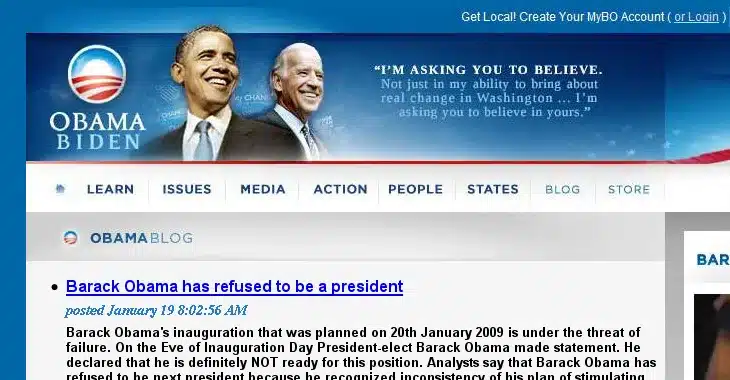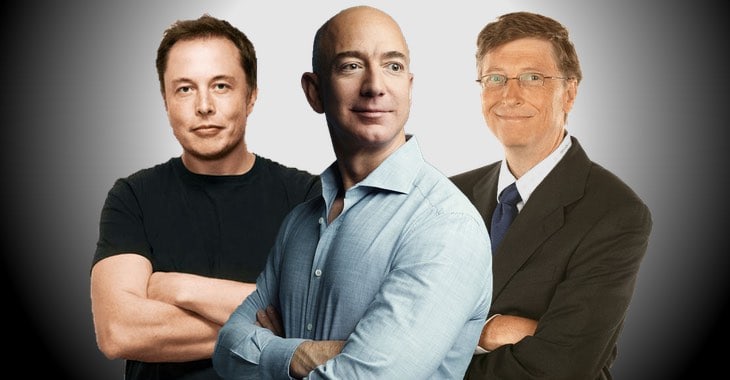
17-year-old Graham Ivan Clark, of Tampa, Florida, was charged and arrested last week for his alleged role in the Twitter mega-hack which saw celebrity accounts including Bill Gates, Elon Musk, Barack Obama, Joe Biden, and others tweet out a cryptocurrency scam.
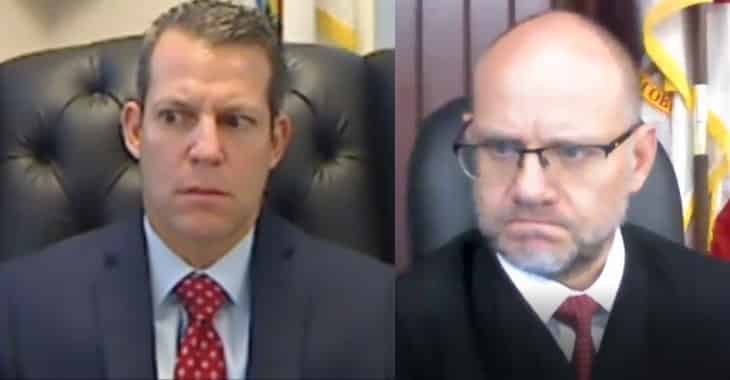
A bail hearing for teenager Clark took place at the Thirteenth Judicial Circuit Court of Florida in Tampa yesterday. Virtually, of course. After all, there’s a global pandemic going on.
Which meant that the hearing was held over Zoom.
And, as Brian Krebs reports, that’s where the problems started:
Even before the hearing officially began it was clear that the event would likely be “zoom bombed.” That’s because while participants were muted by default, they were free to unmute their microphones and transmit their own video streams to the channel.
Sure enough, less than a minute had passed before one attendee not party to the case interrupted a discussion between Clark’s attorney and the judge by streaming a live video of himself adjusting his face mask. Just a few minutes later, someone began interjecting loud music.
It became clear that presiding Judge Christopher C. Nash was personally in charge of administering the video hearing when, after roughly 15 seconds worth of random chatter interrupted the prosecution’s response, Nash told participants he was removing the troublemakers as quickly as he could.
Well perhaps unsurprisingly the accused Twitter hacker-Bitcoin thief’s first (virtual) hearing was shut down within 25 minutes due to relentless Zoombombing. (It ended a minute after this when someone screenshared a Porn Hub video.) pic.twitter.com/fGiceq4WfN
— Jen Wieczner (@jenwieczner) August 5, 2020
What could be worse than that? Well….
What transpired a minute later was almost inevitable given the permissive settings of this particular Zoom conference call: Someone streamed a graphic video clip from Pornhub for approximately 15 seconds before Judge Nash abruptly terminated the broadcast.
Some folks shared the offending part of the Zoom call where some porn clips were played on social media. Frankly I’m not that keen to embed it on my website, but if you really must see it here’s a link to a tweet.
Clearly the judge didn’t read our instructions on how to host safer Zoom meetings – which includes instructions on setting “Screen sharing” to “Host only,” having an assistant co-host the call and chuck out any offenders, and not allowing users to unmute themselves.
If anyone is still reading this rather than checking out the tweet, I’ll add that Ars Technica reports that the judge set Graham Clark’s bail at $725,000.
According to lawyers, teenage Clark has $3 million worth of Bitcoin under his control.
For more discussion of how the alleged Twitter hackers were caught, listen to this episode of the “Smashing Security” podcast:

Show full transcript ▼
 This transcript was generated automatically, probably contains mistakes, and has not been manually verified.
And this week we would like to feature Hades, Nathan, Richard Wade, Tapal Call, Sean Reifschneider, Jamie White, Mark Norman, Teppo Tastic, Gent B, and Roman Busser.
Thank you, all of you. You help make Smashing Security what it is, as all our Patreon supporters do.
If you would like to join our Patreon community, check out deets at smashingsecurity.com/patreon. Now let's get this show on the road.
Hello, hello, and welcome to Smashing Security, Episode 190. My name's Graham Cluley.
I've begun to read it. It's got some good yarns in there, hasn't it, Geoff?
And that's, you've spotted it, that's my exact tactic.
And its impact on society as well.
There's this amazing crossover with the hippies and the sort of psychedelic refugees and sort of early hacking culture.
And it goes all the way through to the election manipulation and vote rigging and disinformation stuff of the present day, which I think is sort of cutting-edge type stuff.
So yeah, it's a sort of full survey of the territory.
In fact, the final chapter, the one that's all about the election hacking and the disinformation stuff, would be a doozy. Let's do that.
And you'll be able to read the final chapter of Geoff's book. Fantastic.
Now, coming up on today's show, Graham looks at how sexy fox costumes could reveal your privates. Your privates?
Geoff looks at the recent Twitter hack, now that FBI indictments are out. And I look at some of the ways people are trying to combat surveillance tactics.
All this and much more coming up on this episode of Smashing Security.
And you think, oh, I'd love to find out more about that book. I'll visit an online bookshop. But then you change your mind. Maybe you're distracted by something else, right?
And then maybe half an hour, an hour later, you receive an email saying, hey, we saw you visited our website. How would you feel?
In fact, I'm sort of— now you say, I'm kind of surprised that we haven't crossed that Rubicon yet. It's a big— is that happening? Is this a bit—
And they get their kicks from these sort of things.
Why don't you come back sometime?" If you had never given them your email address, you're gonna be rather disturbed, right?
And they say they can convert—
You can go and check that out on YouTube. I'll put in a link, but I can explain it in very simple terms.
Just enter all your details here and we will go away and find an answer for you, right?
And what you don't do when you fill out those, or what most people don't do, is they don't read all the terms and conditions and the privacy agreement.
But those sites will gather all that information, and they're not really set up to sell you health insurance and car insurance.
They might do that sometimes or refer you, but what they're really doing is creating a huge database of people's contact details.
They have to share that information with third parties and they don't have to give you a list, you know, here are the exact people we're doing, because it's changing all the time.
And some of them might be, you know, very bona fide companies and some might be shady.
And what they've done is they've generated MD5 hashes, so a checksum for all of those email addresses.
And they reckon they've got around about half a billion now, and they're adding about 1 million more every day.
And they say they've also partnered with mailing lists firms so that when folks click on a link in a newsletter and go to a website, a cookie can be set on their computer containing that MD5 checksum for their email address on their computer.
And so what they're able to do is when you go to the Daily Caller website or another website which is running GetEmails' script, they can compare the hash in the checksum to the hash in GetEmails' database, which they've gathered from all of these sites around the world.
And they've got all your other information which you filled in on that form.
So I don't know, it's interesting because US law is obviously different to UK and European law, but there's just all sorts of legal issues with this.
The idea is, you know, you give over the information for a particular purpose, you know, to get better car insurance, for example.
The question would be, if I insert a clause saying, yeah, you're after better car insurance, but by the way, I'm going to keep your details handy and use it for this marketing exercise, possibly you've got my consent.
But if it's just a kind of enter here for car insurance, and in some way in the terms and conditions is a vague reference to being marketed at, I'm not sure what the UK and European rules would make of that, because it sounds like they're getting information for one purpose, but then using it for a slightly, well, quite different but slightly related purpose.
I don't know.
And they claim that all this collection of data is perfectly legitimate, and that's how they're doing it.
Some of them are pretty strict, the California one, and some are really, really weak.
I don't understand whether the federal act supersedes those, or, you know, just because it may fit in with the federal act doesn't mean they comply with California's Privacy Act.
And what happens then?
And if you go to their website, you find out it's not just the Daily Caller. There's also a fake news site called Western Journal. There's a trade publication focusing on stocks.
There's a testimonial from a company called Newswire.com, which puts out press releases.
They reckon within 60 seconds of putting the code on their website, they were getting hundreds of new contacts sent back to them. And you can see a legitimate need.
And why haven't we— why has nobody tried to cross this Rubicon before? Obviously, in the UK and Europe, it doesn't sound like it'd be legal.
But it makes perfect sense, you know, linking the cookie to the actual email address.
Just because they say they are 100% operating completely legally and are 100% compliant with US CAN-SPAM Act and every other federal law and state law, well, prove it.
I don't know.
The curious thing is these guys who are running the company, Adam and Helen and his girlfriend, Adam Robinson and his girlfriend Helen Sharp, they seem to be reveling in the slight grubbiness of their operations.
So they always address the legality issue and they say, yeah, it is a bit creepy. It is a bit weird, but it's 100% legal. And I even found a video.
So they've been making these short little videos in their homes, in their kitchen and wherever else, promoting their service.
And I think they're trying to be as outrageous as possible. Maybe this is why they initially contacted Jezebel, asking Jezebel if they wanted the service.
But one of the videos which I'm now going to drive traffic to, for instance, is one where Helen is calling Adam a very, very naughty boy.
There's some other ones where she dresses up as a sexy fox.
And it's just the detail in the criminal complaints is fascinating.
And whoever did it used it for a fairly crap bitcoin get-rich-quick scheme. And as soon as I saw that, I thought, oh God, bitcoin get-rich-quick scheme using Twitter hacks.
This is going to be youngsters. And so when the arrests came out, the charges came out, they are 17, 18, and 22, I think, from memory.
And I thought, oh, that's skewing a bit old for what I thought was going to happen.
People don't realize there's this whole community of Twitter hackers, and it's like kids who are just obsessed with personalized number plates on their cars, and they trade for thousands of dollars these accounts, particularly what are called OG accounts.
So like "@123" or "@xyz" or "@abc." But it's weird to describe because, as I say, the trade around this is really, really febrile.
And also, because a lot of it's teenagers, they're all doxing each other and trying to hack each other's accounts.
And when one of them pays one for the account, it doesn't come through, they blaze them on Twitter. There's all this stuff going on.
So as soon as I saw Twitter and bitcoin, I thought, "Okay, potentially juvenile culprits here, not exactly organized crime geniuses." So yes, 3 charges have been laid.
The 17-year-old officially can't be named.
The FBI hasn't named them, although they are named elsewhere on the web, weirdly, by the people who are charging that person in Florida, because in Florida a 17-year-old could end up being charged as an adult.
But what's interesting is that inside the criminal complaints is this massive detail which the FBI always put out as to how they actually found these guys.
Okay, yeah, this is obviously subjudice. It's subject to legal proceedings, so these are allegations at the moment. But they followed the breadcrumb trail along.
So there was a Discord chat in which two people were discussing. One person claimed to be an employee of Twitter, and person number two said, "Oh, great.
Can you get me access to these accounts?" And person number one said, "Yes, what's the price?" And they negotiated back and forth.
So very early on, there was this confusion as to whether the Twitter hack was because there was an insider at Twitter, or whether it was somebody had hacked Twitter employees.
What's interesting is the FBI have charged the buyer, if you like, of this service, the other side of the chat who was saying, "Hey, can you get me this account?
I'll pay you X amount." But they haven't named the person who claimed to be a Twitter insider. So we don't know whether that person yet is actually a Twitter insider or not.
They find where the wallet address has been set up. It's a cryptocurrency exchange. And they say, well, okay, here's a subpoena. Who set up this wallet address?
And you get through a few more steps. And of course, as anybody who's recently experimented with cryptocurrency, they ask for your passport or your driver's license.
And that's led to, allegedly led to arrest number one, charge number one.
I mean, even though they're teenagers, you would think if you're asked for something like that, if you're setting up a cryptocurrency wallet for criminal purposes, the first thing you do is you probably go and buy—
But C also, I'm not sure whether this wallet address was originally set up for crime, it was just— And this is the thing, you know, if you look back at the Silk Road case, actually years ago, Ross Ulbricht originally didn't set up his email addresses for criminal purposes.
It's just later on when he was later in the criminal purposes, he reused that early email address.
So remembering what ID you attached to what in the past is actually quite difficult.
So OG are these Twitter accounts @123, @abc, and so on.
OGUsers got hacked a while ago, presumably by a rival site, and the database of OGUsers users was leaked. And this includes a lot of stuff, email addresses, IP addresses, and so on.
So the FBI starts sniffing around some of the people who are involved in this Twitter hack, allegedly, and they have a copy of the leaked database.
So they start looking up the users on OGUsers who are involved in this, and they start coming out with email addresses, IP addresses, and so on.
And what I find fascinating is cybercriminals have been hacking into websites and leaking databases for years.
What they haven't sort of realized is they think that they're doing that as a criminal act for other criminals, but now it raises the prospect that the FBI and other law enforcement agencies are using this like a sort of Google search engine.
Graham tried to profess that loads of people fell for it, and I was looking at them going, really?
Obviously, nobody's going to believe Barack Obama's going, hey, I'm into bitcoin now, I'll double your money. I'm a tech god.
Had they stuck with the cryptocurrency exchanges, they might have more luck.
But I suspect when these youngsters come to court, it'll be— which presumably will happen.
And we were all like, whoa, that's a big deal. And then Amazon and Microsoft kind of followed similar suit, right?
And this was largely due to pressure related to increased visibility of unwarranted police brutality. So these were all good first steps for these big firms.
But there is a firm here that should be listed and isn't. And that is Clearview AI, a company we've mentioned a number of times on this podcast. But a quick refresher.
So this is a company that has scraped billions of faces off the web from sites like Facebook, Twitter, LinkedIn, Google, et cetera, et cetera, et cetera, and made them available to places like law enforcement.
So any pic of a person you have, you could just drop it into the Clearview AI app and presto, here are all their images of that person that have been scraped.
I mean, really scary, creepy stuff.
Computer vision for safer world, which I don't even know what it means. Computer vision for safer world.
And, you know, it's been— it's helped track down hundreds of at-large criminals, including pedophiles, terrorists, and sex traffickers.
Already I'm really annoyed with the inflammatory language here, right? There's a lot of words that are basically saying without us, you know, the world is going to go to shit.
And you know, you're reading this and you're thinking, I wonder what the Electronic Frontier Foundation, the EFF, think about this. They must be totally on board, right?
So I just put in Clearview AI and EFF to see what would come up.
And the first thing that came up was an article called, "Yet Another Example Why We Need a Ban on Law Enforcement Use of Facial Recognition." So reading on that, there are two big arguments as to why facial recognition is considered scary.
Because some people are thinking, what's the big deal?
In the States, in Canada at least, real estate people, for example, put their actual mugs and their full names on billboards across the city crooning about their real estate prowess, right?
And people on social media, I mean, we all have somewhere where we're publicly billboarding about ourselves. So what's the big deal with the surveillance aspect?
So the two big arguments, one is that it's gonna disrupt relationships between enforcers and communities.
And I think we can all look and see the disruptions that have happened in the States in the last few months and see that that is indeed happening.
And imagine women who are outside in public and they could get snapped and cyberstalked by someone with this app, just go tappity tap tap tap on their phone.
There are countless studies that show that people who think the government is eavesdropping or watching them alter their behavior to avoid scrutiny.
So it means people don't speak out because they're afraid of being identified, targeted, hunted down, whatever. So those are the two big kind of camps of argument.
Now, the problem is, it's not just authorities that have access to the software. You mentioned earlier, you know, these rich guys in clubs were using it.
The New York Times did a big exposé on that. But it's companies Macy's and the NBA and that little-known company called Best Buy, right? Why are they using this software?
Ultimately, the main problem here is there's not nearly enough legislative oversight, right? Let alone understanding of its power from our federal authorities.
But there's evidence of people getting fed up with waiting for legislation and they're kind of taking privacy-screwing mass surveillance into their own hands.
Okay, so I've got two that I want to introduce you to.
Okay, and this is a database of surveillance technologies across the US.
And just this week, this Atlas of Surveillance has been updated to include searchable— it's a searchable interactive database.
And you can now see which cops are using body cameras, drones, automated license plate readers, Ring Neighbors app, camera registries.
I don't know, if you looked in your neighborhood, either of you, right, and you saw that the cops were using all these kind of facial recognition-y software and predictive policing measures, would you feel happy?
And I just find with this, you know, when Facebook was formed and we all merrily uploaded our pictures to our Facebook profiles, it just shows you the unintended consequences that come down the line.
You say, oh, what's the problem, what's the problem?
And then suddenly it's like, well, yes, you can basically be snapped in the street and somebody can stalk you and find out, you know, what your name is and where you live and who your friends are.
Just by pointing a phone at you. That's actually a genuine potential consequence now. So yeah, it's fascinating.
If you're thinking you're in a neighborhood in the States, you want to know what cops are doing or you want to know what the authorities are doing, this is a good site to go and find out what your local cops are up to.
Here's another wackier approach, okay? It's called an image cloaking device. They called it Fawkes after Guy Fawkes.
And this comes from a recently published paper from the University of Chicago, okay? So here's the gist.
Okay, so you can use these cloaked photos as you normally would. You share them with your friends, put them on social, print them, whatever.
And you just use them like you would any other photo.
The difference, however, is that when someone tries to use these photos to build a facial recognition model, the cloaked images will teach the model a highly distorted version of what it thinks you look like.
And they claim it's 100% effective.
Tiny little bits of him and put his little pixels into your face. Maybe a few Thom Hanks, right?
I then uploaded the originals and the cloaked images to my Facebook to see if I fooled the social network's facial recognition system. It worked.
Facebook tagged me in the original photo, but it did not recognize me in the cloaked version. However, the changes to the photo were noticeable to the naked eye.
In the altered image, I look ghoulish. My 3-year-old daughter sprouted what looked like facial hair, and my husband appeared to have a black eye.
Now apparently later on in the article they talk about how they really amped it all the way up just to make sure it would work completely for her stuff.
But still, there's an issue, right?
They don't want to have hair coming out of their eyeballs.
So then the New York Times went to the Clearview CEO, right, to find out what his views are of the Fawkes data poisoning approach.
And he said, there are billions of unmodified photos on the internet, all of them on different domain names.
In practice, it's almost certainly too late to perfect technology like Fawkes and deploy it at scale. And you know what? I think he's probably right. That's why we need legislation.
It's like we've all become celebrities, and the police and corporations are the paparazzi constantly hounding us to turn a dime.
We could just go to Zoom, can't we, and share our deepest, darkest secrets, and no one's ever going to know about any of those.
The pupils are super reflective, and most of them, not all, but most of them rely on pupils. Aviator shades, mirrored shades.
It's the one question I've forgotten to ask all the facial recognition people: does it work with mirrored shades? Some of them do nose and chin and all that kind of thing.
But again, if you've got a mask and mirrored shades on these days, I reckon you're good to go.
If you want increased security without impacting productivity, if you want to secure every entry point to your business, if you want to unify access and authentication, then check out LastPass.
They have the tools to make your life easier. Learn more at smashingsecurity.com/lastpass. Oh, and the rest of you out there, don't freak out.
There's a free password manager for home use. Check it out at smashingsecurity.com/lastpass.
Could be a funny story, a book that they've read, a TV show, a movie, a record, a podcast, a website, or an app, whatever they wish. Doesn't have to be security-related necessarily.
So Rush Hour is a sliding block puzzle game invented by a guy called Nob Yoshigahara in the 1970s. It's produced by ThinkFun Games.
It's like a traffic jam, or imagine a really crowded car park. And what you have to do is just slide the cars back and forth. You can't go around corners, you can't turn them.
So just going up, left, right, or up and down. You have to manoeuvre them in order to get your car out of the car park.
So they're all going forwards and backwards, but some are sort of north-south and others are east-west. Yeah?
And you start with these and you think, this is a doddle.
So the closest I found is Unblock Me, as you mentioned, which is for iOS. And I'm sure there are similar ones for Android as well.
We're putting a link to Unblock Me so you can check it out if you're a cheapskate. But I've had a lot of fun with this, and some of them are extremely complicated.
You're thinking logically, you know, you have this visualization and it's quite clever little game. I enjoy it.
It's written by a guy called Lewis Dartnell, who's an astrobiologist of all things. I have no idea what the fuck that means.
You can trace everything, all of our entire sort of current existence, you can trace it all back to the sort of geological age-old sort of shifts and stuff.
So, you know, the reason we have family units, the reason, Graham, you have a kid who wakes you up early in the morning with information about game, is because of the Panama Canal.
Right.
So basically the Panama Canal used to be open, that gap between North and South America, and so warm water from the Pacific would go to the Atlantic, and that closed that gap.
Before we opened up the Panama Canal. The Atlantic got colder, Africa started to dry out, and the trees started to die.
So we came down from the trees, and instead of walking on all fours, we started to walk upright.
And when you walk upright, your pelvic bones have to come together to support your body.
And because your pelvic bones come together, the amount of baby you can push out between the pelvic bones reduces.
So you have to give birth to a younger child, which means when babies are born, they are looking after. So mummies and daddies have to look after the little baby.
So basically the reason we have a family unit is thanks to Panama. It's full of stuff like that. It's the most amazing book. It's incredible stuff.
But exactly, you might have men do it, it might be a different story. That's hilarious.
Yes, there's loads of famous people, but I don't pay attention to that. Of course, no, there are loads. Literally, my husband's, oh wow, wow, wow, wow. I don't even know.
I don't know anybody. But yes, and good acting. But what I love is they've kind of done some movie pastiches that you'll recognize.
So there's some really great kind of Hitchcock-styled shots, and they just paid attention to the composition of images, and it really shows. And I that a lot.
And it's also a bit dark and quite clever. And it's not kind of cutesy-wootsy. It's got a real edge to it. And it's from a comic book.
It was a comic book first published in 2008, written by Gerard Way and illustrated by Gabriel Ba. And it looks awesome. I haven't read it yet, but it's on my list, Graham.
Birthday, just saying.
First of all, I was contacted by a chap called Julius out in the Philippines who is teaching InfoSec to some of the kids out there.
And it turns out what they really to do is listen to the Smashing Security podcast. Can you believe that?
It's one of the projects they've been doing and they were put into teams and one of the teams— One of the teams at the De La Salle University in Manila, they have named their team Team Graham Cluley.
Thank you for listening from me. Me and Carole and Geoff, of course.
So guys, if you're out there, it's available on amazon.com as well.
What's the best way for folks to do that?
And don't forget, if you want to be sure never to miss another episode, subscribe in your favorite podcast apps such as Apple Podcasts, Spotify, or Pocket Casts.
Its support helps us give you this show for free. Check out smashingsecurity.com for past episodes, sponsorship details, and a free chapter of Geoff's new book.
Geoff, I was sort of Googling your facial recognition stuff as we were talking about because I remembered you had done some sort of website.
You've got an article where it's called Accuracy and Facial Recognition, but you've spelled it feckognition in the title. I've just sent you a link. So you can—
Amazing site. Amazing work.